

Solar panels are at their best when every kilowatt-hour they make replaces something expensive. In many Sunvale homes the most expensive thing is not the electricity bill at all — it is the gas bill for heating and hot water.
Why a heat pump changes the maths
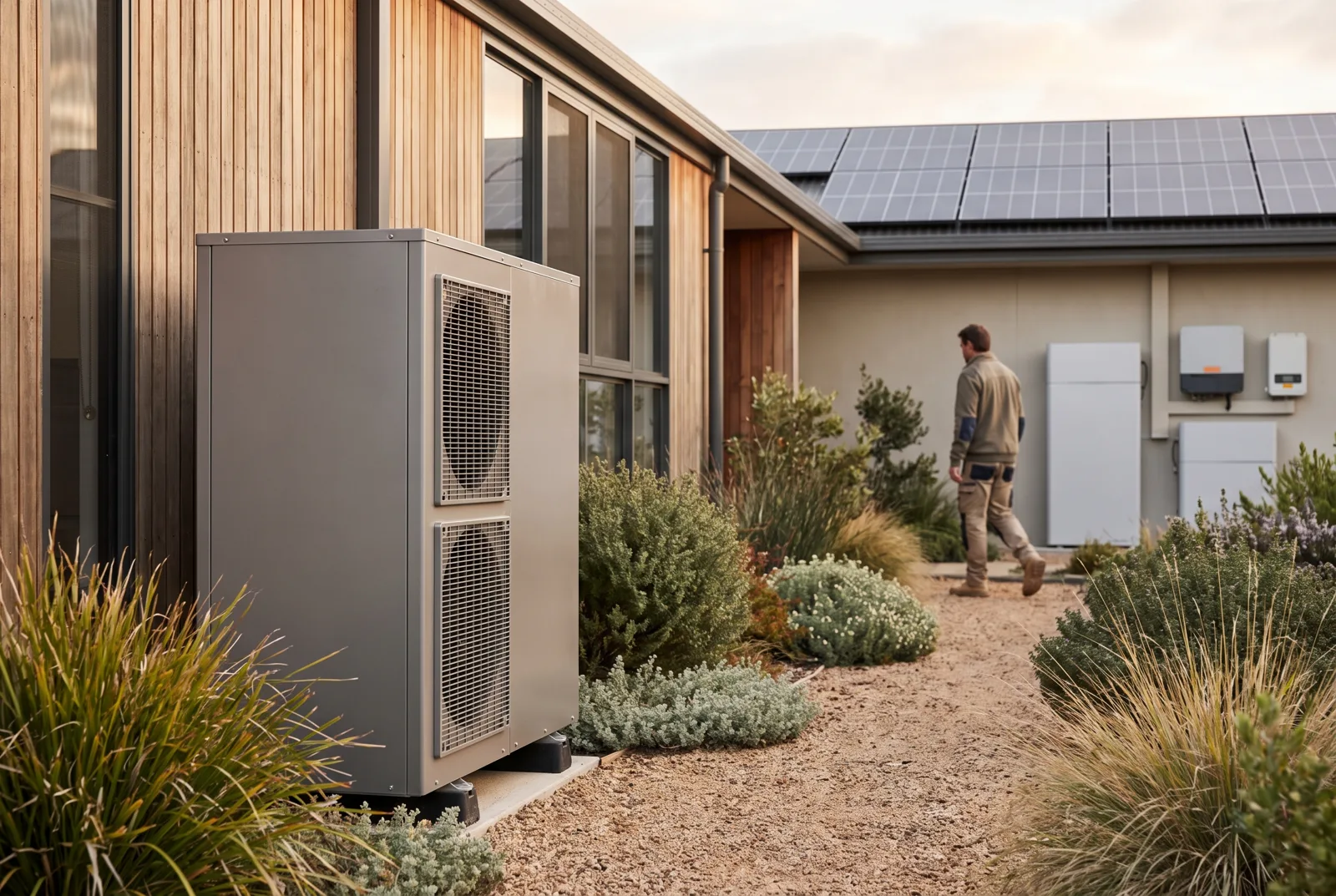
A heat pump moves heat rather than making it, delivering three to four units of heat for every unit of electricity. Replace an ageing gas furnace with one and your electricity use goes up, but your total energy spend goes down — and a bigger share of that electricity can come straight from the roof.
“Every kilowatt-hour from the roof is worth most when it replaces gas, not grid power.”
Jenna Holt, Lead System Designer
Plan the order of work
If a heat pump is likely in the next five years, tell us before we size your solar. Adding six panels on the original install costs far less than a second visit, a second permit and a second inspection later.
- Year one: panels sized for today’s use plus the expected heat pump load.
- When the furnace fails: install the heat pump; the panels are already there.
- Optional: a heat-pump water heater, which uses about a quarter of the energy of an electric tank.
Summer cooling is where solar shines
Our summers are long and hot, and a heat pump doubles as a high-efficiency air conditioner. Peak cooling demand lines up neatly with peak solar output, so on the hottest afternoons the roof covers most of the cost of staying cool.
Winter is the honest catch
Short winter days mean less solar exactly when heating demand is highest. Under net billing, summer export credits help offset winter imports, but they do not erase them. We show both seasons separately in the proposal, so there are no surprises at the true-up.
What it looks like for a typical home
A four-bedroom home in Linden switched from gas heat to a ducted heat pump and added three panels to an existing 6.8 kW system. Gas spend fell by $1,140 a year; electricity spend rose by $310. Net saving: $830 a year, with the extra panels paid off in under four years.
Incentives worth checking
The federal homeowner credits for heat pumps ended alongside the solar credit, but our state still runs rebates for heat-pump water heaters, and the utility offers a lower electric-heating rate in winter. We list whichever apply on your proposal, with the paperwork handled by the HVAC partner.
We do not install heat pumps ourselves, but we work with two local HVAC firms and coordinate the sizing so both systems are designed around each other. Ask for a joint survey when you book.