

The roof decides more about a solar install than most people expect. It changes the mounting hardware, the number of days on site and sometimes the price. Here is what to expect on the roofs we see most in the valley.
Asphalt shingle
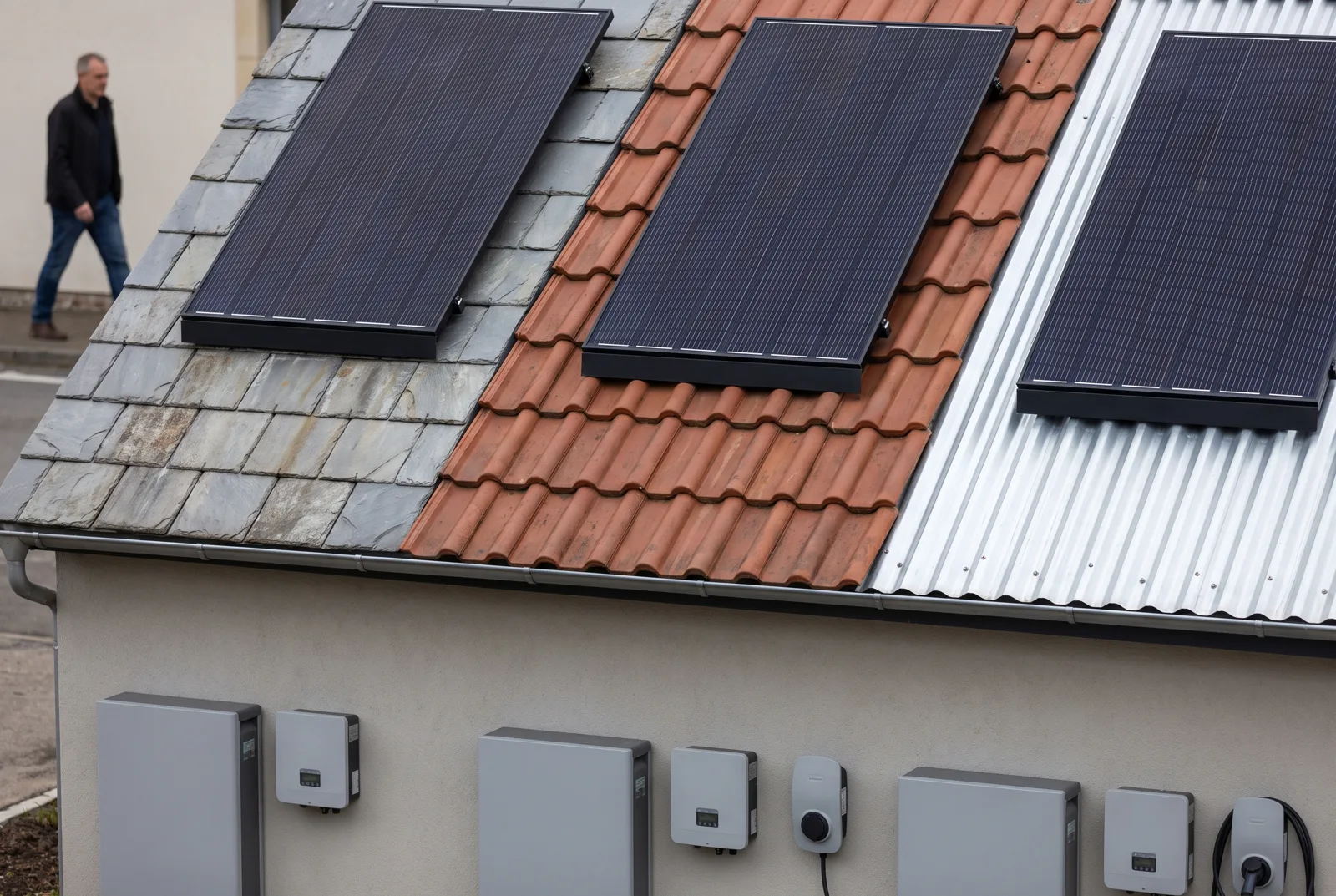
The simplest and most common. We fix flashed mounts into the rafters, seal every penetration and lay rails across them. A typical home is finished in one day. If your shingles are more than fifteen years old, we will talk about timing — it rarely makes sense to put a 25-year system on a roof with five years left.
“The roof decides more about the install than the panels do. We read it before we quote.”
Henry Albers, Structural Engineer
Concrete or clay tile
Tile needs more care and more time. We lift the tiles where each mount goes, fit a hook to the rafter beneath, and replace the tile with a flashed or notched version so water still runs off cleanly. Expect a second day on site and a modest premium per panel. Broken tiles are replaced from our own stock of matching profiles.
Standing-seam metal
The fastest install of all. Clamps grip the raised seams, so there are no holes in the roof. Metal roofs last for decades, which makes them an ideal partner for solar panels with a 25-year warranty.
Slate and wood shake
Possible, but specialised. Slate cracks easily and needs replacement slates with integrated flashing. Wood shake is often restricted by fire codes in wildfire-risk areas. We assess both case by case and sometimes recommend a ground mount or a carport instead.
Flat and low-slope roofs
We use ballasted frames that tilt the panels to about ten degrees, held in place by weight rather than fixings. The structural engineer checks the roof can carry the load before we quote.
What every roof gets
- A structural review of the rafters, signed by a licensed engineer.
- Photographs of every mount before the panels cover it.
- A 10-year workmanship warranty that covers leaks at our penetrations.
Should you re-roof first?
If your roof needs replacing within ten years, the answer is usually yes. Removing and refitting panels later costs around $2,000–$3,500 for an average home. We can coordinate with your roofer so the new roof and the solar go on in the same month.
How long the install really takes
From survey to switch-on, most homes take about six weeks, and almost all of that is permits and utility approval. The roof work itself is one day on shingle or metal, two on tile, and the electrical tie-in and inspection usually happen the following week.
Not sure what is on your roof? A satellite check during your free estimate usually tells us, and the survey confirms it.