One fixed price covers all eight. If your panel board needs an upgrade, you see it on the survey page — not on the invoice.
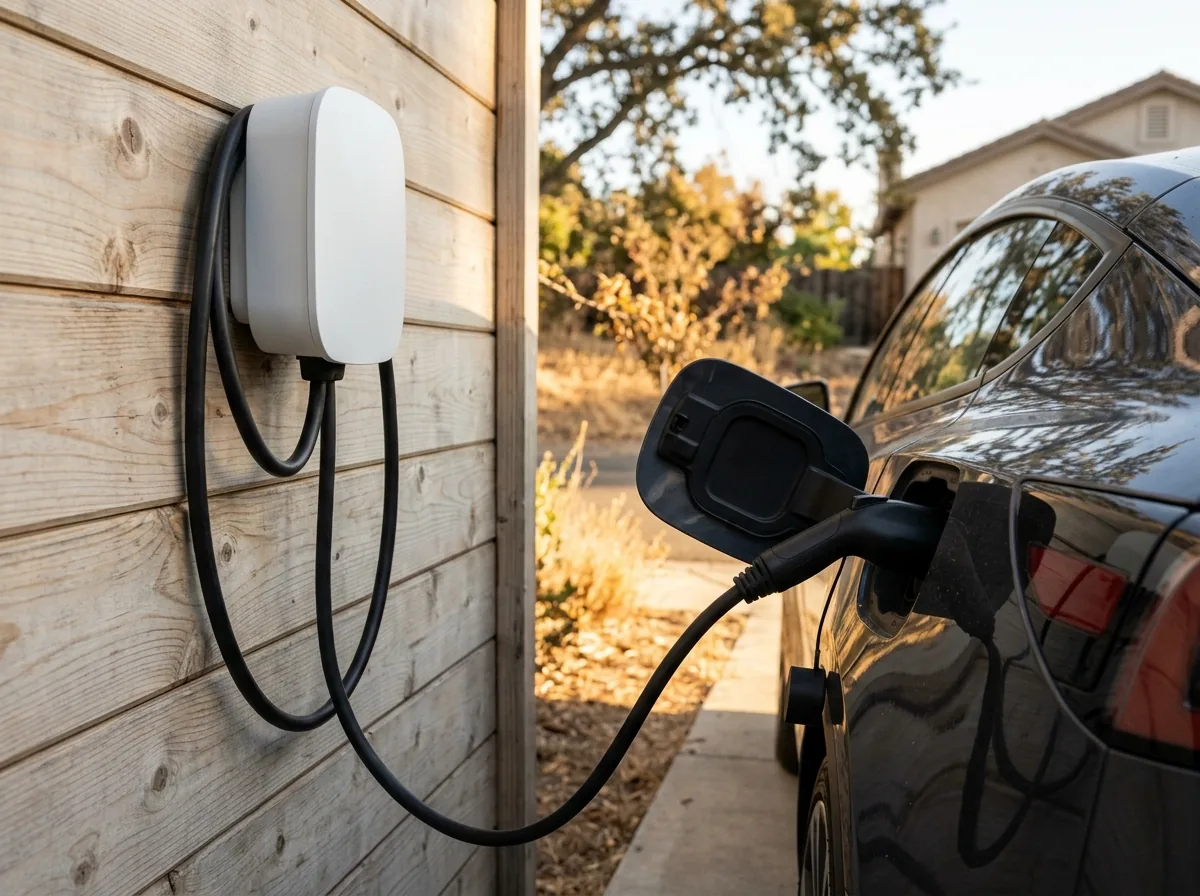
One small wall unit, the cable on its hook and the circuit run straight to the board. Garage wall, carport post or the side of the house.
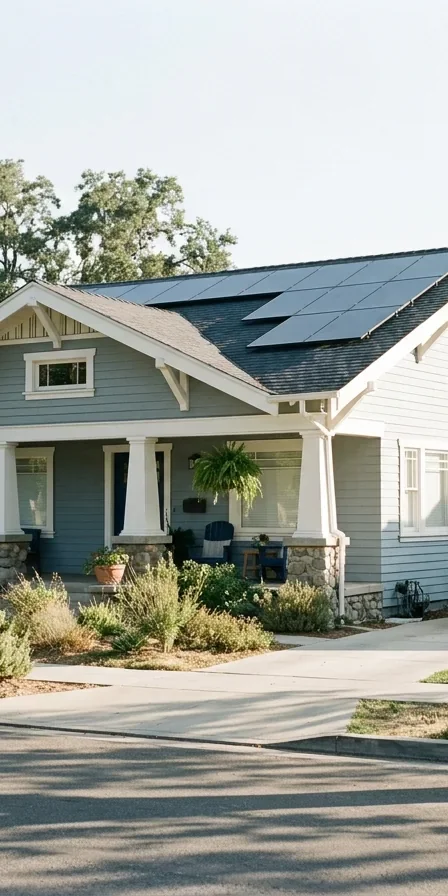
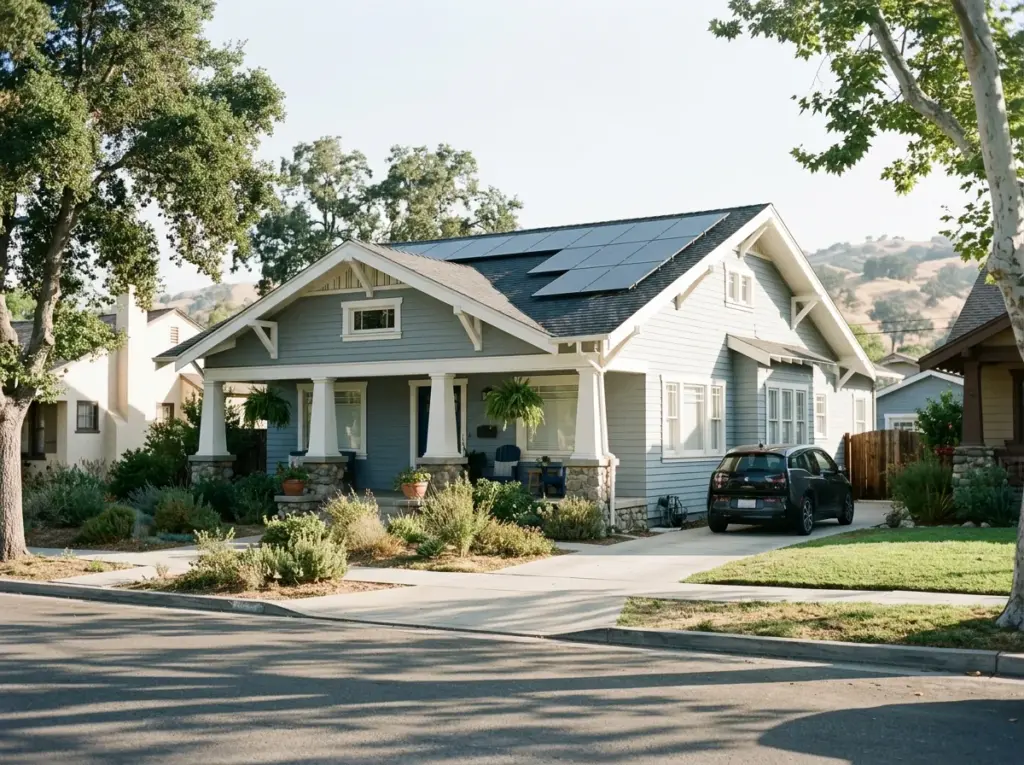
A solar-first charger watches what your panels are making and sends only the surplus to the car while the sun is up. After dark it waits for the cheapest night rate, so the car is full by morning.
We check your panel board first: most homes take a 7 kW charger as they are, and 11.5 kW often needs only a new circuit. You see both options, with prices, before you choose.
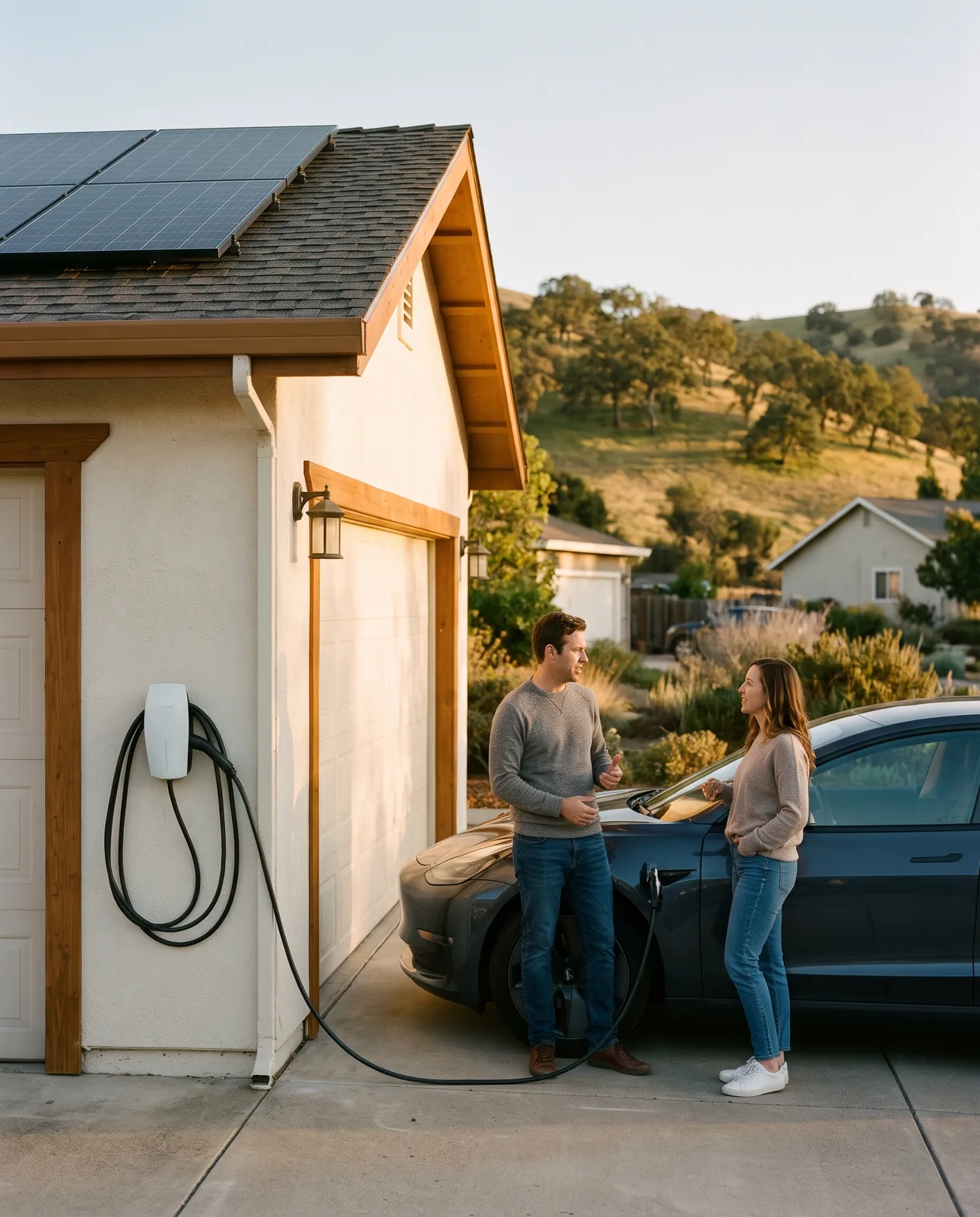
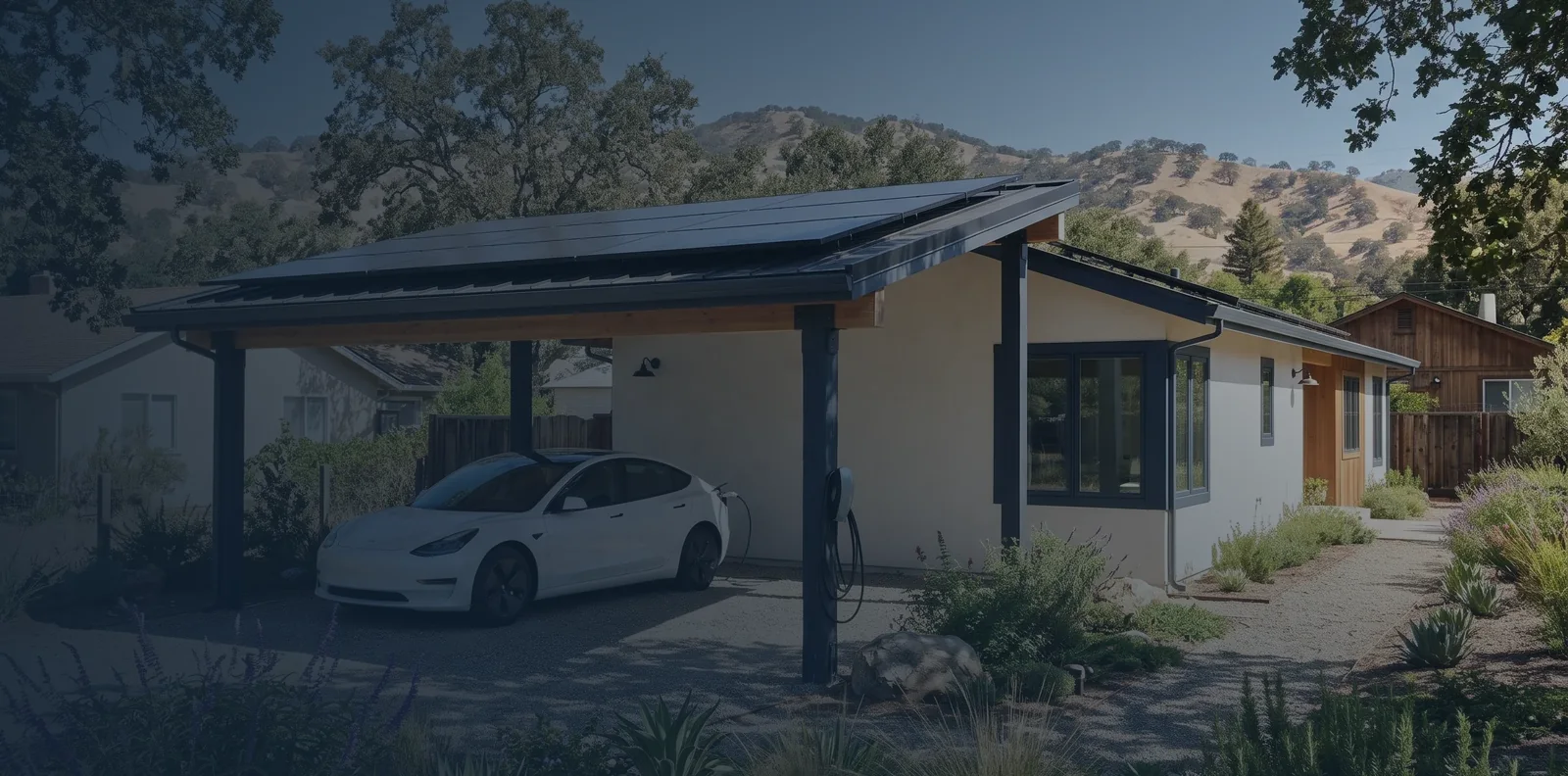
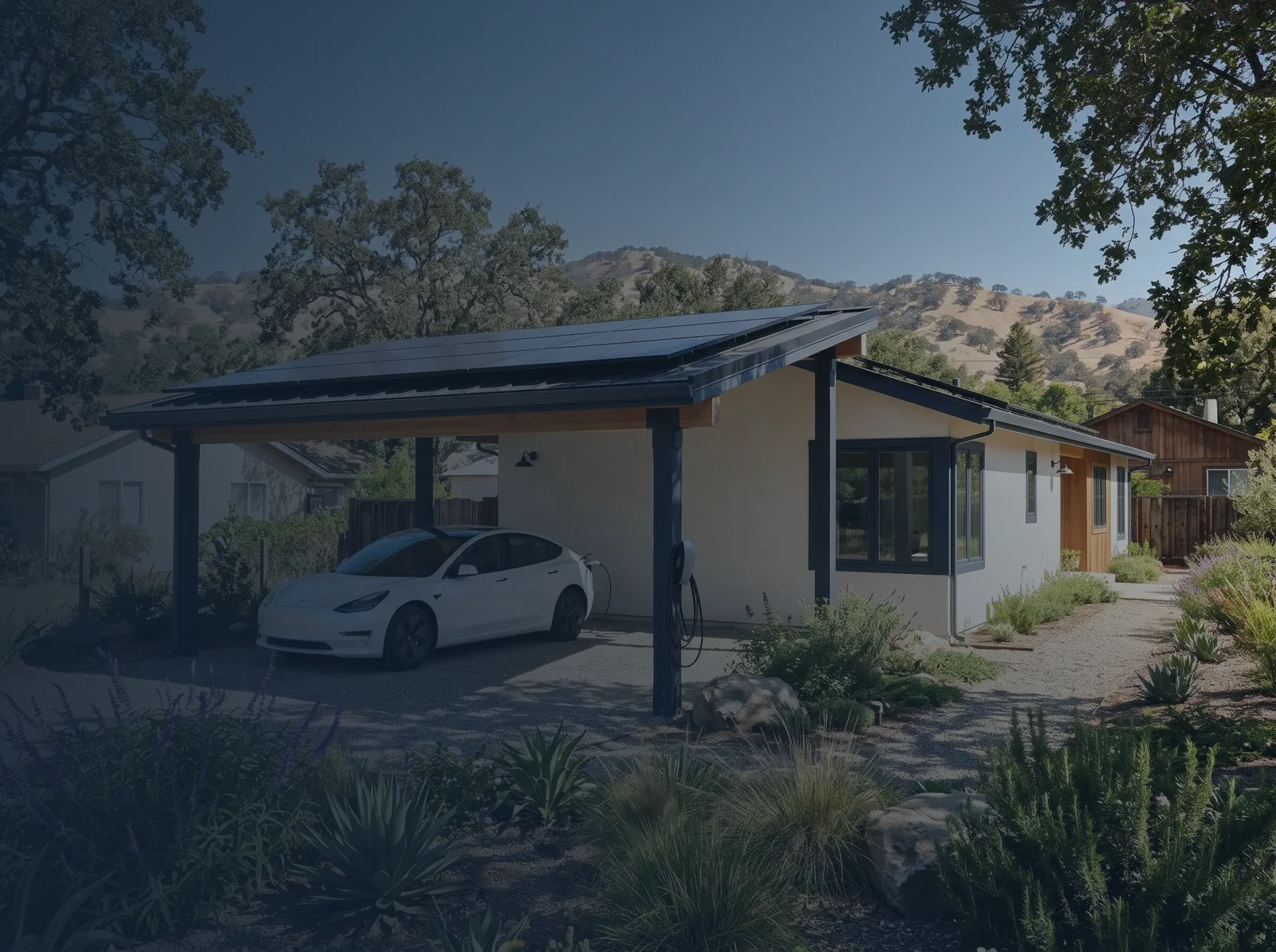
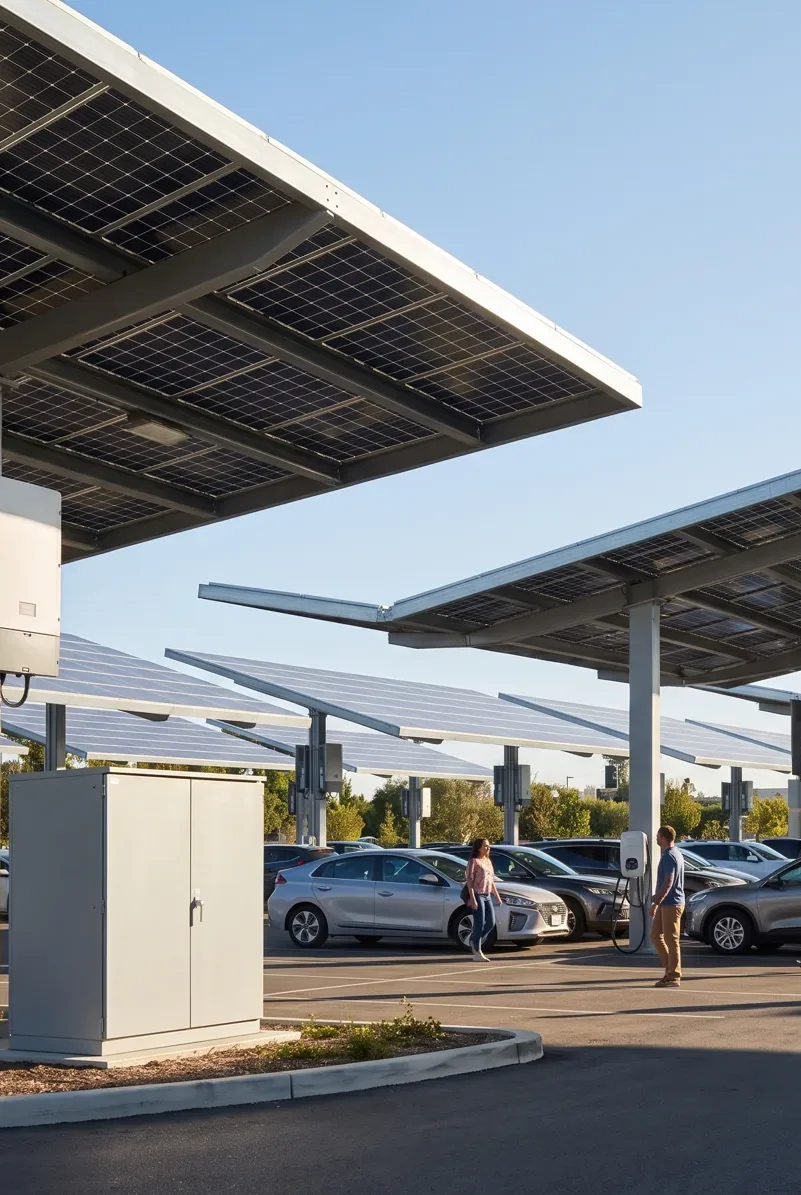
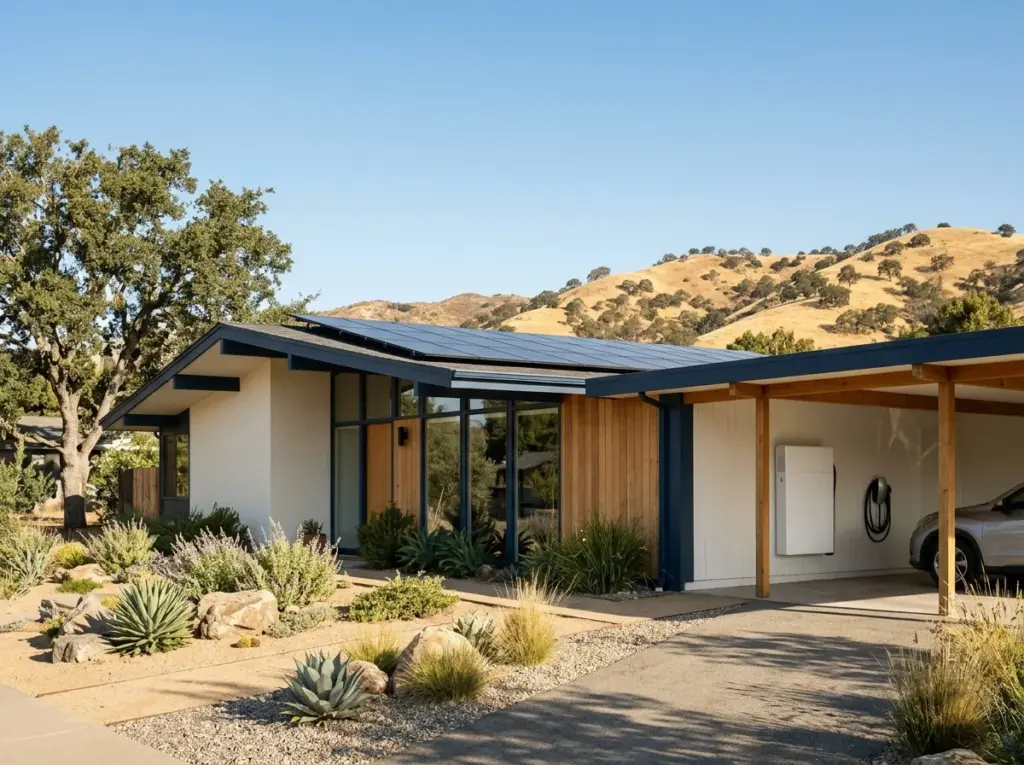
Driveways, a carport and a public library car park — each with the charger size, the solar behind it and what it saves.
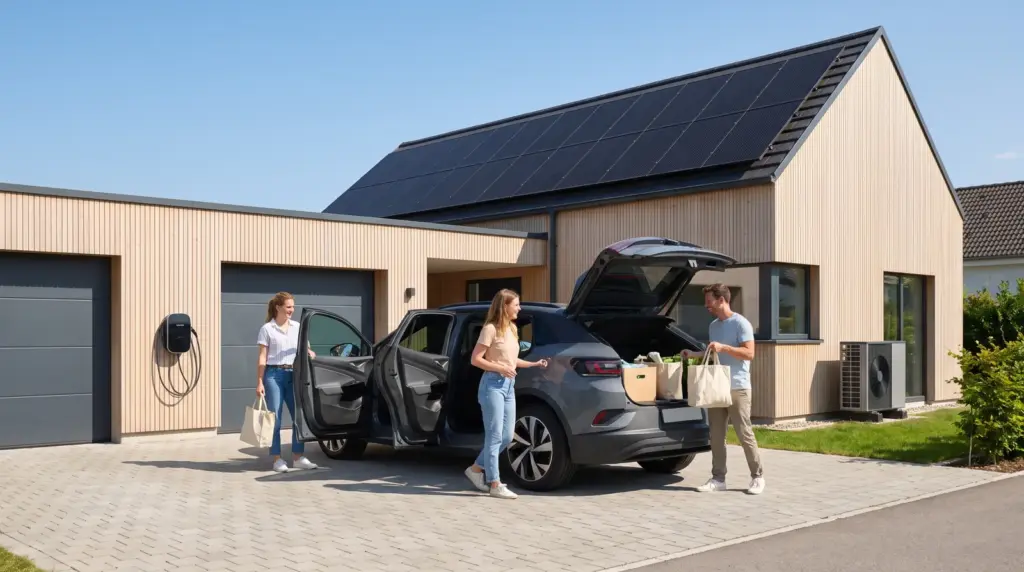
The five questions we hear before almost every charger quote.
No. We fit chargers on homes without panels too — and wire them so a solar system can drive them later without new work.
Yes. The chargers we fit use the standard connector for North American EVs, with an adapter where a car needs one. We confirm on survey day.
Most homes take a 7 kW charger as they are. An 11.5 kW charger often needs only a new circuit; if your board is full, you see the upgrade price on the survey page before you decide.
The charger reads what your panels are making and sends only the surplus to the car during the day. If the car must be full by a set time, it tops up on the cheapest night rate.
Yes — carports and shared chargers for car parks and apartment blocks, on the same survey-first, fixed-price terms. Our Work shows a few.