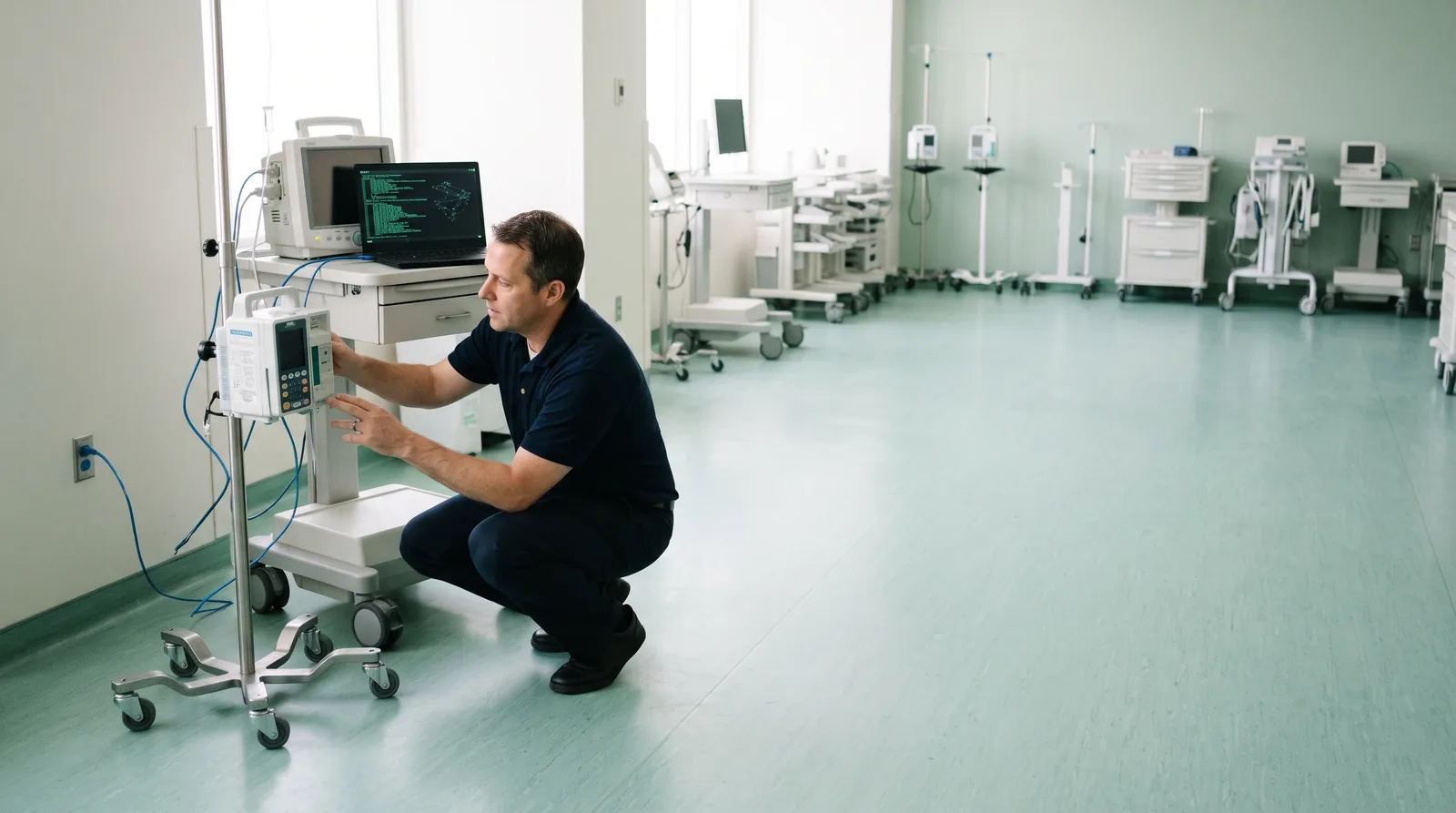
Infusion pumps and imaging carts sit on your network. Many risk analyses still stop at laptops, servers and the records system, because those are the things IT bought.
The Security Rule asks you to look at everywhere electronic protected health information is created, received, kept or sent. A device that stores patient data on its own disk is part of that, whoever purchased it.
Start with clinical engineering
Your biomedical team usually holds a better device list than IT does. Ask for it, then match it against what your network tools can see. The gap between those two lists is your first finding.
- What the device stores, and for how long.
- What it talks to, and over which network.
- Who can patch it, and when the vendor allows that.
- What happens to care if it goes offline.
You do not have to patch every device. You do have to know about it and write down the decision.
Do it without stopping care
Passive discovery reads traffic and sends nothing to the device. Use that before anyone suggests a scan. Plan any hands-on check with the ward, in the quiet hours, with a spare unit nearby.
The first step
Pick one department and list every networked device in it. Add the list to your analysis, with an owner and a date beside each risk you find.