
The retainer is the same work as an emergency call, with the first day already done. Your lead has the map, the logs and the names on file.
Term | 12 months |
Hours held for you | 160 a year |
Lead responder | Named at signing |
Onboarding | 2 weeks |
Unused hours | Move to readiness work |
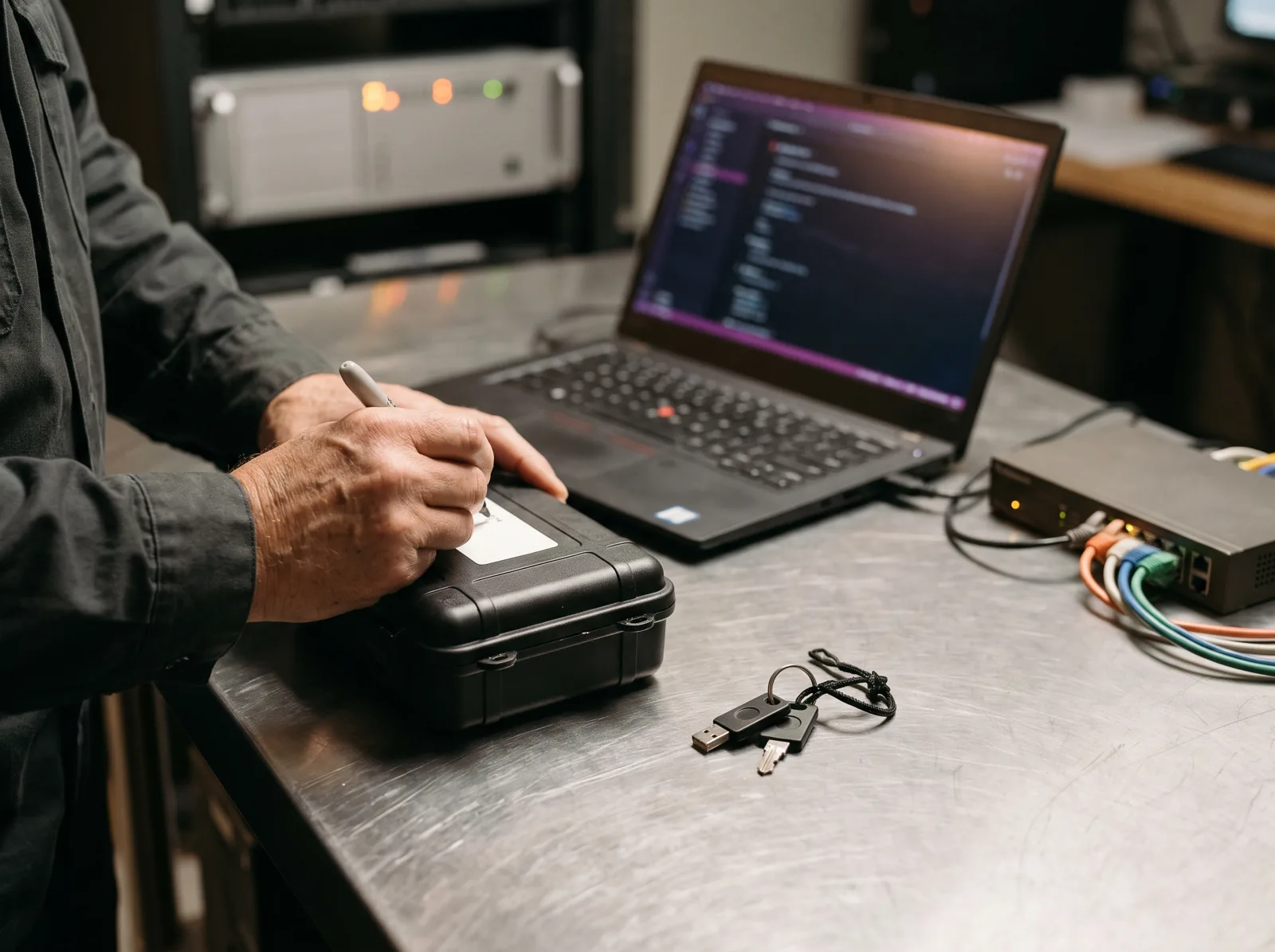
During onboarding your lead walks the network with your IT team, checks that the logs we ask for in the first hour exist, and writes it all into a short case file.
When you call, that file is open before you finish the sentence. Triage starts from what we know, and containment waits on fewer questions.
Who it suits
Companies with IT staff but no responders of their own.
Who it does not
Teams with an in-house response crew. Ask us for forensic support instead.
One person who knows your network and stays to the end of any case.
Sites, key hosts and who owns them, reviewed once a year.
The four sources we ask for first, tested for 90 days of history.
Sealed accounts and keys, agreed in writing, so nobody waits on a password.
Same number as everyone else. Give your case reference and skip the scoping call.
Your people, a sample case and a written list of what to fix.
One hour with the research desk on what is reaching your sector.

These two schedules go into the contract as they stand. They show the Retained plan; the Plans page compares all three.
Work | Included | Beyond that |
Case response, remote and on site | 160 hours a year | $320 an hour |
Onboarding and network map | 2 weeks, once | New sites at the hourly rate |
Log source check | One a year | From unused hours |
Tabletop exercise | One a year | From unused hours |
Threat briefing | Quarterly | Monthly on request |
Travel for on-site work | Not included | Billed at cost, no markup |
Severity | Remote work starts | On site | Written updates |
Critical | Within 1 hour | Within 24 hours | Every 4 hours |
High | Within 4 hours | Within 24 hours | Daily |
Low | Next working day | On request | At close |
Critical 2 · High 5 · Low 11 · Contained in 4 h 12 min
The same lead stays on it at the rate in Schedule A. We tell you before the hours run out, in writing.
They move to readiness work before the term ends: a tabletop, a log review or a threat hunt. They do not roll into the next year.
No. Emergency access stays sealed, and you approve its use at the start of a case. Each use goes in the record.
Many cyber policies name a panel of response firms, so check yours before you sign. If we are not on it, we can ask your broker about adding us.
Your lead runs the case and signs the report. Other responders take shifts under that lead, working from the same written record.

Twenty minutes with a responder. Tell us your size and sector, and we will say which plan fits, including none of them.
If it is happening now: +1-555-0187