A good exercise ends with a shorter runbook and a phone list that works. If people leave with only a feeling that it went well, the afternoon was wasted.
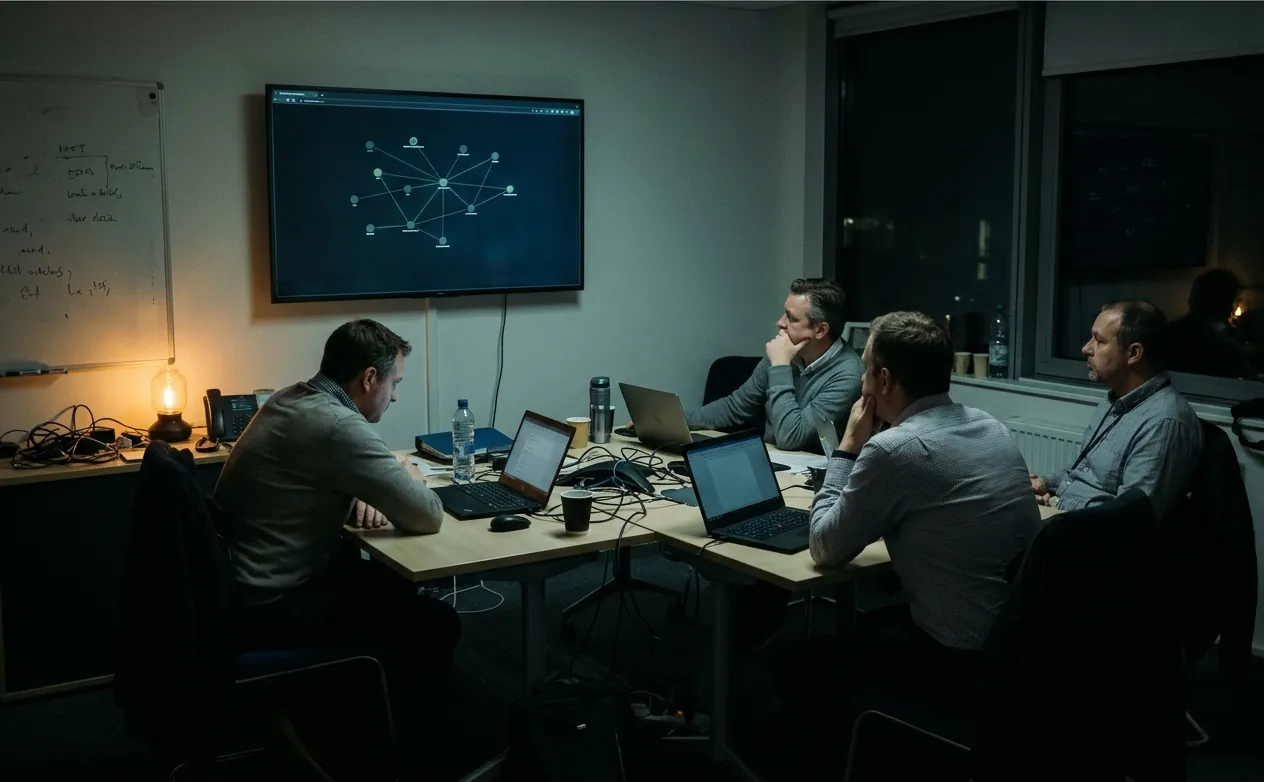
A tabletop is cheap. It takes a room, two hours and a scenario that feels plausible. What makes it pay is the record you keep. People remember the conversation, and they forget the details that need changing.
What to write down
Keep a note taker in the room whose only job is to record decisions and the time they took.
- Who made each decision, and how long it took.
- Which phone numbers were wrong.
- Which step nobody owned.
- One change to the runbook, with a name beside it.
The exercise is the meeting. The runbook change is the result.
Pick a scenario that hurts a little
Use something close to your own business. A stolen finance mailbox the night before payroll will teach you more than a nation-state attack. Then take one thing away: the IT manager is on a plane, or the phone system is down.
Call at least one number live during the exercise. It takes a minute, and the out-of-date contact you find may be the most useful thing to come out of the room.
Who needs to be there
An incident is a business decision with a technical part. If only IT attends, you will test the part you already know.
- Whoever can approve a lockout at 2 a.m.
- Someone from legal or compliance.
- The person who would talk to clients.
- Your outside provider, if you have one.
Run it again
Repeat the same scenario six months later and compare the times. That is the only number that shows the runbook got better. If the second run is faster and the phone list holds, the afternoon paid for itself.