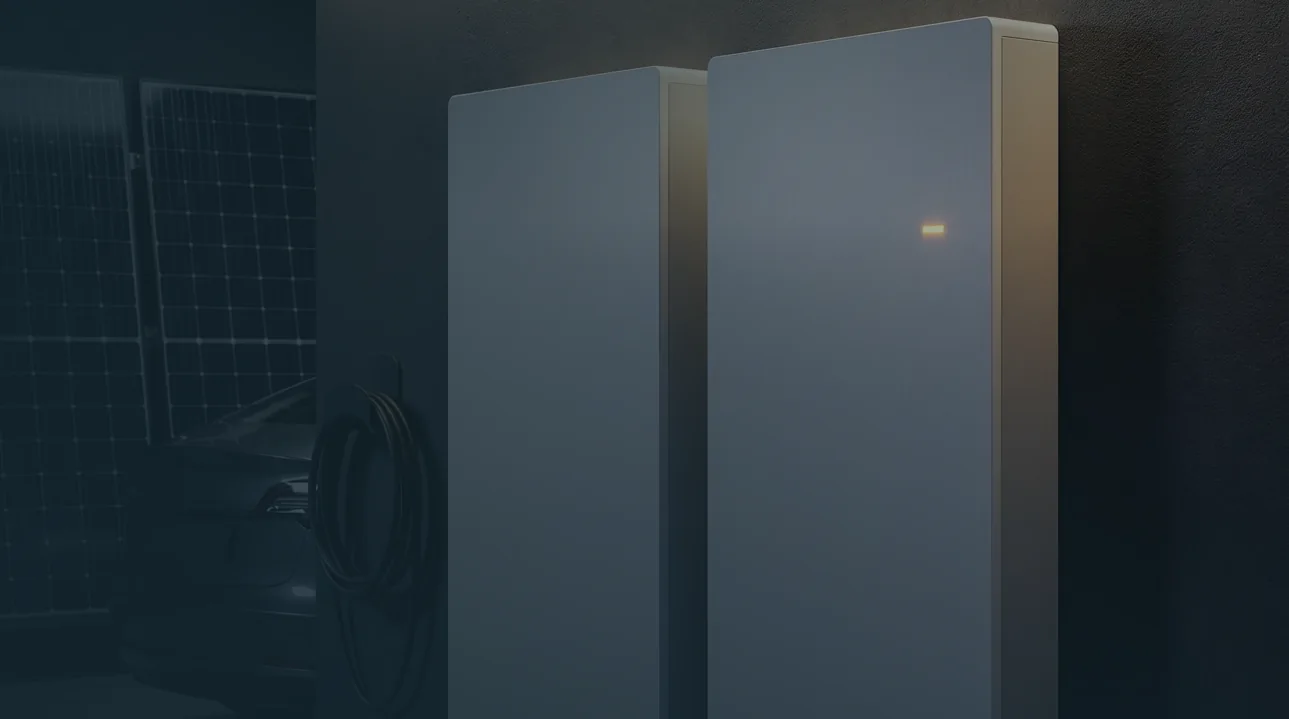
Without a battery, the power your roof makes at noon goes to the grid at the export rate — and you buy it back at seven at the peak rate. A battery keeps that surplus in the house and spends it when power costs the most.
When the grid drops, the backup gateway switches your chosen circuits over in under 20 milliseconds — fast enough that the Wi-Fi and the fridge never notice.

One fixed price covers all eight. If your panel board needs work to take the battery, you hear before we start — not on the invoice.
One slim cabinet, conduit run tight to the wall and the gateway beside the meter. Garage, utility room or a weather-rated wall outside.


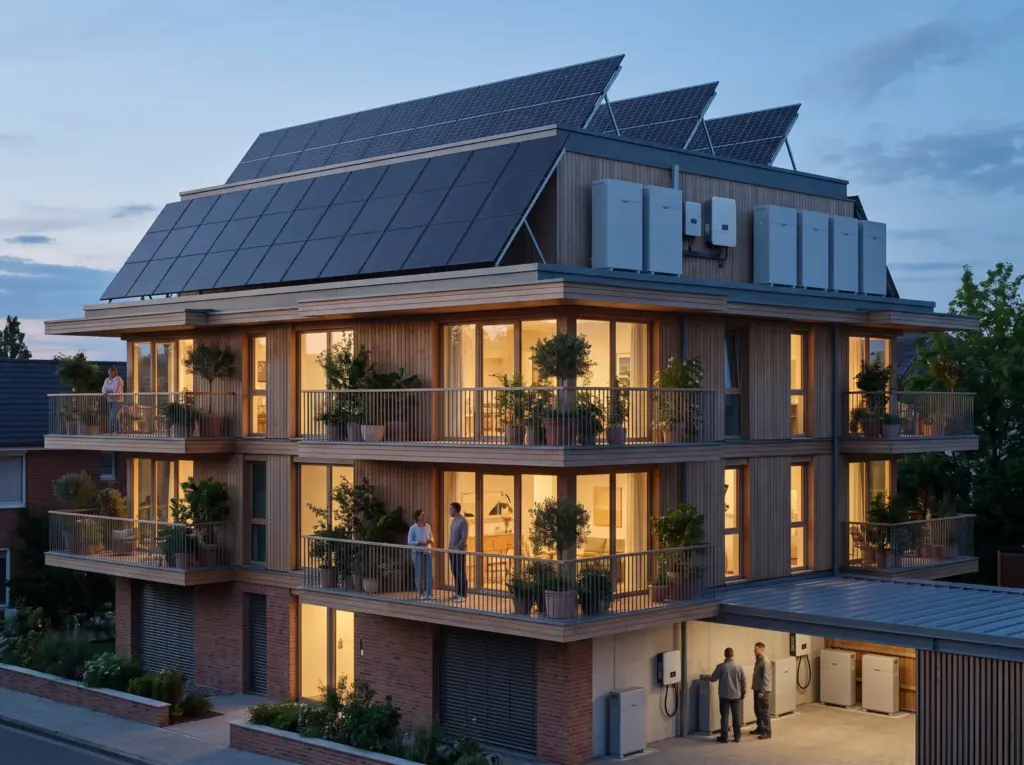
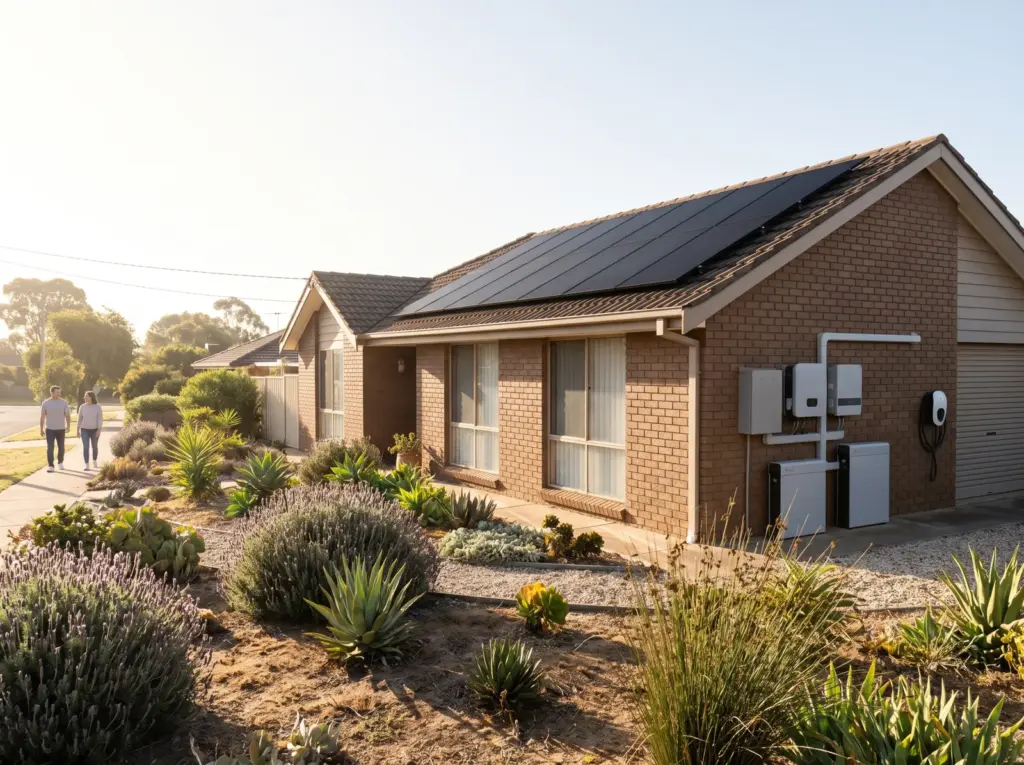
A family home, a 48-flat block and a 2019 array with a battery added — each with the backup hours we promised and the hours it ran.

The five questions we hear before almost every battery quote.
Most homes land between 10 and 30 kWh. We size it from your evening use and the circuits you choose to back up — fridge, Wi-Fi, lights and a heat pump fit comfortably in the middle of that range.
Yes. The gateway disconnects from the grid and switches the backed-up circuits over in under 20 milliseconds. During the day the panels keep recharging the battery, so a long outage doesn’t drain it.
Yes — to arrays of any age, ours or another installer’s. We fit a hybrid inverter, or an AC-coupled unit beside the inverter you have, and nothing on the roof changes.
The warranty covers ten years and at least 70 % of the original capacity. Most of the batteries we watch in the app are still above 90 % after five years.
In 2026 the state storage rebate still applies and we file it for you. Your proposal shows the amount before you sign, and the price never depends on it arriving.