

Battery quotes tend to start big. Two units, twenty-something kilowatt-hours, “whole-home backup”. Sometimes that is exactly right. More often it is buying capacity you will never touch. Here is how our designers size storage from the loads you actually run.
Start with the outage you are planning for
A three-hour evening outage and a three-day wildfire shutoff are very different problems. For most Sunvale homes, the outages that matter last under eight hours and happen in summer heat. We ask which one worries you, then design for that — not for the worst case on the internet.
“Most nights need four to six kilowatt-hours. Size the battery for the outage you actually get, not the one on the news.”
Eli Brandt, Master Electrician
List the circuits that matter
We walk the electrical panel with you and mark the essentials. A typical list looks like this:
- Refrigerator and freezer: around 1.5 kWh a day combined.
- Wi-Fi, phones and a laptop: under 0.5 kWh.
- LED lighting in four or five rooms: about 0.6 kWh for an evening.
- Gas furnace fan or a well pump, where they exist: 1–3 kWh.
Add those up and a comfortable night needs somewhere between 4 and 6 kWh. A single 10 kWh battery covers that with room to spare, and the panels refill it the next morning.
Power matters as much as capacity
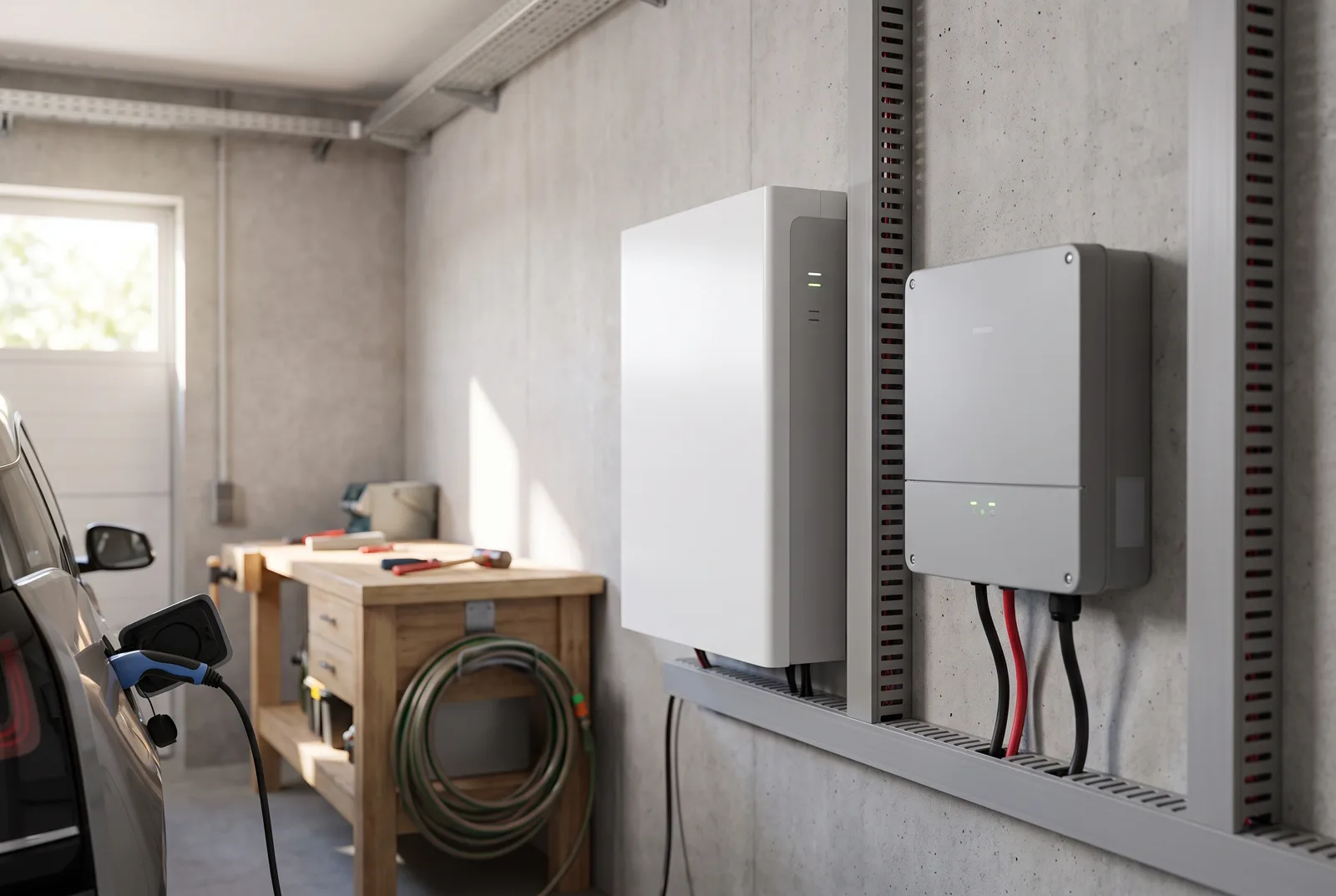
Capacity tells you how long the battery lasts. Power — measured in kilowatts — tells you what it can start at once. A central air conditioner or an electric range can ask for more than one battery can deliver, even if there is plenty of energy stored. That is where a second unit, or a smart panel that sheds big loads automatically, earns its place.
Daily use is where the savings are
Backup is the reason most people call us; time-of-use rates are the reason the battery pays for itself. Charging from the roof at midday and running the house from storage between 4 and 9 pm avoids the most expensive kilowatt-hours on your bill. We size for that daily cycle first, then check the backup case still works.
What we usually recommend
- 10–13 kWh, one unit: essentials backup plus evening self-use for a three- or four-bedroom home.
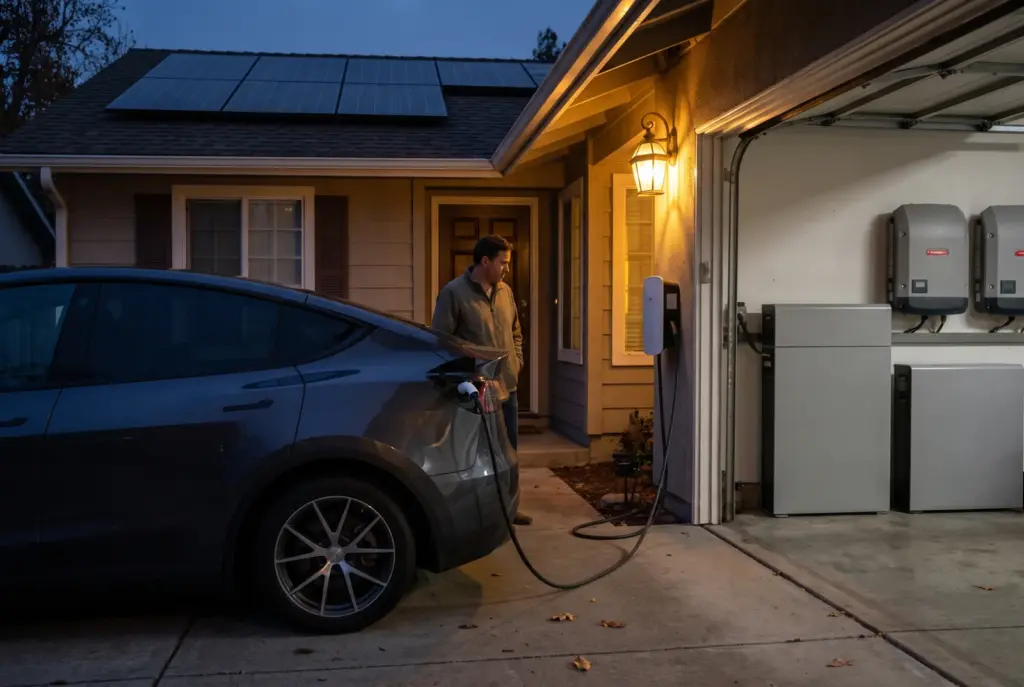
- 20–27 kWh, two units: homes with an EV, a pool pump or a well, or anyone in a wildfire shutoff zone.
- 30 kWh and above: rare, and usually for homes off a long rural feeder.
Switch-over you will not notice
Modern hybrid inverters move the house onto the battery in under 20 milliseconds. Clocks do not reset, the router stays up and most people only notice an outage because the street goes dark.
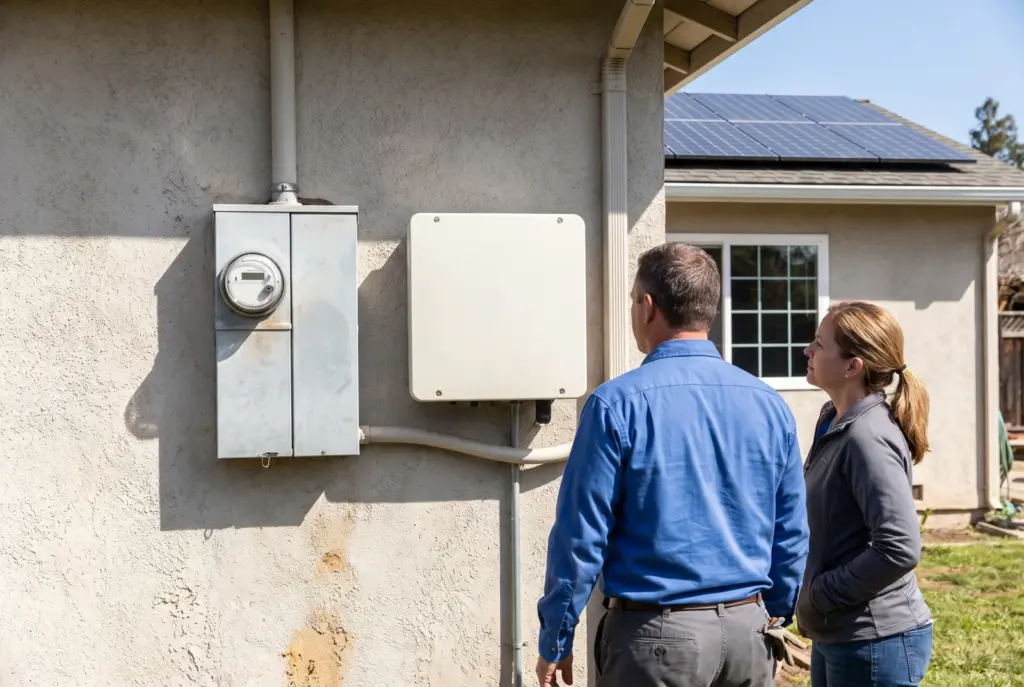
If you already have panels, we can add storage to most existing systems in a single day. Send us a recent bill and a photo of your electrical panel, and we will tell you which battery size makes sense — including when the answer is “not yet”.