
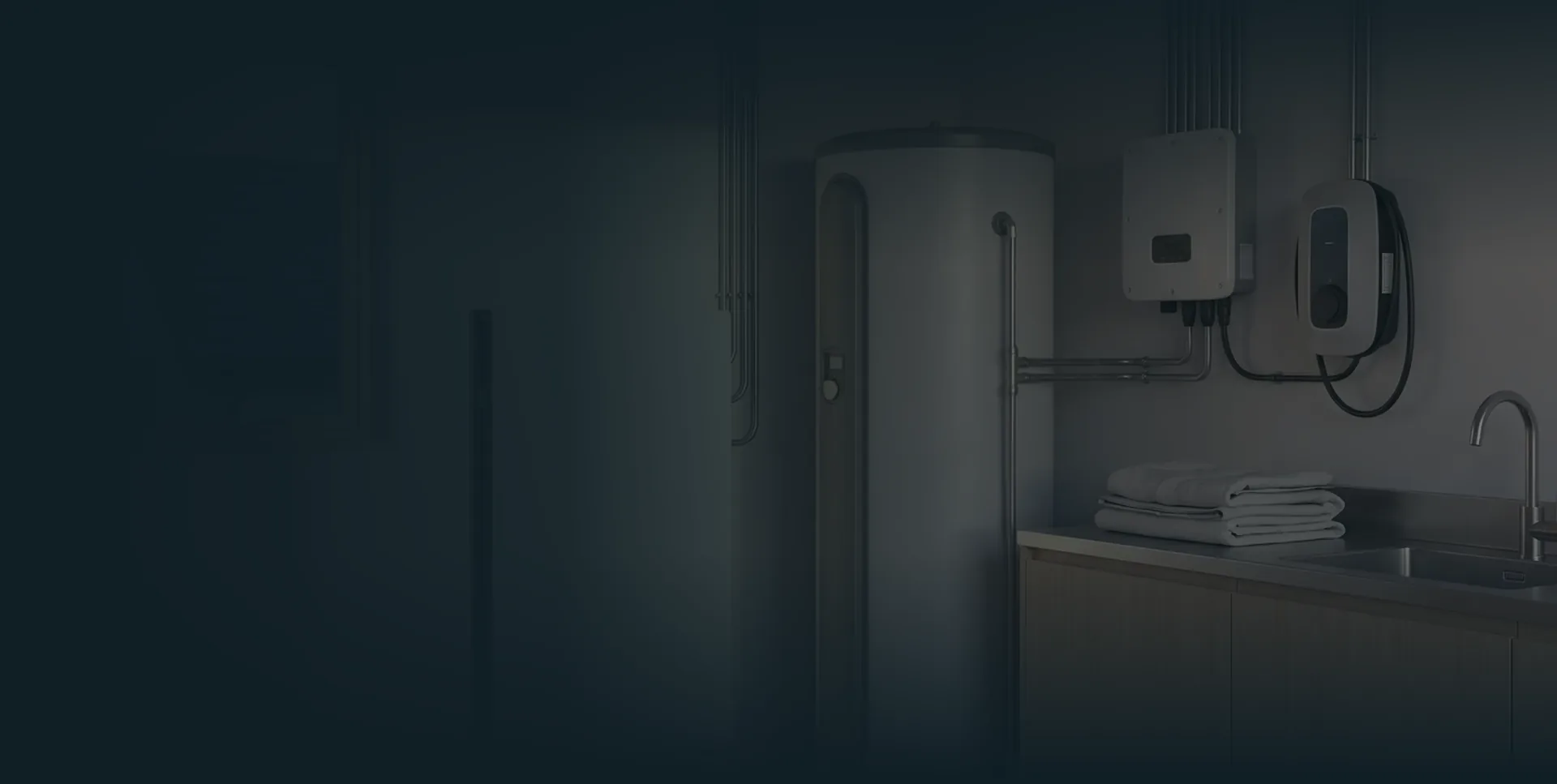

Our most chosen battery carries a three-bedroom house from the four o'clock price jump to bedtime on stored sun — and keeps the essentials on for about 20 hours if the grid fails.
Essentials backup — fridge, lights, Wi-Fi and the heating fan on a single charge.
Here is where a full battery goes on an ordinary October weekday in a three-bedroom home with a 7.2 kWp roof. The heat pump takes the biggest share; the fridge barely registers.
Two Vesper electricians, one van, no subcontractors. Most installs finish before school pickup, and the house is only off the grid for about forty minutes.
Dust sheets down, and the power plan for the day agreed with you at the door.
Cabinet on the wall, gateway beside the meter — one short, planned power cut.
Firmware, rate plan and reserve set. Then we pull the main switch and test a real outage.
An app walkthrough at your kitchen table. Tonight already runs on stored sun.

One page, plain words, no registration hoops. If the battery or our wiring lets you down inside ten years, the fix is on us.
If our wiring causes a fault, we fix it — parts, labour and the call-out, for ten years.
We monitor every battery remotely and usually call you before you notice anything is wrong.
The five questions our designers hear most about this size. The rest live on the FAQ page.
Yes. The gateway is sized for three cabinets from day one. A second 13.5 kWh unit mounts beside the first in about three hours, and the app simply shows one bigger battery.
Yes. Without panels it charges from the cheap overnight rate and carries the house through the four o'clock peak. Add a roof later and the gateway takes the panels without new wiring.
Under 30 dB — quieter than most fridges. There is no pump or compressor; the cooling fan only turns on during the hottest afternoons, and we never mount it on a bedroom wall.
Surplus sun runs the house first, then goes to the grid at your export rate. With the EV Charger Link fitted, the car takes it before the grid does.
Only if you ask it to. Grid charging is off by default; switch it on in the app and it tops up in the cheapest off-peak hours — useful in winter, or before a forecast storm.