


A home battery does three jobs without being asked: it soaks up spare sun, spends it when power is dearest, and stands guard for outages. Here is a full day of that — and the one day it takes us to fit it.
Filled by the roof since 07:10 — now running dinner and the heat pump.
Solar peaks at one o'clock. Your house peaks at seven. The battery is the bridge — and it crosses it every day without you touching a thing.
Off-peak $0.19. The battery holds its 20% reserve and lets the cheap grid run the fridge.
The roof covers the house and fills the battery. Surplus is exported after it is full.
Peak $0.48. The battery runs everything — the grid meter reads 0.0 kW.
Lights and standby on stored sun, stopping at 20% so an outage never finds it empty.
Five steps, about three weeks, and roughly two hours of your time in total. We do the paperwork, the permit and the utility sign-off.
Upload a recent bill or connect your utility account. We read twelve months of half-hourly data, not a guess.
A written proposal: battery size, installed price, evening savings and the reserve we would set. No call unless you ask.
Forty minutes with a designer to choose the wall, check the meter and photograph the switchboard. We file the permit that day.
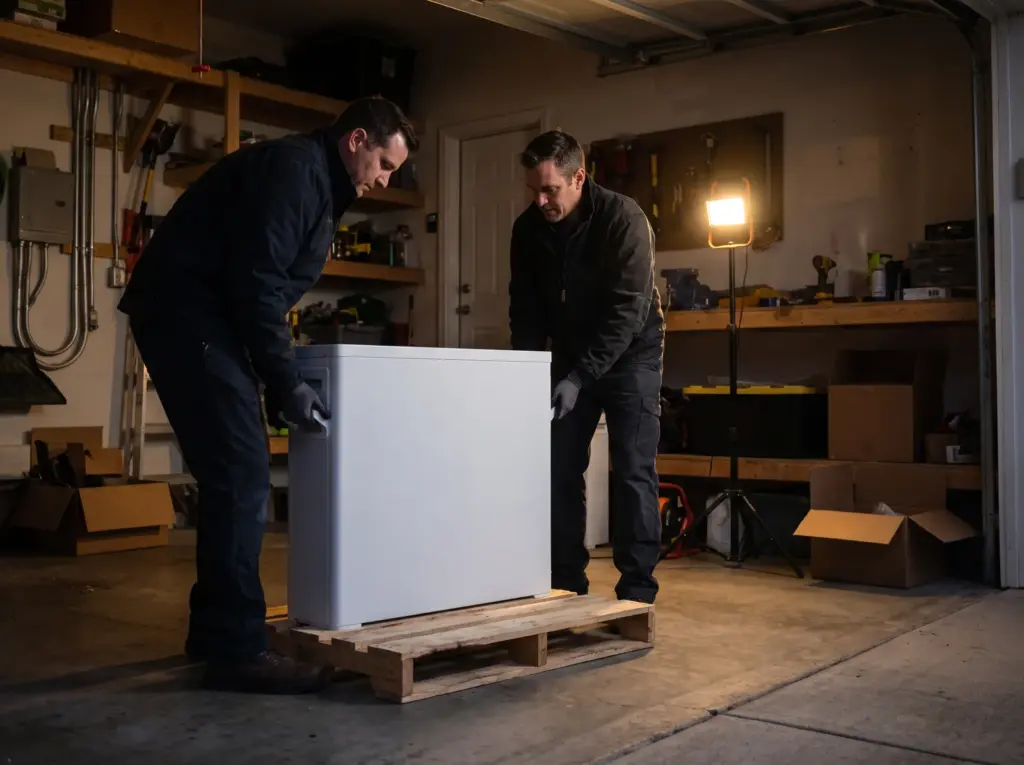
Two of our electricians, one day. Cabinet, gateway, and a real outage test before the van leaves.
The app goes live, the reserve is set, and dinner runs on sunlight you caught that morning.
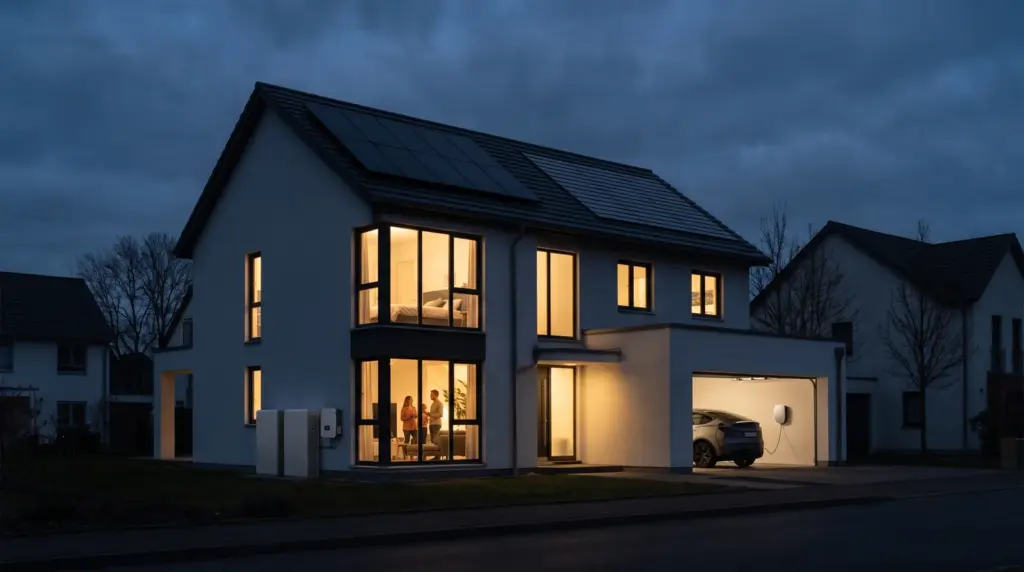

Most owners open it twice: the night we switch on, and the next time the weather turns. Everything else runs on its own.
We set the mode with you on switch-on day. Change it whenever life does — a new car, a home office, a stormy season.
Use every watt of your own sun before touching the grid, all day and night.
Charge from the roof, spend at peak, rest when power is cheap. Where most of the $1,180 a year comes from.
Stay full and wait for the storm. For homes where an outage costs more than any bill.