
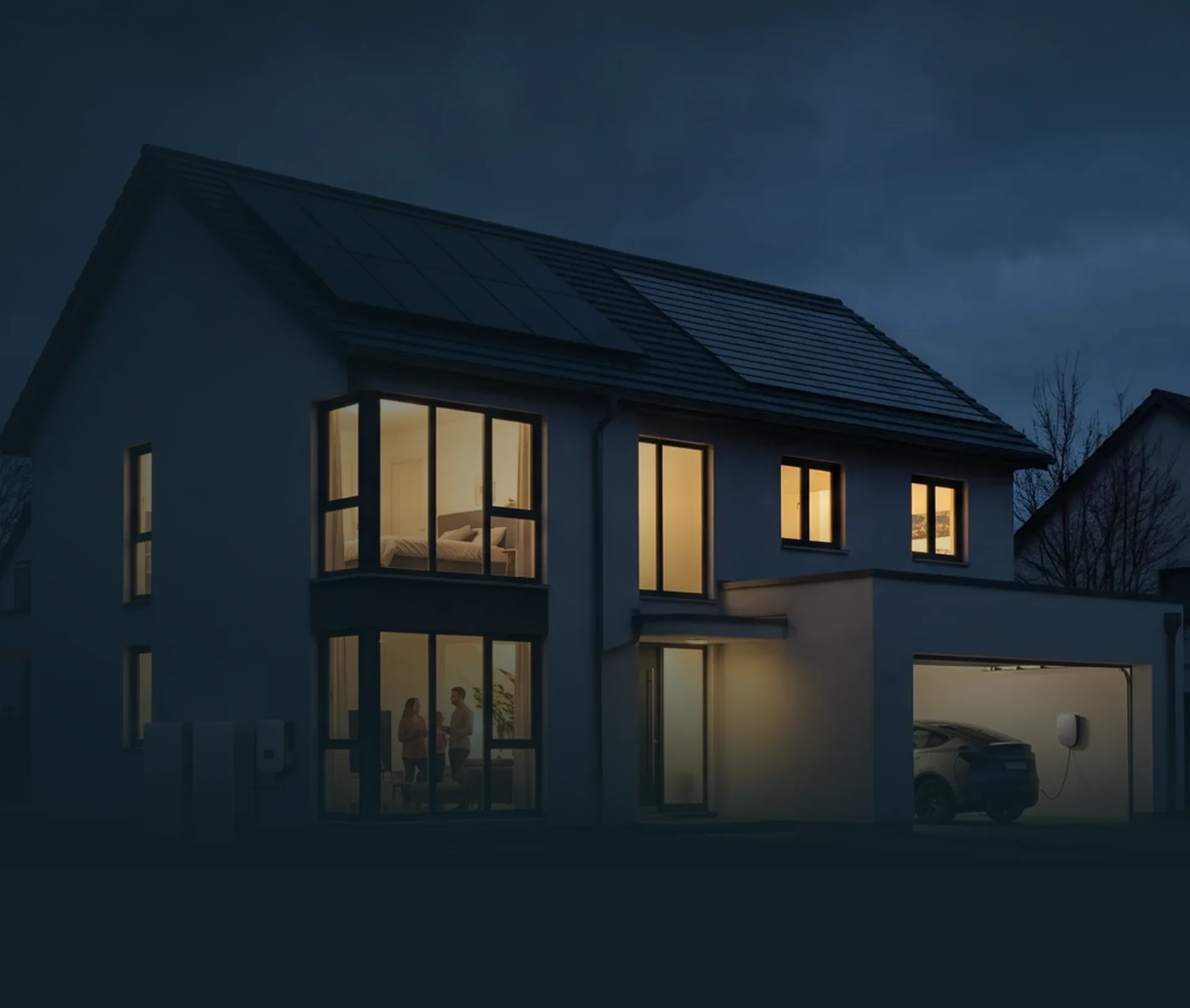

A home battery that fills up on your own roof by day, runs the house through the evening peak, and takes over in under 20 milliseconds when the grid goes down.
Solar makes power at noon. Your house wants it at seven. The battery sits in the middle and moves the sun to where the bill is highest — every day, without you touching a thing.
Panels wake up. The house takes what it needs for breakfast; every spare watt goes into the battery.
By mid-afternoon the battery is full. Whatever the roof still makes is exported at the day rate.
Rates jump to $0.48 at four. The battery runs dinner, laundry and the heat pump instead of the grid.
Lights, fridge and Wi-Fi run on stored sun. A 20% reserve is always held back in case the grid fails.
We size from your meter data, not a brochure. Most homes land on the middle one; a few need two units, and some only want the essentials kept on.
Fridge, lights, Wi-Fi and the garage door through a night-long outage. Good for smaller homes and tight budgets.
Carries a three-bedroom house from 16:00 to bedtime on stored sun, and keeps the essentials on for about 20 hours if the grid fails.
Two units side by side. Heat pump, oven and an overnight EV top-up included — the house barely knows the grid exists.
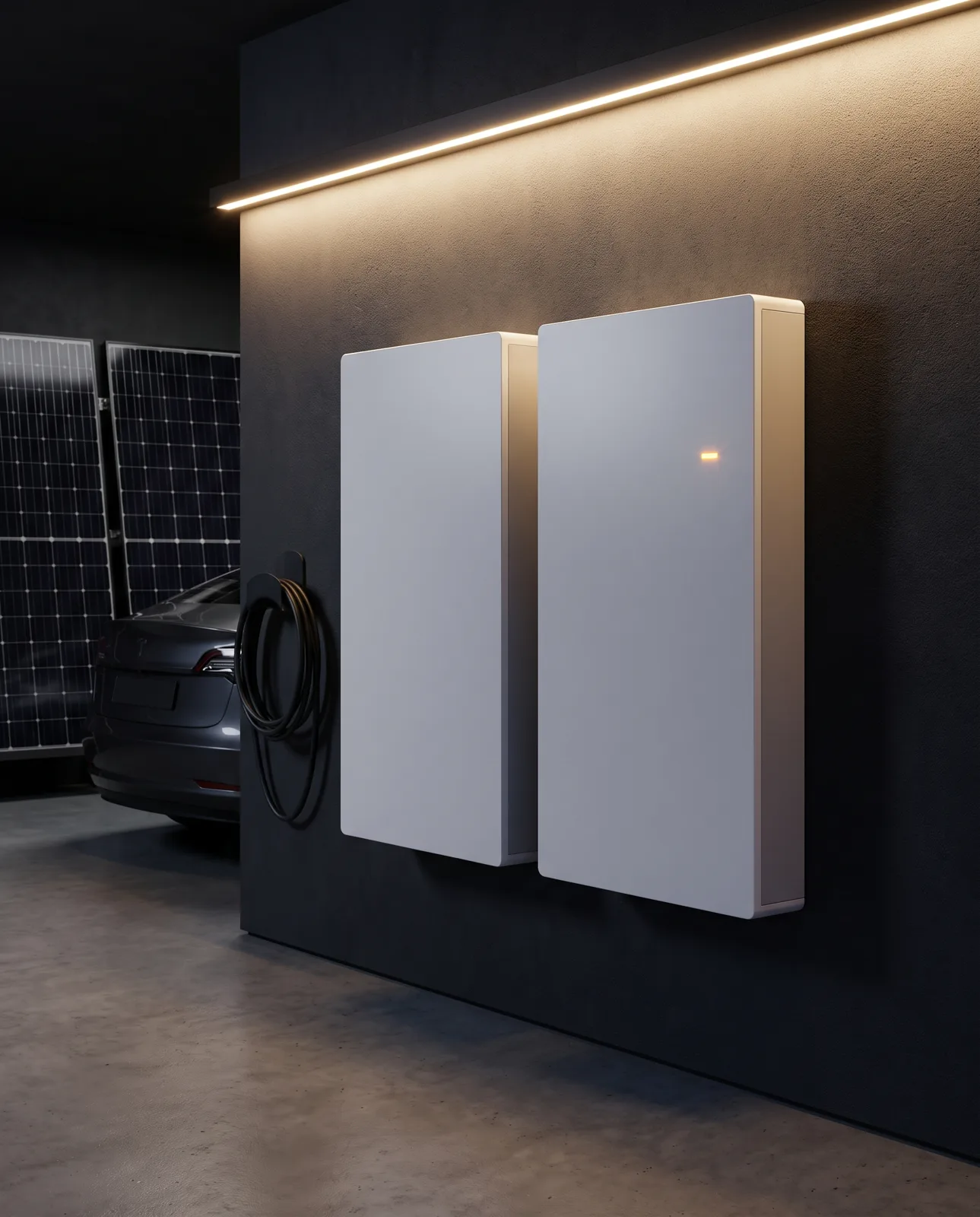
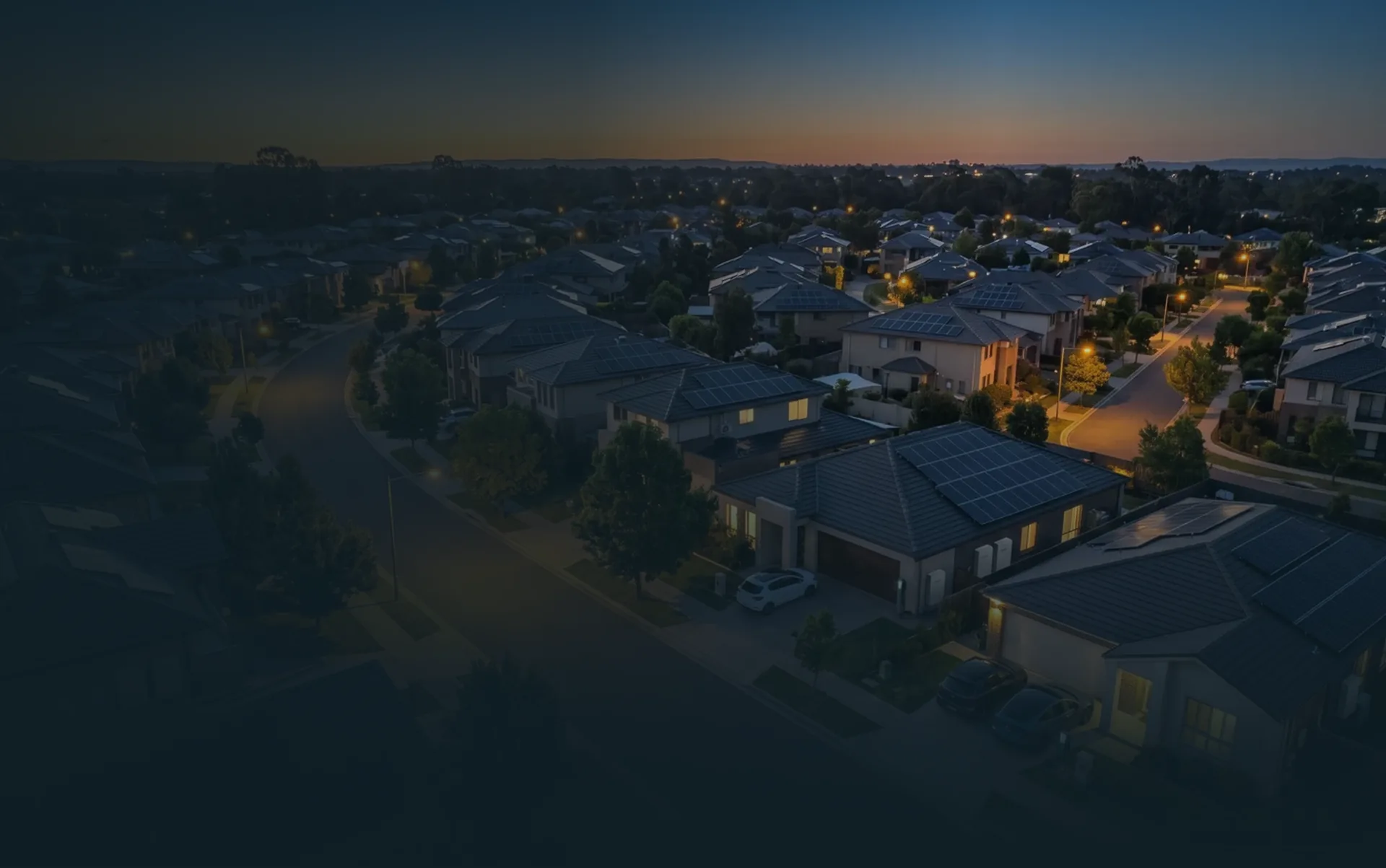

When the February storm took down the Calder Bay feeder, 1,340 Vesper homes kept their lights, heat and Wi-Fi on. Most owners found out from the neighbours — the switch-over is that quiet.
Calder Bay power costs two and a half times more after four o'clock. The battery learns your rate plan and only spends stored sun when the grid is most expensive.
Window | Rate | Your battery |
00:00–07:00 | $0.19 | Rests · holds the reserve |
07:00–16:00 | $0.27 | Charges · from your roof |
16:00–21:00 Peak | $0.48 | Runs the house |
21:00–24:00 | $0.27 | Tapers · keeps 20% back |

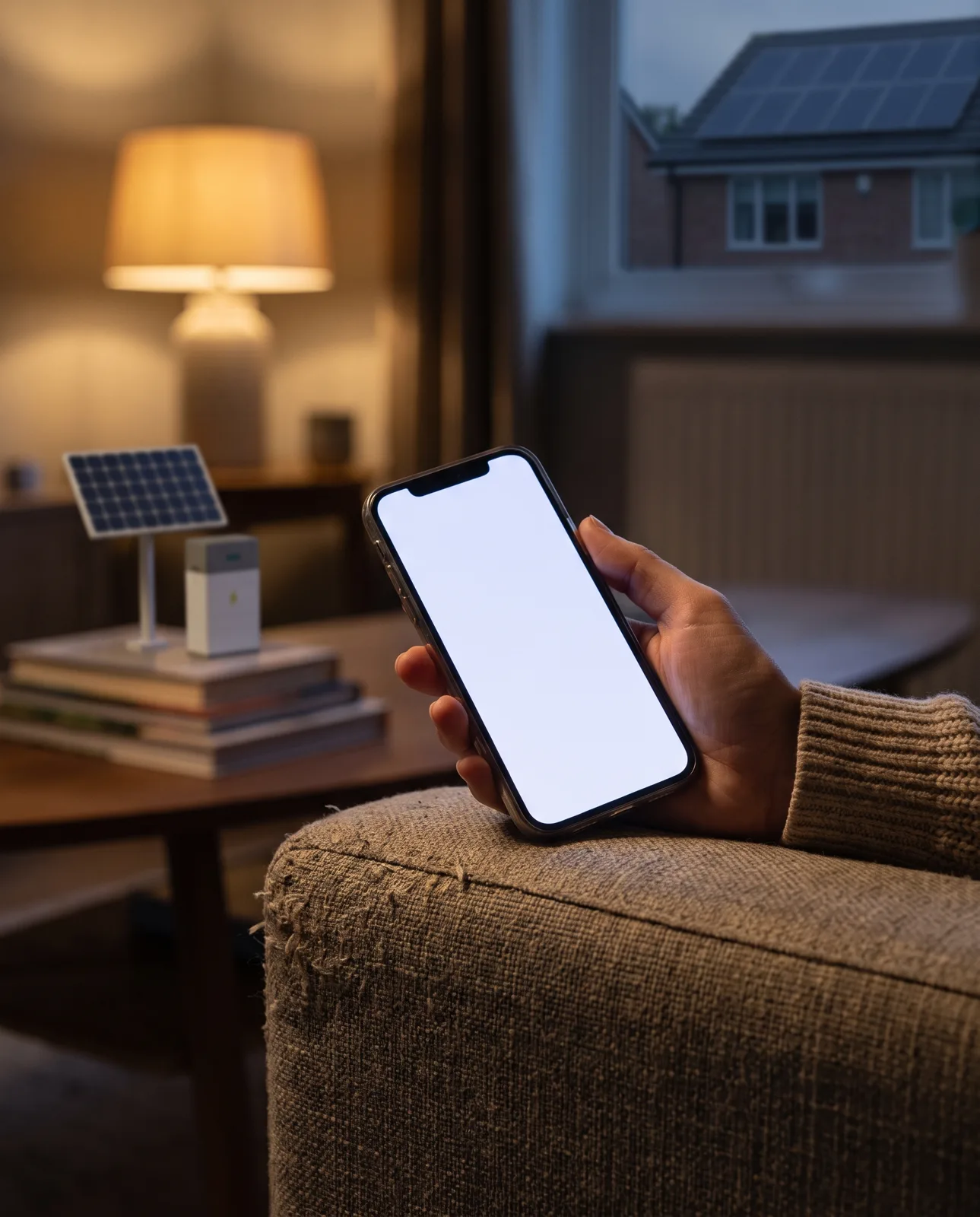
See what the roof made, what the house used and how long the battery will last tonight. Most owners set it once and open it when the weather turns.
Twelve months after switch-on we send every owner a one-page report: what we promised, and what the meter actually read.
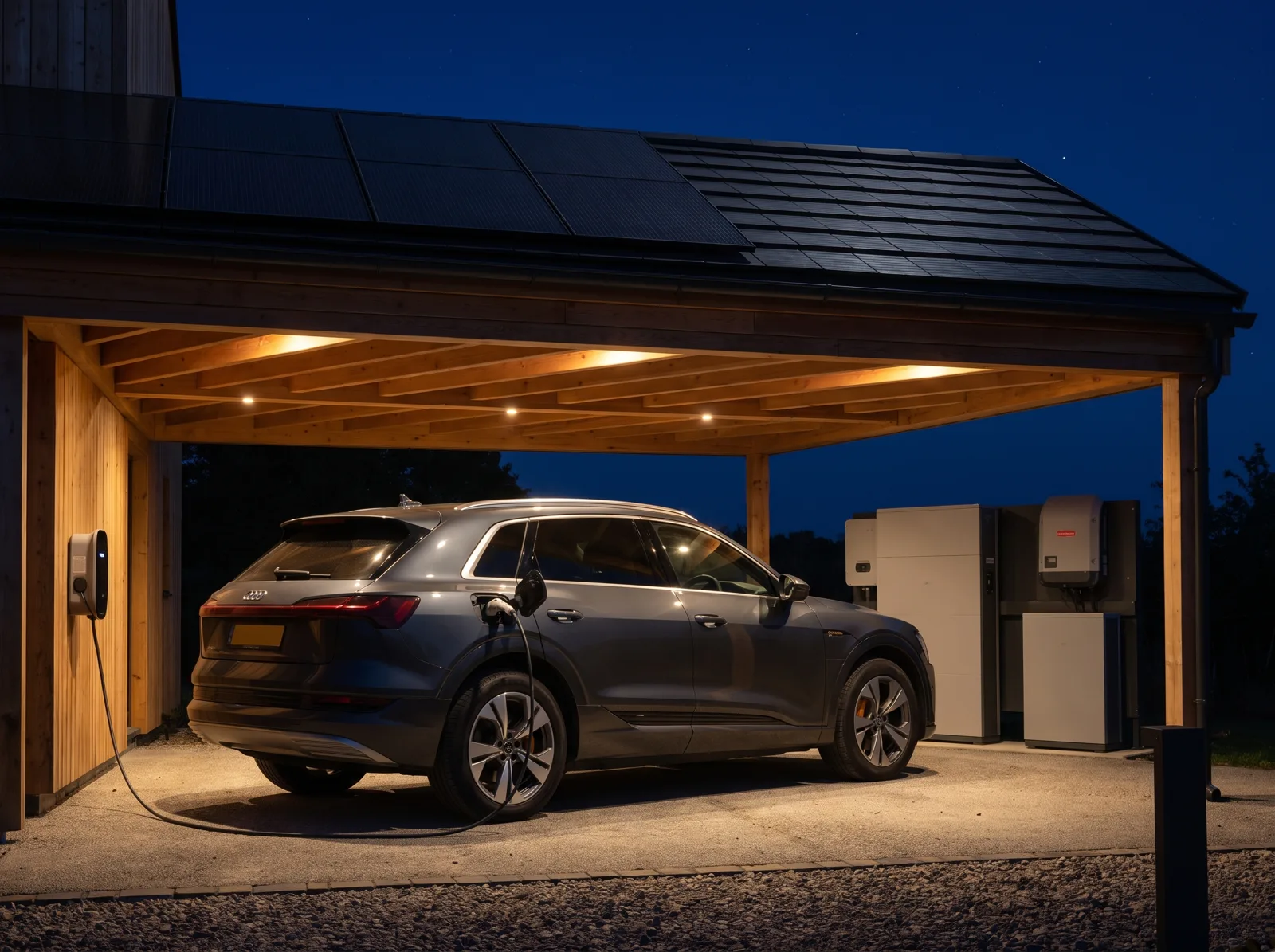
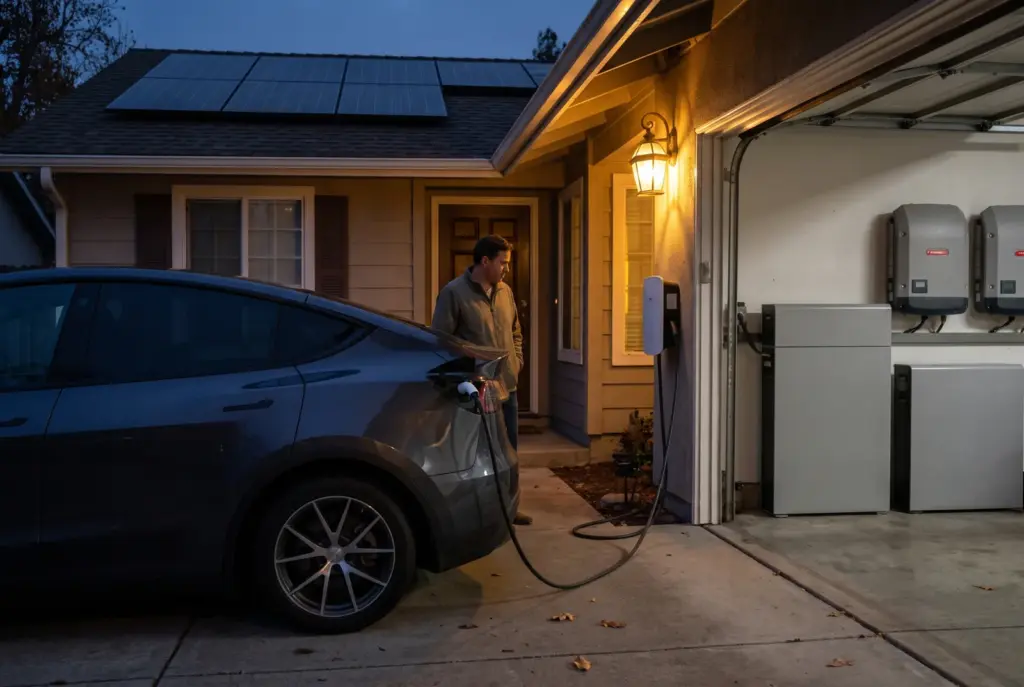
A 7.2 kWp roof, one 13.5 kWh battery and a carport charger. The car fills from surplus sun; the evenings run on what's left.
Three Calder Bay owners on the first storm night after switch-on.



Yes. A gateway beside your meter disconnects the house from the grid and the battery picks up the load in under 20 milliseconds — too fast for clocks, routers or a running laptop to notice. It reconnects on its own when the grid is stable again.
No. Without panels the battery charges from the cheap overnight rate and runs the house through the evening peak — Westcliff, one of our owner stories, has no roof at all. With solar it fills from your own sunlight instead, and the savings roughly double.
Our cabinets are warrantied for ten years with 70% of their capacity guaranteed at year ten. Most keep 80–85% after a decade of daily cycling, and the app reports capacity health every month.
The battery still charges from whatever the roof makes, then tops up from the off-peak grid overnight if your plan allows. Storm Watch charges it to 100% before a forecast storm, so backup is always there when it matters.
Send us a recent bill and we'll come back with the right size, a fixed price and the evening savings — in writing, by tomorrow.