

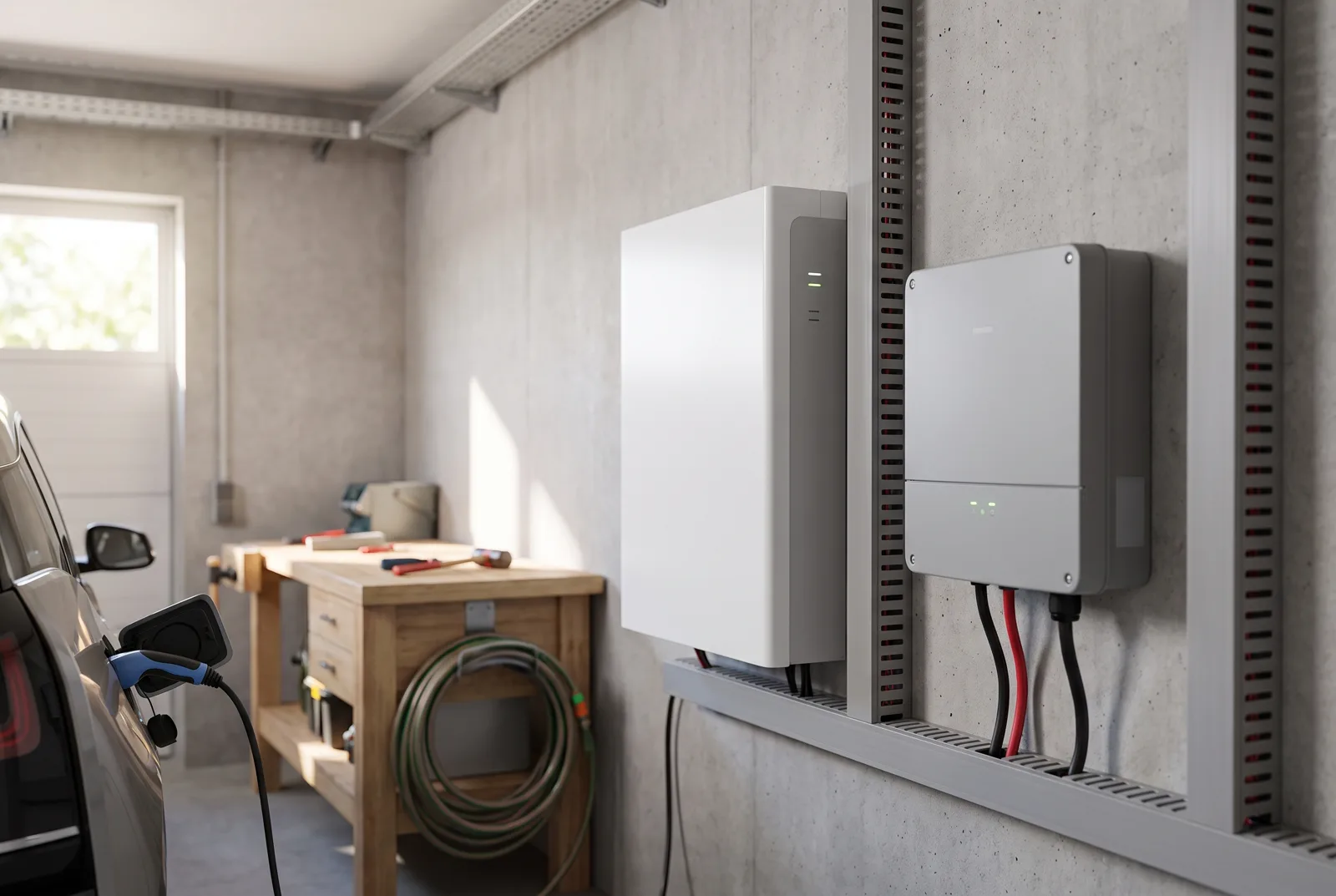
Every week someone walks into the showroom and asks for “the biggest one.” Most of them leave with something smaller and a lower bill, because a battery is sized for your evening, not your roof.
Start With Your Evening, Not Your Roof
The window that matters is roughly 16:00 to 23:00: the hours after the sun drops and before the cheap overnight rate begins. That is when the grid is most expensive and when your solar has gone quiet. We read twelve months of interval data to see how many kilowatt-hours your home really uses in that window.
Across the 2,600 homes we monitor, the median is 9.6 kWh. Winter evenings run higher, summer ones lower, and a single heat wave can move the number more than a new fridge ever will.
9.6 kWh
Median evening use, 16:00–23:00. One 13.5 kWh battery covers it with room left for an outage.
The Three Loads That Change It
Lights, a fridge and the Wi-Fi barely register. Three things move the answer by whole kilowatt-hours:
- Electric heating or cooling. A heat pump on a cold evening can use 4–6 kWh on its own.
- An EV that charges after work. We time it off-peak instead, so it rarely needs the battery.
- Induction cooking and an electric oven. Short, sharp draws that need power more than capacity.
Power and capacity are not the same thing
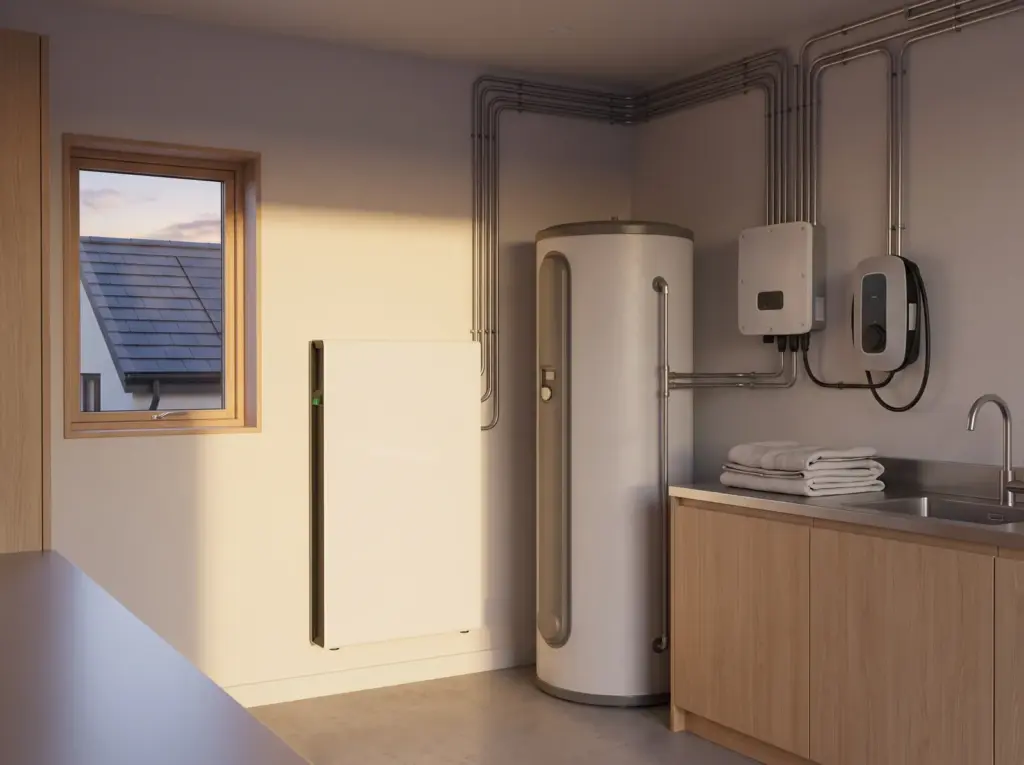
Capacity (kWh) is how long the battery lasts. Power (kW) is how much it can run at once. A Whole Evening cabinet delivers 5.8 kW continuous, enough for an oven, a kettle and the heat pump at the same time.
A Sizing Table We Actually Use
| Home | Evening use | What we’d fit |
|---|---|---|
| Flat or small home Lights, fridge, Wi-Fi, cooking | 6–8 kWh | 10 kWh |
| Family home, gas heat Plus laundry and an evening EV top-up | 8–11 kWh | 13.5 kWh |
| All-electric home Heat pump and induction on battery | 12–18 kWh | 13.5 kWh + 10 kWh |
| Home with two EVs Both cars off-peak, evenings on battery | 18–26 kWh | 27 kWh |
Typical Calder Bay figures from 2025–26 meter data. Your proposal uses your own twelve months.
If a smaller battery does the job, that is the one we quote. An empty kilowatt-hour you paid for is the most expensive one in the house.
Callum Reyes · Founder
What Backup Really Needs
Backup is a different question from savings. In an outage you choose what stays on, and most owners pick the same short list: lights, fridge and freezer, Wi-Fi, the boiler controls and one socket for phones. That list runs on about 0.6 kW. A full 13.5 kWh battery carries it for well over a day.
In the February storm, the 1,340 Vesper homes that stayed lit used an average of 41% of their charge overnight. Not one of them ran out.
When Bigger Is Worth It
Go bigger if you are all-electric, if you have two cars on the drive, or if your area loses power for days rather than hours. Otherwise start with one cabinet. The gateway is sized for three from day one, and a second unit fits beside the first in about three hours.
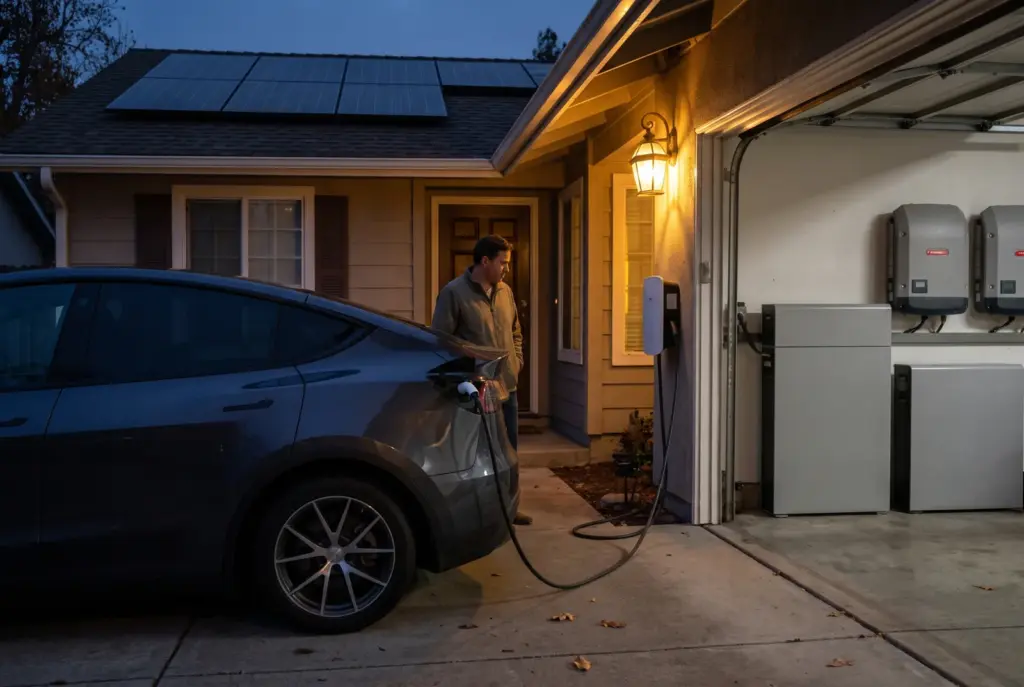
We have a heat pump and one EV. Would you still start with a single 13.5 kWh unit, or go straight to two?
Usually one, with the car timed off-peak. Send us twelve months of meter data and we will show you the winter evenings that decide it.
The point about power versus capacity finally made our oven-tripping problem make sense. Thank you.