

Sector | Housing association, name withheld |
Scope | 9 executives |
Programme | WL-120 Leading through an incident |
Duration | Half day |
Result | Spokesperson and decision log agreed |
Written for the client's leadership. The client's name and staff names are removed from this copy.
A housing association's executive team knew their IT team had a plan. They did not know who among them would decide, or who would speak to tenants.
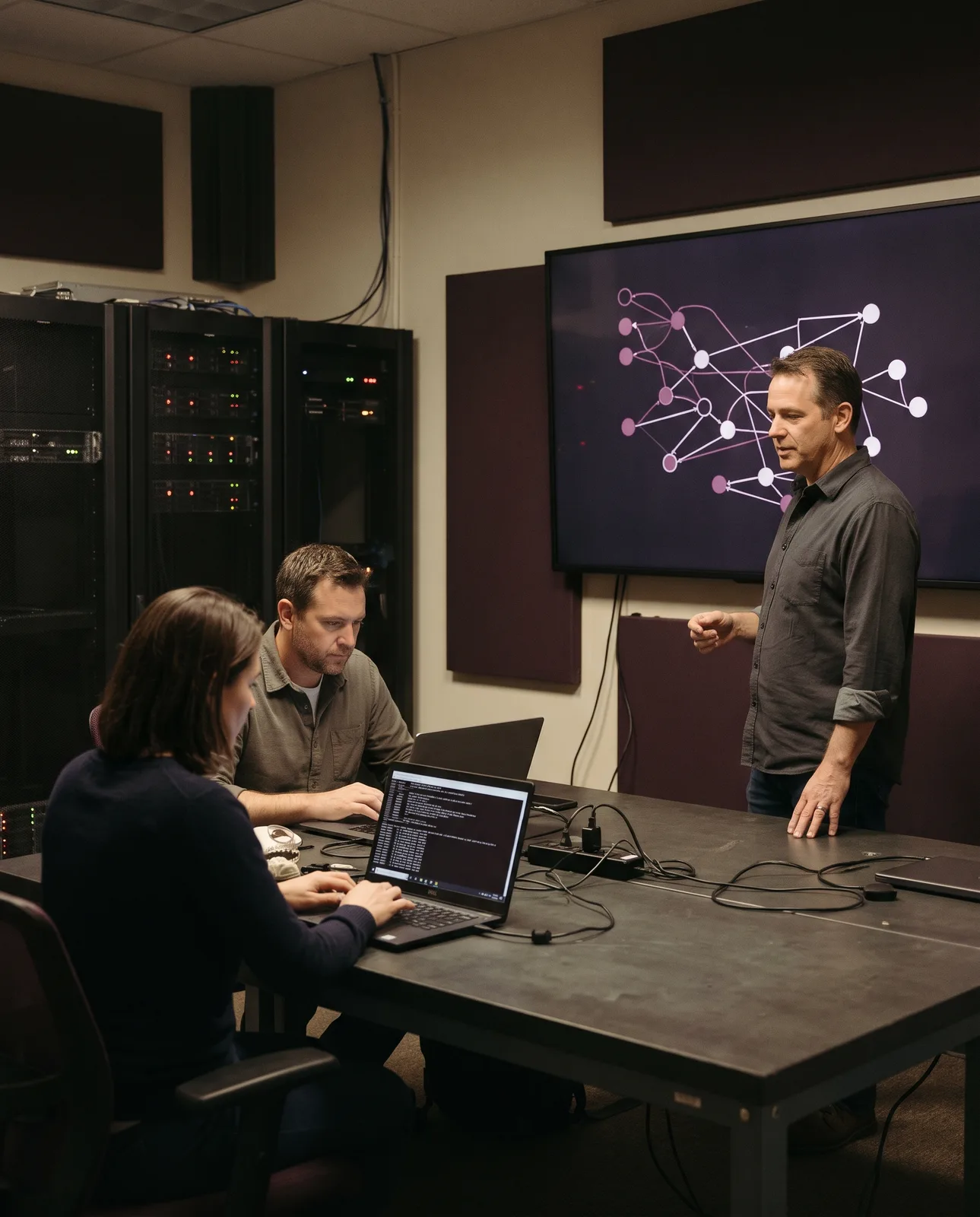
Owen Hartley taught WL-120 Leading through an incident for a half day. Clara Voss read the injects, and the team practised the first hour out loud.
They left with one named spokesperson, a decision log, and a short list of who decides what. The list now sits at the front of the incident plan.
From the programme record. One half day, nine executives.
When | Step | By | Outcome |
Week 1 | Incident plan read, one call with the chief executive | Owen Hartley | Done |
09:00 | Who decides, who speaks, what do we know | Owen Hartley | Taught |
10:15 | Injects 1 to 3: tenants call, a reporter emails | Clara Voss | Practised |
11:30 | Injects 4 and 5: the insurer wants a timeline | Clara Voss | Practised |
12:30 | Spokesperson and decision owners agreed | Owen Hartley | Agreed |
After the programme | |||
Week 2 | Decision log template sent | Owen Hartley | Delivered |
Month 6 | Open tabletop seat for the new finance lead | Client | Booked |
Question | Status | When |
Who owns the decision to cut a system off? | Agreed | Day 1 |
Who answers the press and tenants? | Named | Day 1 |
What are we sure of, and what is a guess? | Logged | Day 1 |
Executives | 9 |
Injects | 5 |
Spokesperson | 1 |
We practised saying “we do not know yet” out loud. It was harder than any of us expected.
One named spokesperson, and a deputy
A decision log opened in the first hour
Leaders practise once a year