
Home charging on the overnight rate costs about a quarter of petrol. Here is what 1,000 miles really costs each way you can fuel — and how the tariff windows decide it.
Versus $140 on petrol at 30 mpg and $4.20 a gallon — about four times cheaper.
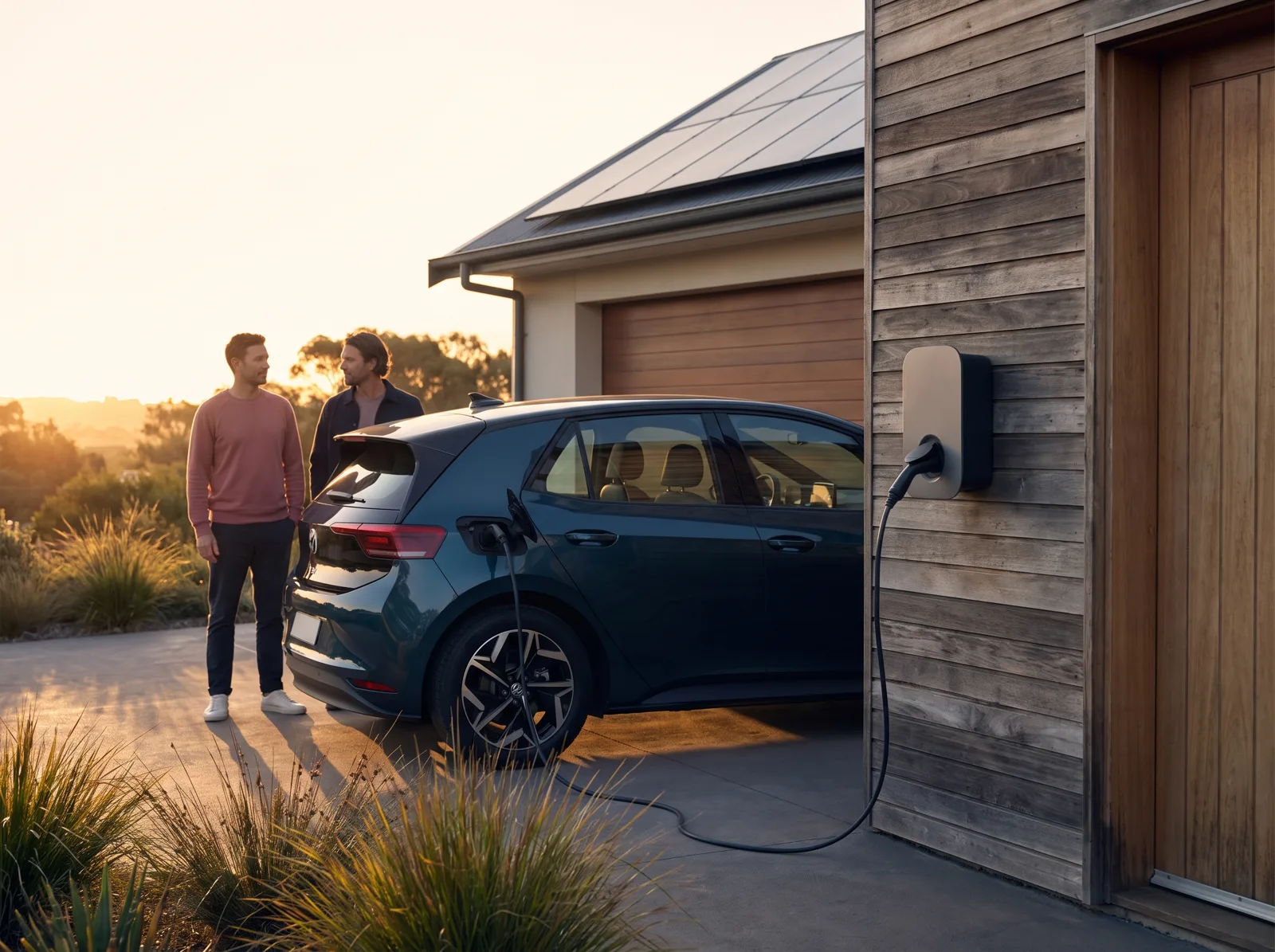
The cost table pays for the charger. What drivers mention first is simpler: leaving every morning with a full battery, without ever thinking about it.
Public rapid chargers barely beat the pump. The saving comes from charging at home on the overnight rate — which is exactly what the app's schedule does for you.
Your utility charges by the clock. Charge the moment you plug in at six and you pay the evening rate; let the app wait until midnight and the same miles cost less than half.
Same charger, same crew, same warranty. The only difference is when the money moves — and, for workplaces, who pays per kWh.
The simplest route: one fixed price for the 7 kW charger, install, permit and inspection.
24 months at 0% APR with nothing down — less than most drivers' monthly fuel saving.
For car parks: drivers pay per kWh in the app at the price you set, and the site is paid out monthly.
Home, workplace or depot — four photos from your phone and an electrician sends one fixed price the next working day. Permit included, holds for 60 days.