
On survey day the first question is never “which battery”. It is “where will it live?” The answer decides how long the install takes, how quiet the cabinet stays and how many years it keeps its capacity.
Heat is the enemy of capacity
Lithium batteries age fastest when they sit hot. Our cabinets are rated from −20 °C to 50 °C, but a wall that bakes in the afternoon sun is a poor home. We look for shade first: a north-facing wall, the back of a carport or the inside of a garage.
The three places we fit most
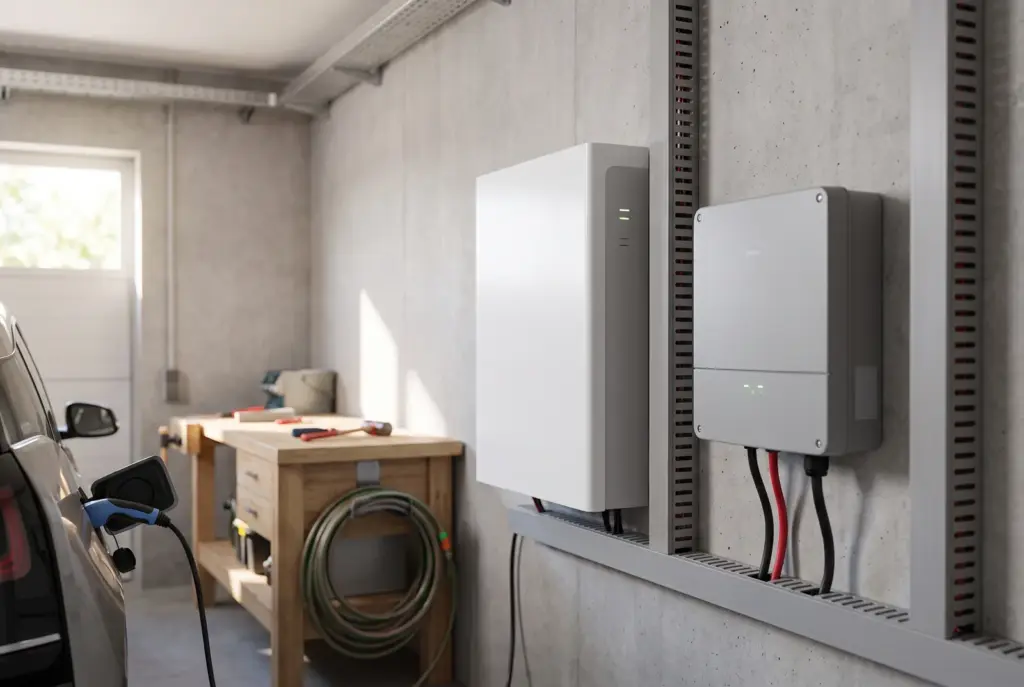
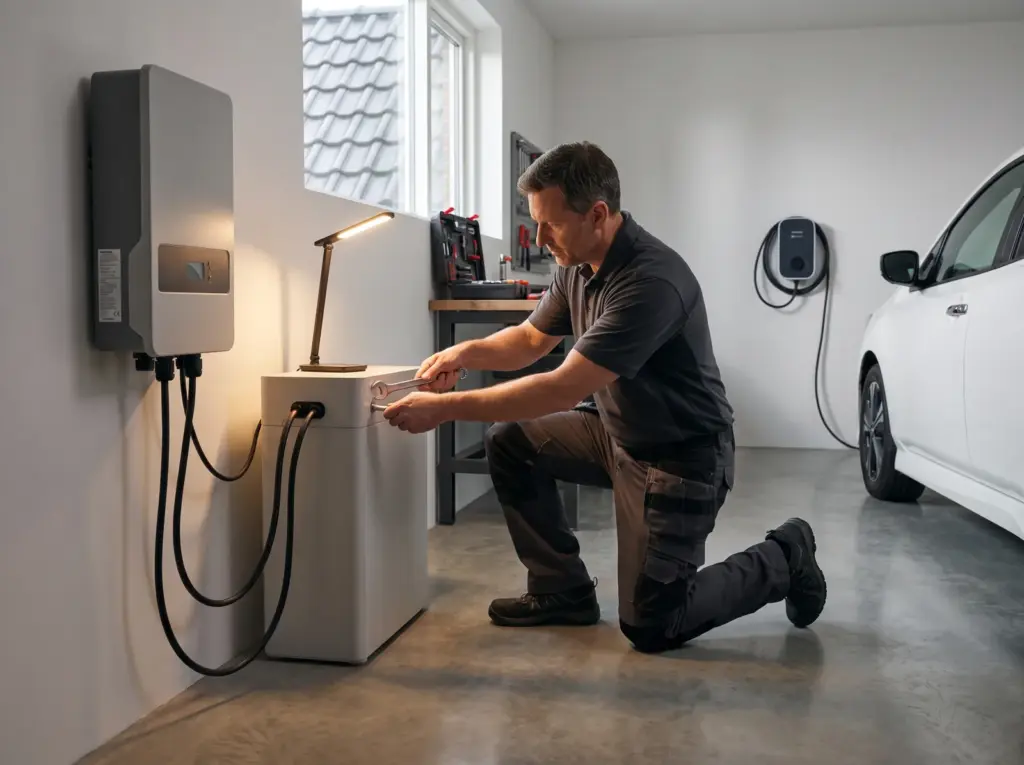
- Garage wall (about half of our installs). Dry, shaded and usually close to the meter. We keep 90 cm clear in front for service and fit a bollard if a car parks nose-in.
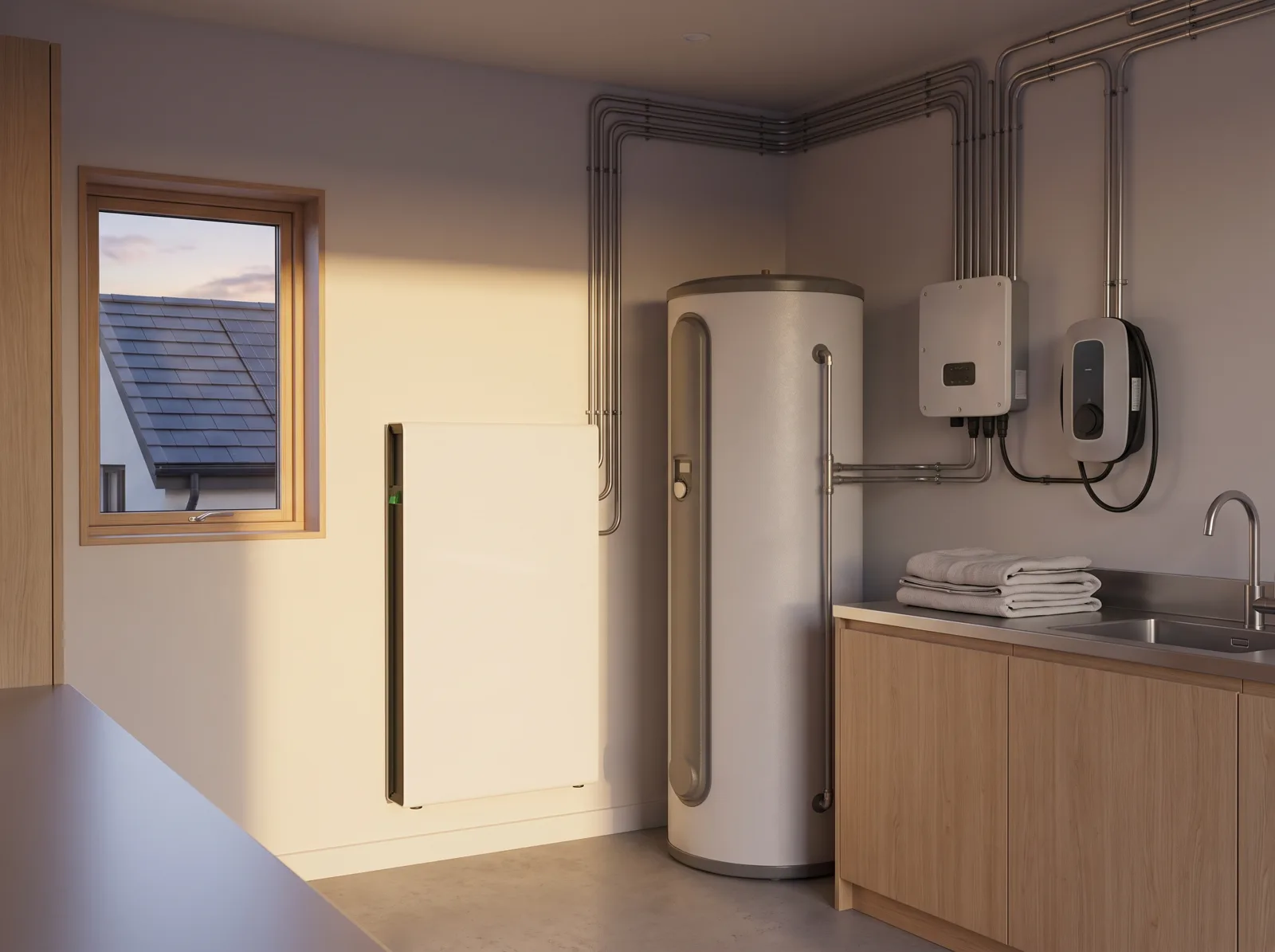
- Utility room. Quiet and protected, but we check ventilation and keep the cabinet away from bedrooms — the cooling fan is soft, not silent.
- Outside wall. The IP55 casing is made for it. We choose the shadiest side and stay clear of windows, vents and gas meters.
Cable runs and the gateway
The gateway sits beside your main electrical panel and is what switches the house over in an outage. Every metre between the cabinet and that panel adds cable, conduit and time, so the shortest sensible run usually wins. A typical run in Calder Bay is under six metres.
Clearances the inspector checks
Local code sets clearances from doors, windows and escape routes. Our designers mark the spot on the survey photos so you see exactly where the cabinet will hang before anyone drills a hole.
What it looks like afterwards
One cabinet about the size of a slim fridge door, one gateway the size of a shoebox, and a single tidy conduit between them. Most owners stop noticing it within a week — which is exactly the point.