Eight years for Hartfell Edge, most of them spent listening. Five phases, four signed gates on site and a bulletin every Friday, so nobody has to guess what the trucks are for.
Fifteen things you can read, check or question — each one published, each one with a date. If a date slips, the Friday bulletin says so the week it slips.
A wind mast logs speed and direction for at least two years while we hold drop-in days and map every home within two miles.
Come to a drop-in and tell us what worries you — every written question gets a written answer.
Birds, bats, noise, flicker, landscape and water are studied in the field; the layout moves to meet what the studies find.
Pick the viewpoints for the photomontages and comment on the draft layout.
We apply to the county, answer the hearing and agree the conditions: sound limits, flicker sensors, bat slow-downs, the fund and the discount.
Speak at the hearing, for or against, and register interest in shares if you want them.
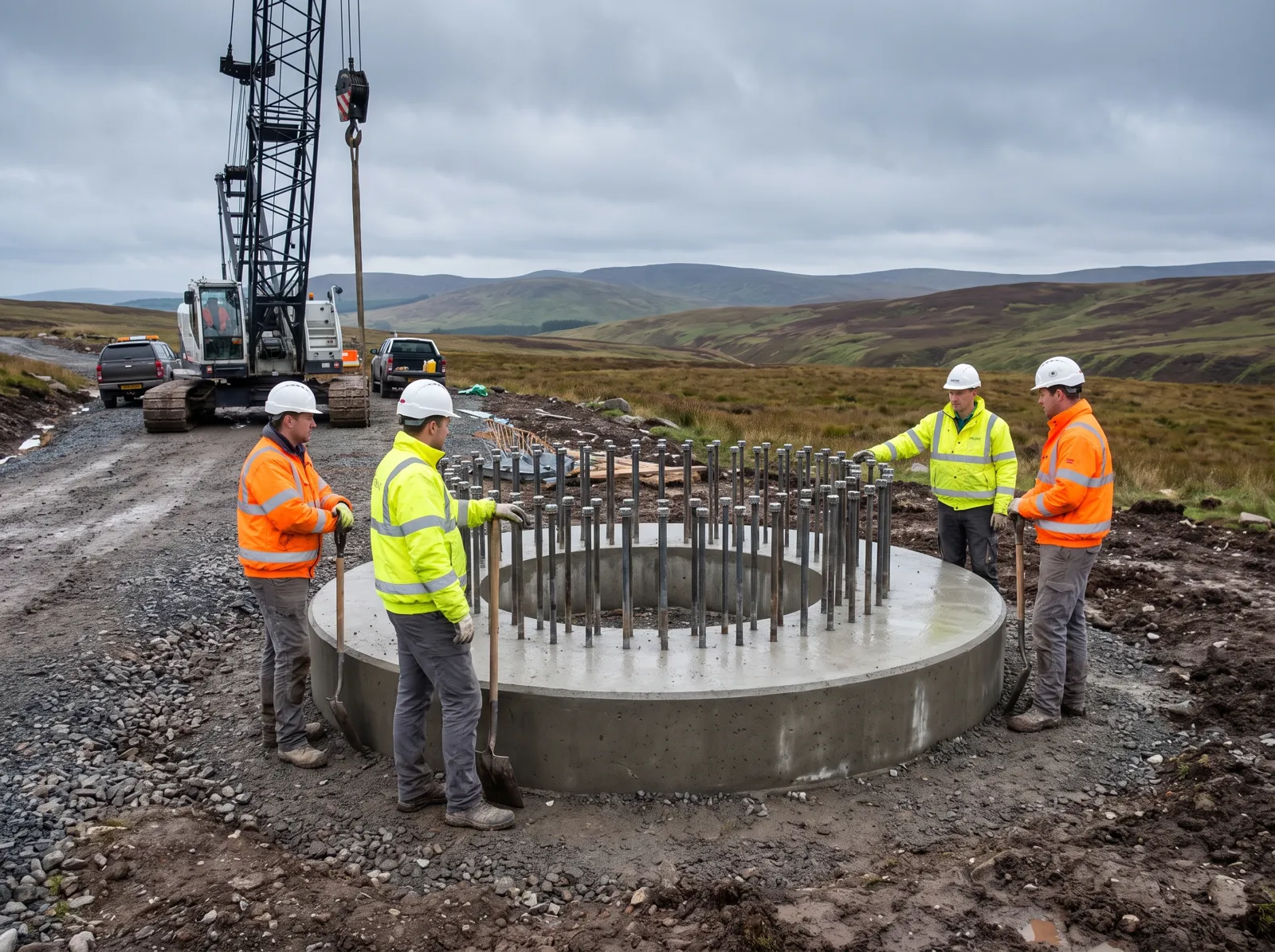
Roads, foundations, cable and substation, then the turbine lifts. Blades travel by night convoy; local people are hired first.
Sign up for the bulletin, and call the 24/7 site line if anything on the road goes wrong.
Our control room runs the farm round the clock. Fund payments, bill credits and member interest start from first power.
Vote at the co-op AGM, sit on the fund panel — or just enjoy the lower bill.
Four gates during the build, each with a short checklist and a named signatory — and the county inspector signs the first one with us.
The grid connection is the one part we don’t control — so the utility’s substation work starts in month six, while the foundations are still curing. Updated in every Friday bulletin.
Twenty identical turbines, chosen for slow-turning blades in low wind. The site bulletin on the right goes out every Friday to anyone who signs up.