
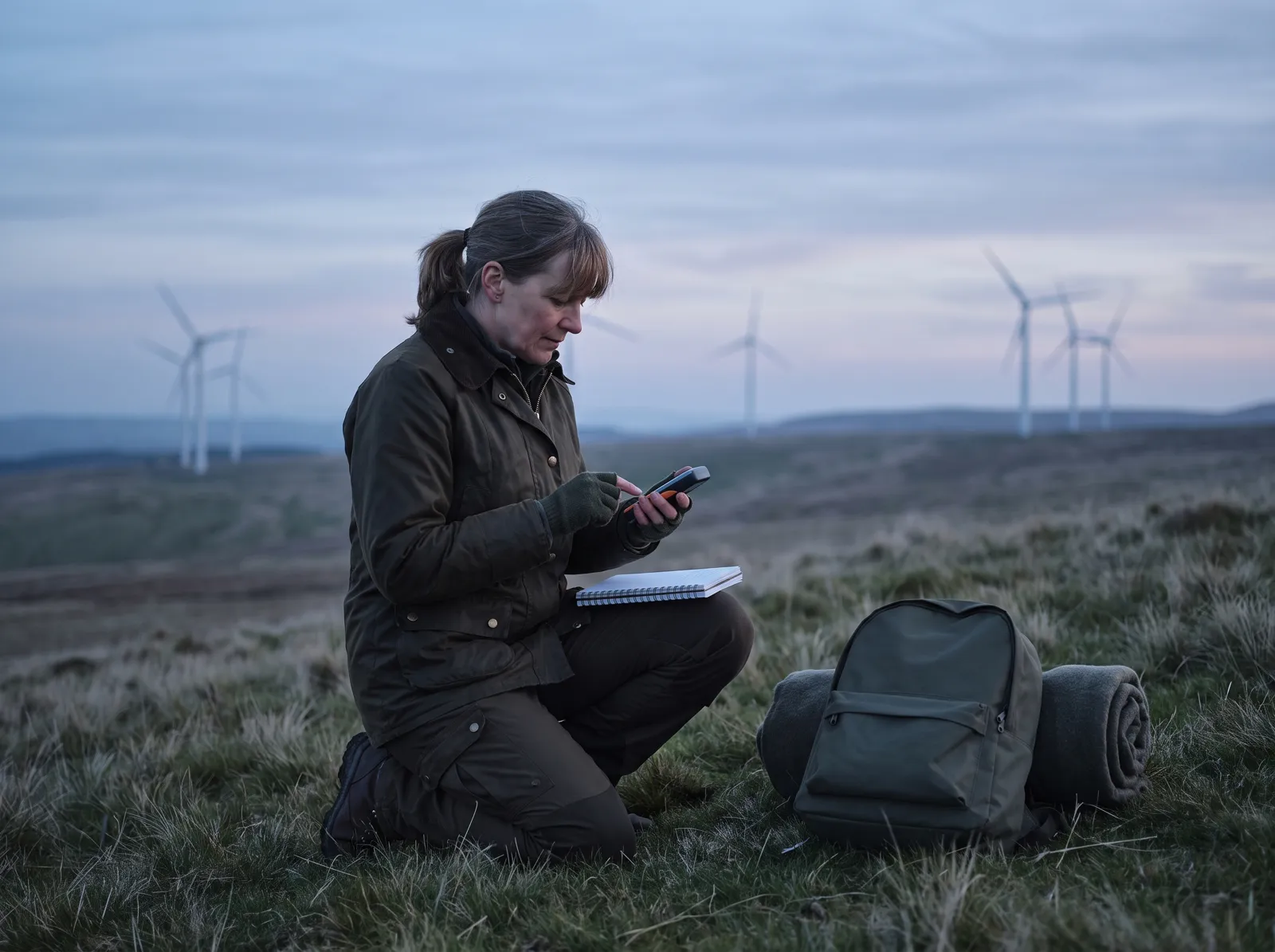
Before a single turbine position on Hartfell Edge was fixed, our ecologists spent 24 months counting. Vantage-point surveys for birds, static bat detectors at 31 locations and a radar unit on the old wind mast logged every flight line across the ridge from April 2021 to March 2023.
The pattern
Bat activity was anything but random. Over 80% of passes happened in the first 90 minutes after sunset, on nights above 10 °C with wind below 5 metres per second — exactly the low-wind hours when a turbine produces the least power anyway.
What we changed
Two turbine positions were moved 140 metres off a dusk flight line along the Hartfell beck. Every turbine on the farm will run a curtailment programme from April to October: when the temperature, wind speed and time of evening match the high-risk window, the blades are feathered and slowed. We estimate the lost output at well under 1% of the year.
“The radar told us where to look. The curtailment rule is the part that keeps working for thirty years.” — Fiona Marsh, Lead Ecologist
Read the full study
The full 212-page bird and bat report, including raw counts, is in the study library. Questions go to the ecology team at the drop-in days or through the contact page.