Healthcare security and compliance

§1Industries
The rule is the same in a teaching hospital and a two-room clinic. The floor is not. Find your setting, see where the risk usually sits and where we start.
Each tile carries the number of its sample case. A starting point, not legal advice.
§2Hospitals
Setting | Where the risk sits | Where we start |
Hospital groups | Failover between sites that nobody has tested with the units | A downtime drill, one side of the pair at a time |
Teaching hospitals | Thousands of devices, many on vendor hold, on one flat network | A device count with clinical engineering |
Community hospitals | Shared logins at busy workstations | Hardware keys, night shift first |
Sample cases 01 to 03 show each one. Every change runs in a window the unit agreed.
§3Clinics
SettingsClinic networks, specialty clinics, outpatient sites
Usually missingA current risk analysis, and owners for the gaps it finds
WindowAfter hours, 20:00 to 06:00, sample
First stepOne risk analysis across every site
Open gaps across eight clinics, a year after the analysis. Sample case.

§4Labs and imaging
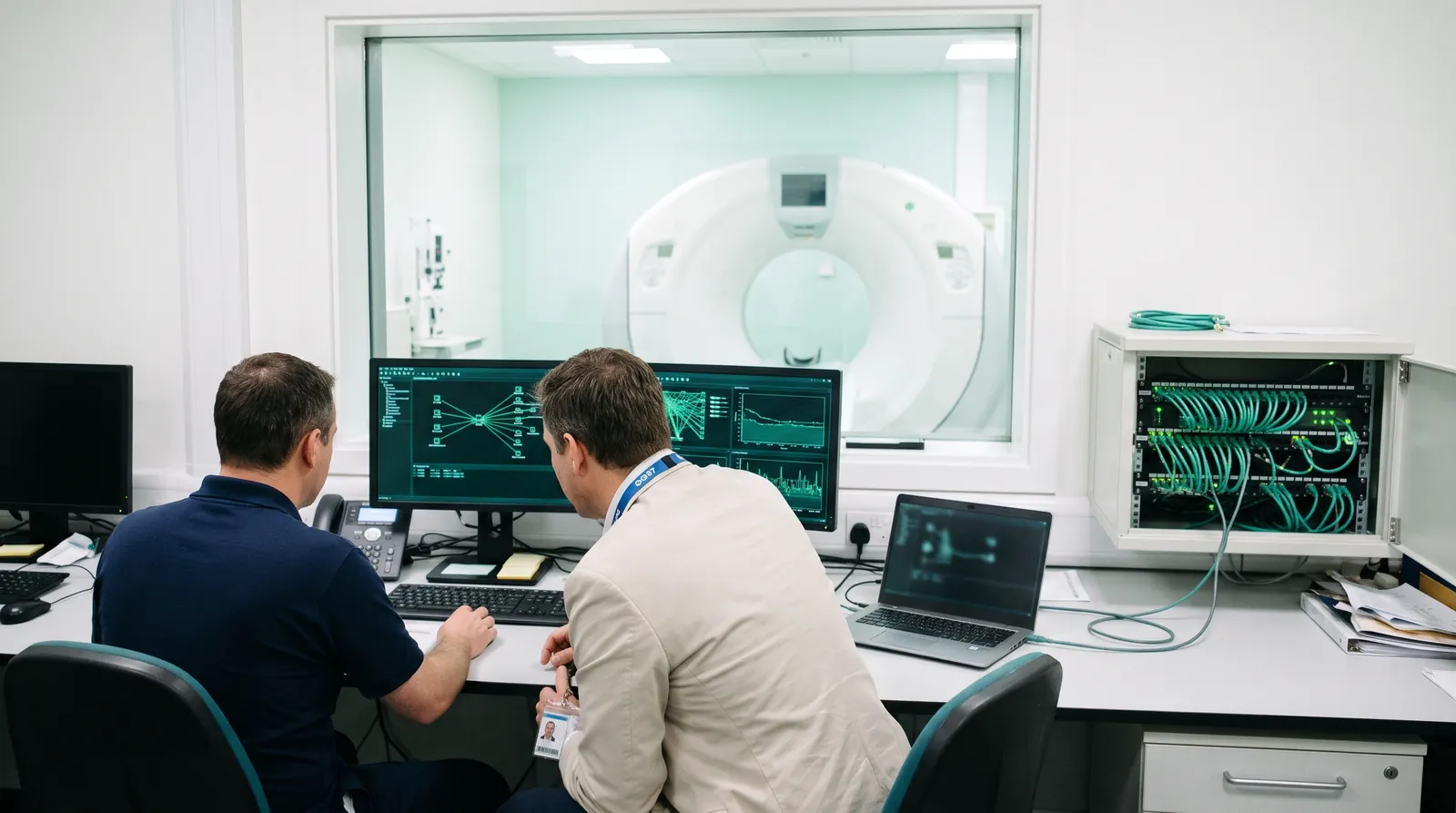
Scanners and analyzers run software only the vendor can change. We put each one on its own segment and open vendor access by request, inside the night window.
night windows, 00:00 to 06:00, to move 180 imaging and lab devices. Sample case.
§5The rules
Regulation names only. A starting point, not legal advice: your counsel confirms what applies.
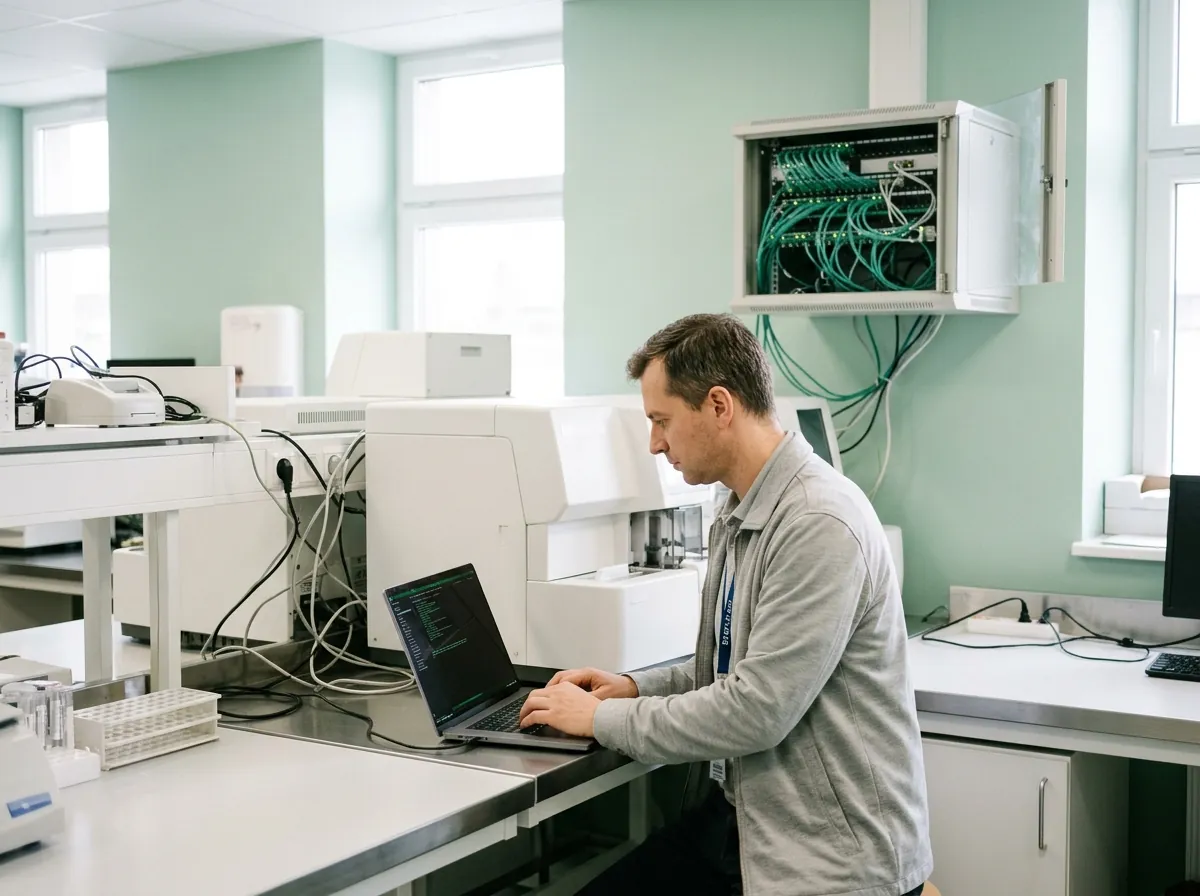
Administrative, physical and technical safeguards for electronic patient data, with an accurate and thorough risk analysis behind them.
Notice without unreasonable delay and no later than 60 calendar days after discovery. Our plan finishes at day 30.
Extends the rules to business associates, so every firm that touches patient data signs an agreement first.
Some states ask for more, or sooner. Your counsel confirms which apply to your sites.
§6On the floor
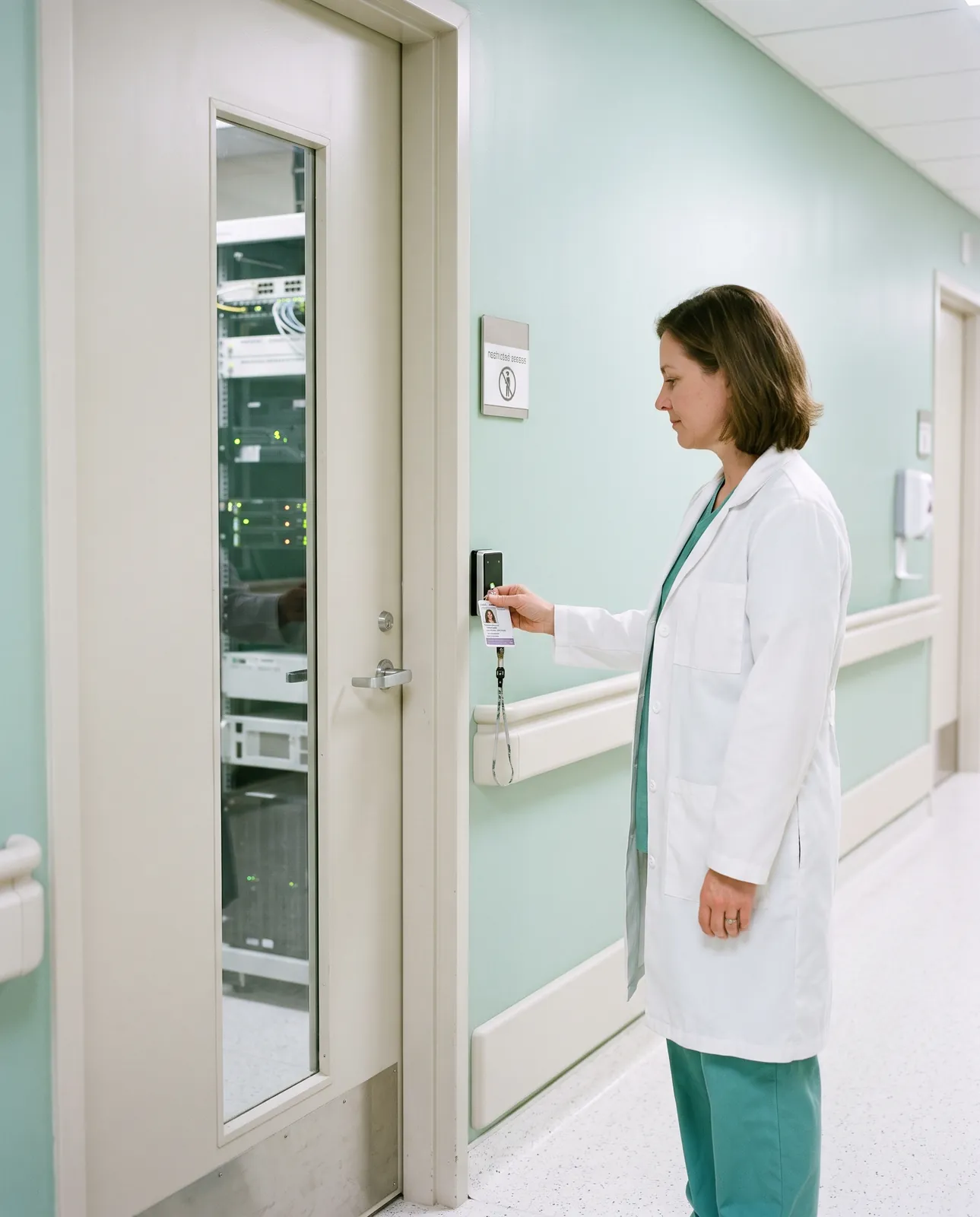
Privacy officer | Owns | We bring |
Clinical engineering | Owns | We bring |
Nurse managers | Own | We bring |
Hospital IT | Owns | We bring |
Counsel | Owns | We bring |
§7Not on the list