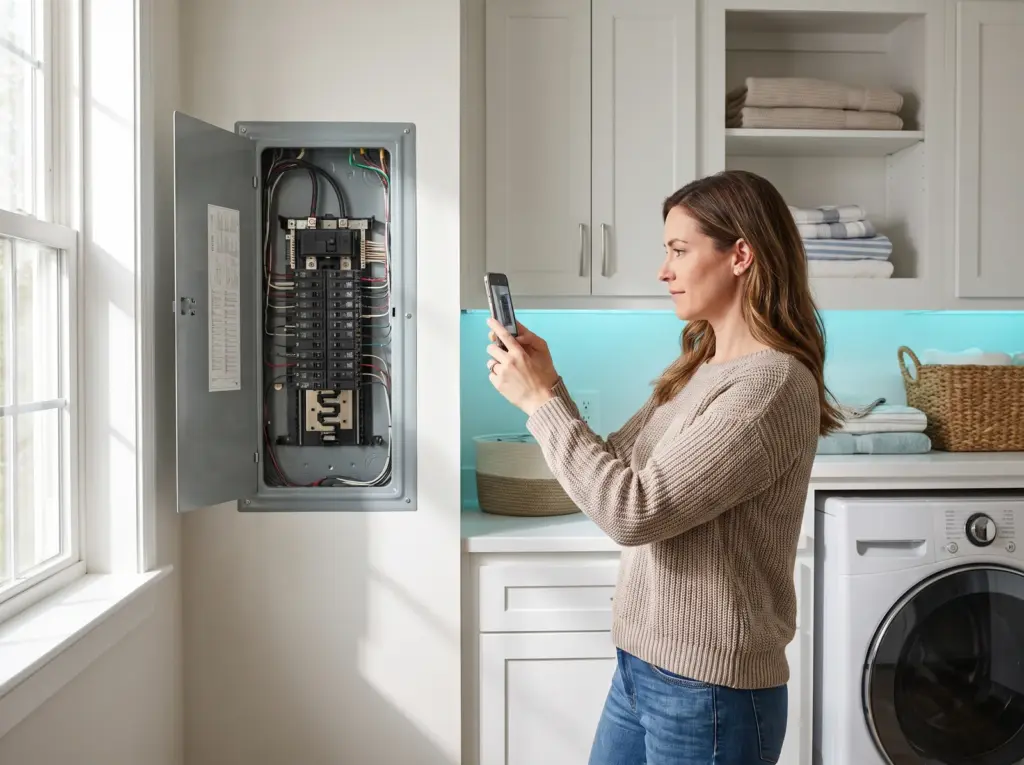

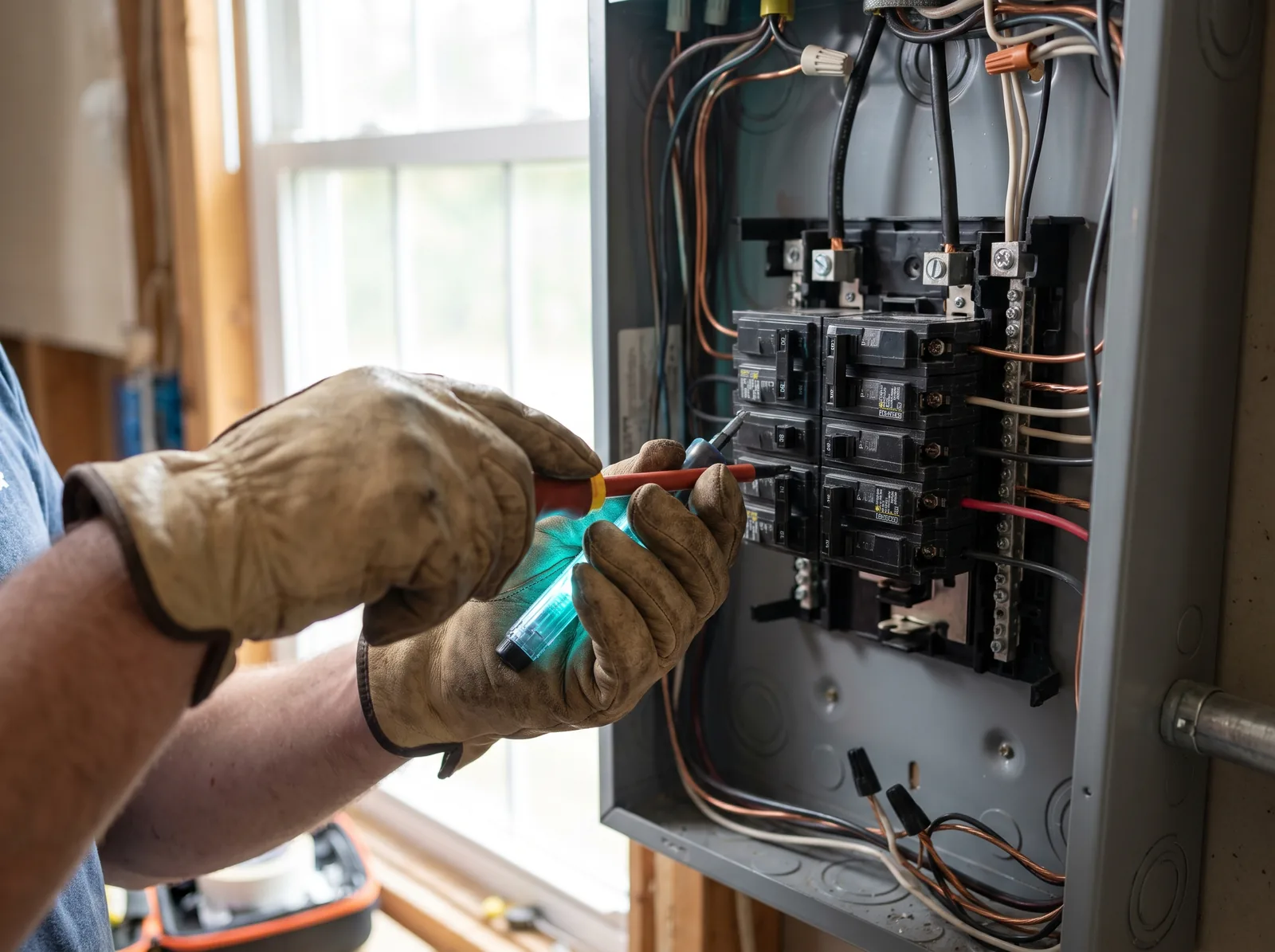
A panel upgrade can add $2,000–4,000 and a month of waiting to a charger install. In nine homes out of ten we avoid it altogether, because the charger can watch the house and slow down when the oven and the dryer are on.
How load management works
A small clamp on the main supply cable tells the charger how much the house is drawing. If the total gets close to your main breaker, the charger turns itself down for a few minutes, then back up. You never notice, and nothing trips.
When a 100 A panel is fine
Most 100 A homes with gas heating and cooking can run a 7 kW charger with load management. Overnight, when the car charges, the house is barely drawing anything.
When it is not
- A full panel with no spare slot — sometimes a tandem breaker solves it, sometimes not.
- Old fuse boards that a city inspector will not pass.
- All-electric homes with a heat pump, electric water heater and a second EV on 100 A.
How we decide
Your panel photo from the remote survey, a load calculation by a licensed electrician, and twelve months of usage if your utility provides it. If an upgrade is needed, the fixed quote says so on day two — never on install day.