Solar farms, grid batteries and the hybrids that join them. We design, finance and build every one — and run it from the same Sandoval control room for as long as it makes power.
610 MW of solar plus 200 MW / 0.8 GWh of storage, commercial operation due Q2 2027.
Each plant is designed around one interconnection point and one buyer. Most new sites pair solar with storage; some only need one of the two.
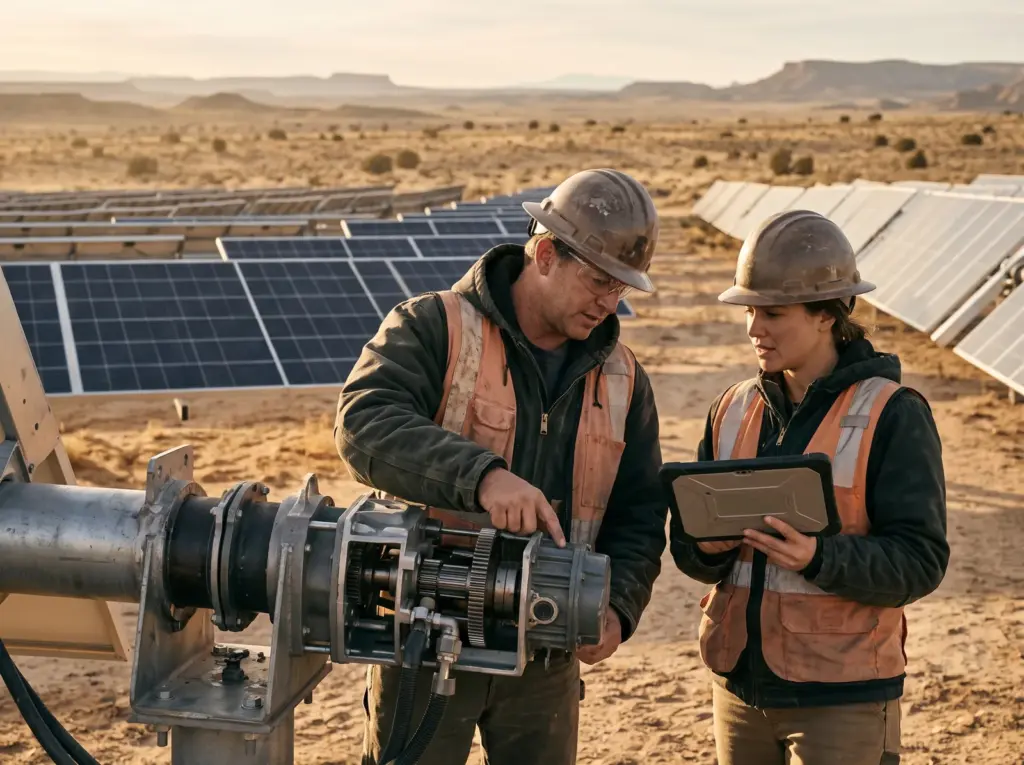
Bifacial panels on single-axis trackers that follow the sun from east to west, with sheep and native seed between the rows.
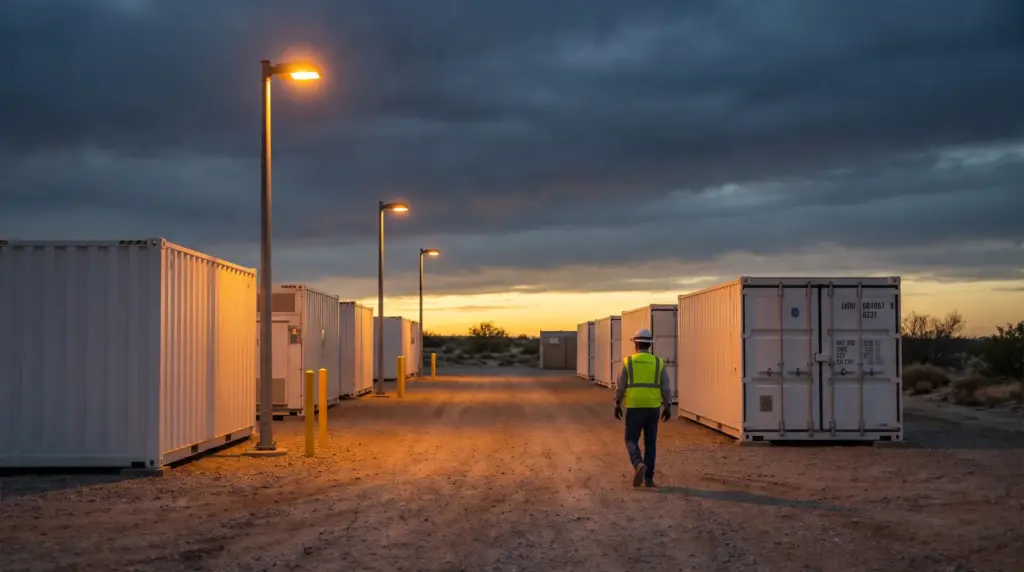
Four-hour lithium iron phosphate blocks that charge on cheap midday sun and carry the grid through the evening peak.
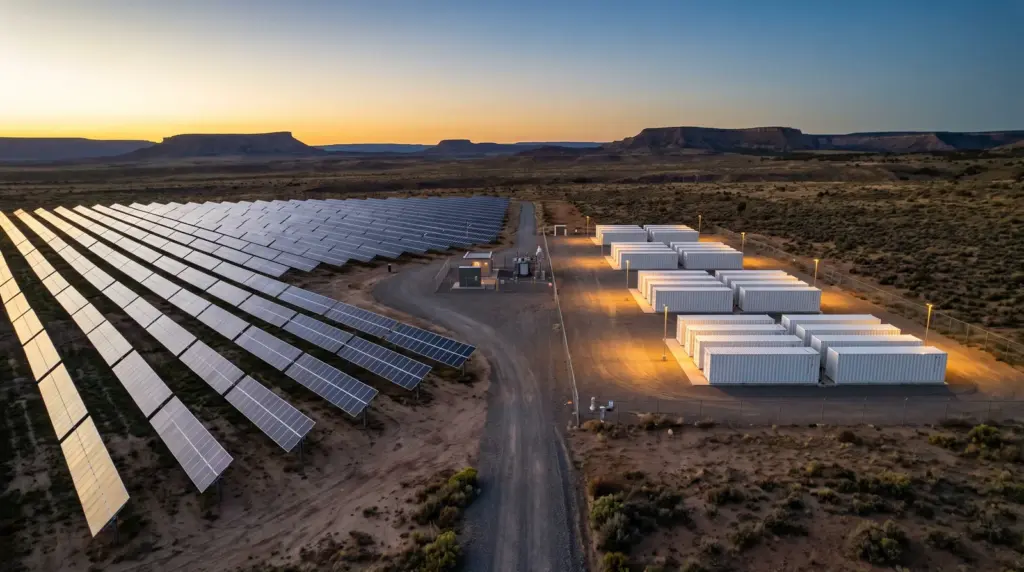
Of Saltbush Ridge's battery charge comes from its own panels — solar and storage behind one connection, delivering into the evening.
Most of our sites begin with a buyer's problem, not a technology. These three shapes cover almost every contract we sign.
Twenty years of predictable midday megawatt-hours, priced once and delivered from a site we keep.
The same land team, the same crews and the same control room — the differences are what each plant delivers and when.
At a glance | Solar Farm bifacial · tracking | Fastest Growing Battery Storage 4-hour LFP | Hybrid Plant solar + storage |
Typical size | 150–510 MW | 150–400 MW | 300–610 MW |
Energy stored | — | 0.6–1.6 GWh | 0.8–1.2 GWh |
Delivers | Daylight hours | Evening peak, 4 h | Day + evening |
Round-trip efficiency | — | 87–88% | 87% |
Build time | 12–18 months | ≈ 12 months | 18–24 months |
Grazing & native seed | |||
Grid services | |||
Run from the Sandoval control room | |||
Long-term fixed-price contract | |||
Design life | 35 years | 20 yrs, then re-powered | 35 years |
Largest site we run | 420 MW | 1.6 GWh | 1.2 GWh |
None of these show up in a megawatt figure. All of them decide whether a county wants us back for the next site.
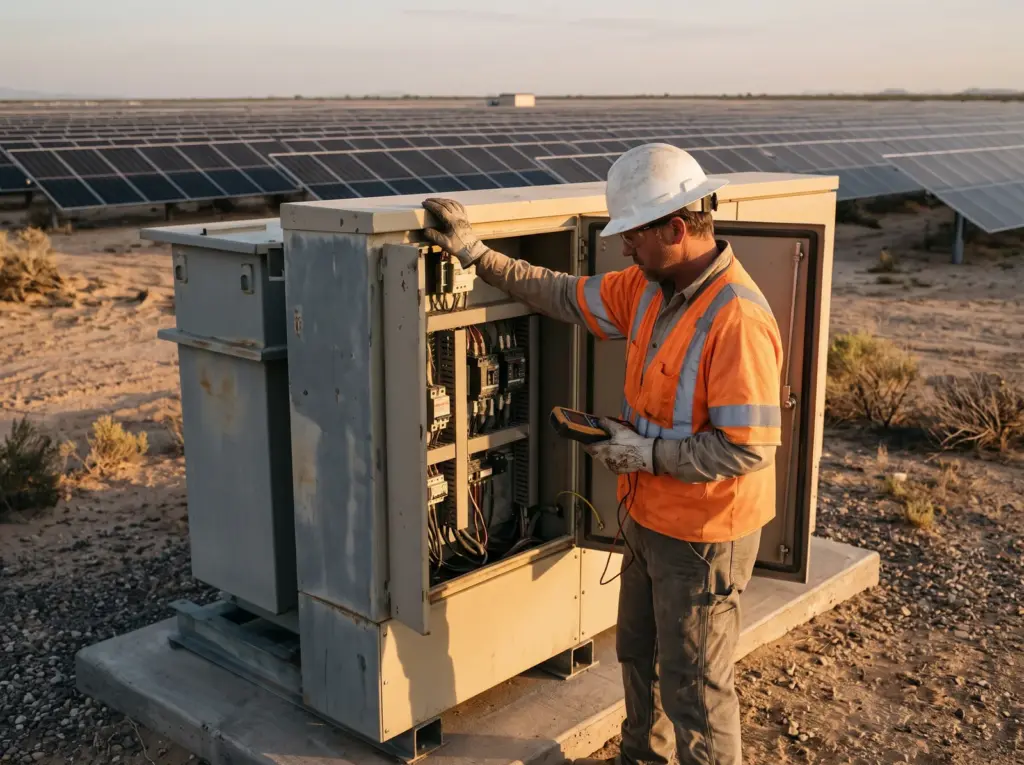
Inverters that help hold voltage and frequency steady when a line trips, instead of simply following the grid.