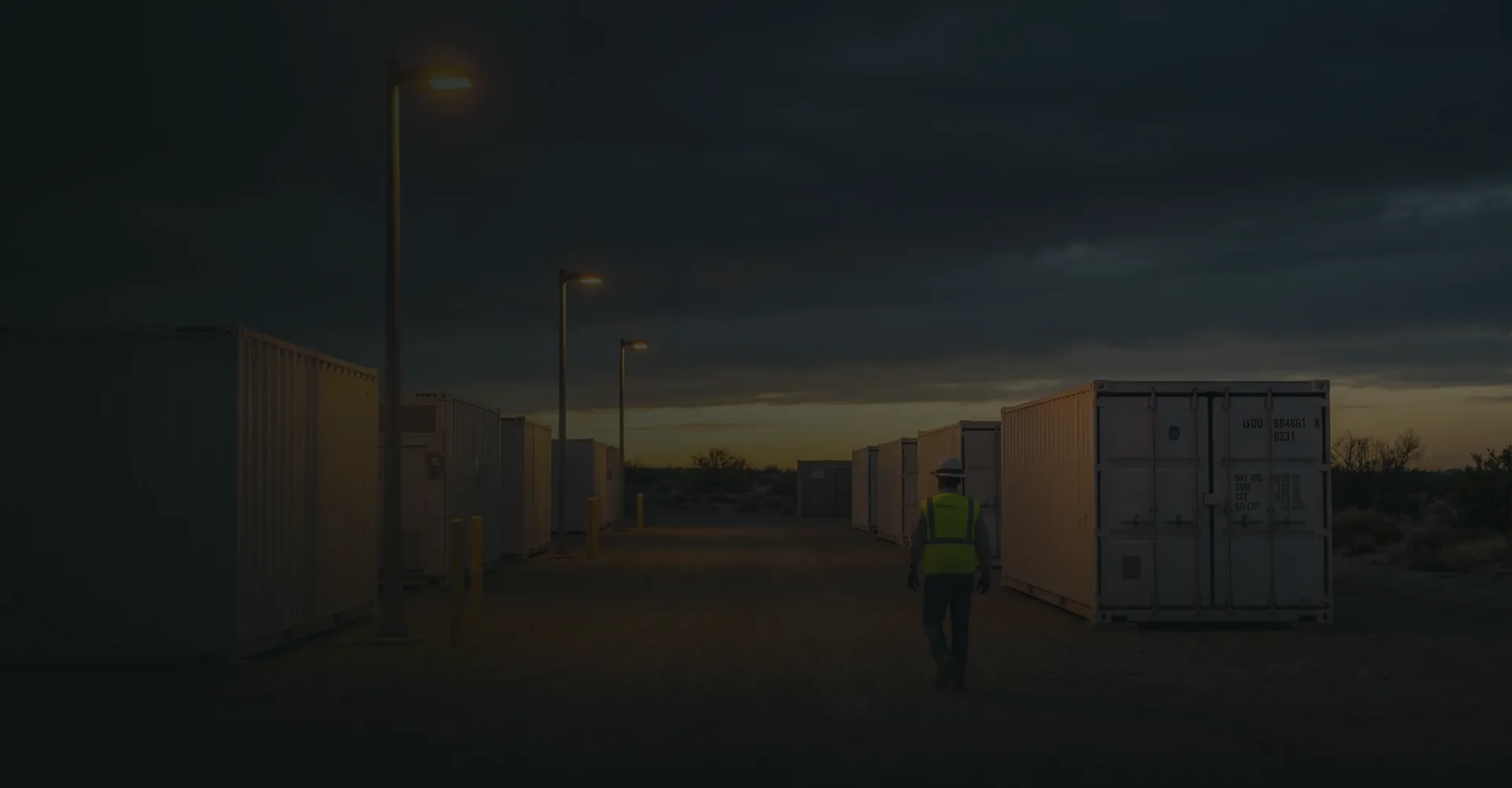
Aisle between battery storage containers at dusk with a technician walking away


Storage

Midday Sun, Delivered After Dark.

Four-hour lithium iron phosphate batteries that charge while solar is plentiful and carry the grid through the evening ramp. Red Hollow in Texas is the model: 400 MW / 1.6 GWh since March 2025.

3.6 GWh running
2.4 GWh building
 
Red Hollow
TX · 2025
98.4%

Availability in its first year, at 88% round trip — enough at the evening peak for about 80,000 homes.


Red Hollow, TX
 
400 MW / 1.6 GWh · 4-hour LFP · 88% round trip
01Where the Output Goes

One Charge, Spent on the Evening

Here is how Red Hollow's 1.6 GWh was used on a hot August weekday in 2026. It filled on midday solar, answered frequency calls through the afternoon and covered the evening ramp until ten.

A Summer Day
A Winter Day
1.6GWh
Charged 10:00–⁠15:00
1.41GWh
Delivered 17:00–⁠22:00
88%
Round-trip efficiency
Red Hollow · August weekday
Energy delivered
Frequency response
Calls through the afternoon
 
 
40 MWh
17:00–⁠18:00
The ramp begins
 
 
170 MWh
18:00–⁠19:00
Full output
 
 
400 MWh
19:00–⁠20:00
Evening peak
 
 
400 MWh
20:00–⁠21:00
Holding on
 
 
280 MWh
21:00–⁠22:00
Tapering off
 
 
120 MWh
Held for grid contingency
The last tenth waits for the grid operator's call
 
160 MWh
02Performance
 
Contracted energy held for 20 years

Full Capacity, Every Year

Batteries fade slowly. We add modules on a schedule, so the energy promised to the buyer is still there in year ten — and in year twenty.

Usable energy vs contract · years 0–10
Contract 1.6 GWh, held every year


Contracted · 100%
0
1
2
3
4
5
6
7
8
9
10
Year 0–10 · scale from 80% · modules added in years 4 and 8 keep usable energy above the contracted 1.6 GWh.
98.4%

Available When Called

Red Hollow's first-year availability, measured by the grid operator rather than by us.

1s

Full Power Inside a Second

From standby to full output in under a second when the grid frequency drops.

03The Build

Twelve Months From Pad to Power

Battery sites go up faster than solar: concrete pads, containers delivered ready to wire, and a long commissioning phase in which every block is tested with the grid operator.

Mo 1
Pads & Cabling

Foundations poured, cable trenches dug and the substation tie-in prepared.

Mo 4
Containers Land

Pre-built LFP containers set by crane, about forty a week.

Mo 8
Wire & Protect

Inverters, transformers and fire detection connected and tested container by container.

Mo 12
Grid Tests

Charge, discharge and frequency tests witnessed by the grid operator, then commercial operation.
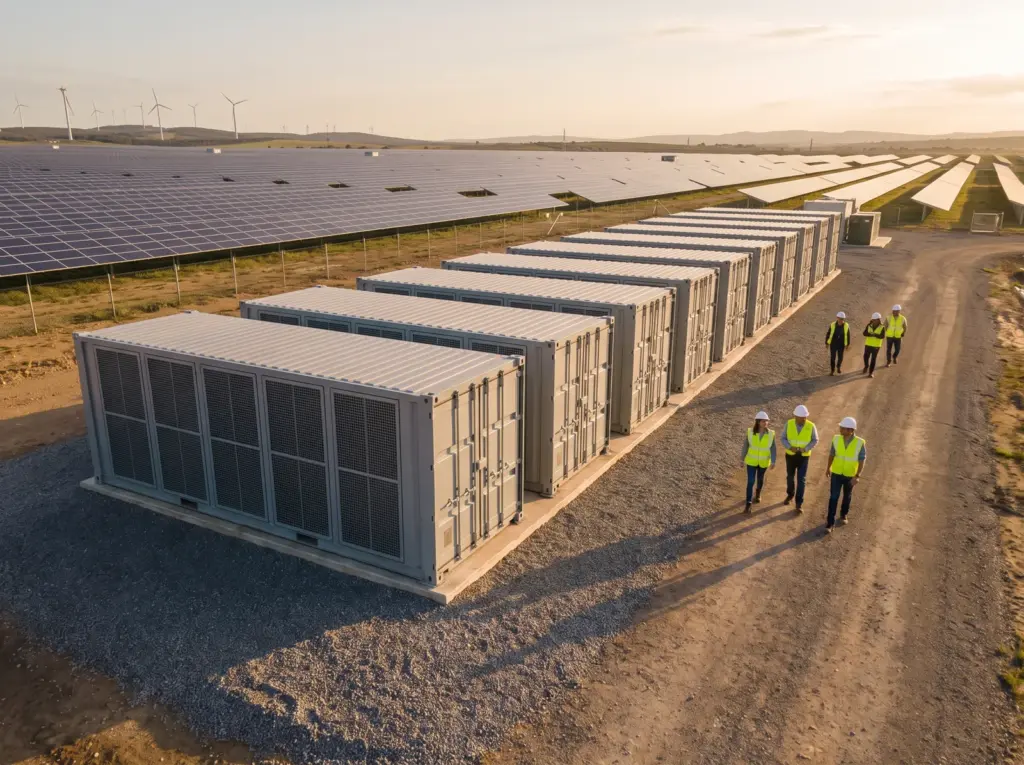
Rows of white battery containers beside a solar farm with technicians on the access road
Fire-code spacing
Container detection
No water used
≈ 12 months · Emergency plan agreed with the county fire marshal · Open day before switch-on
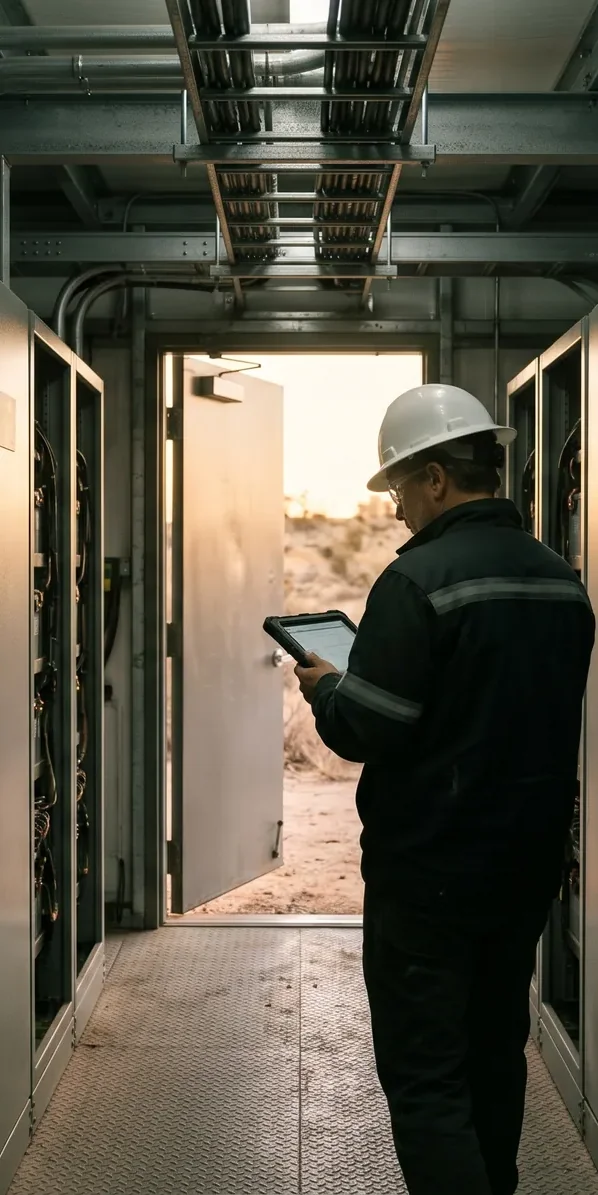
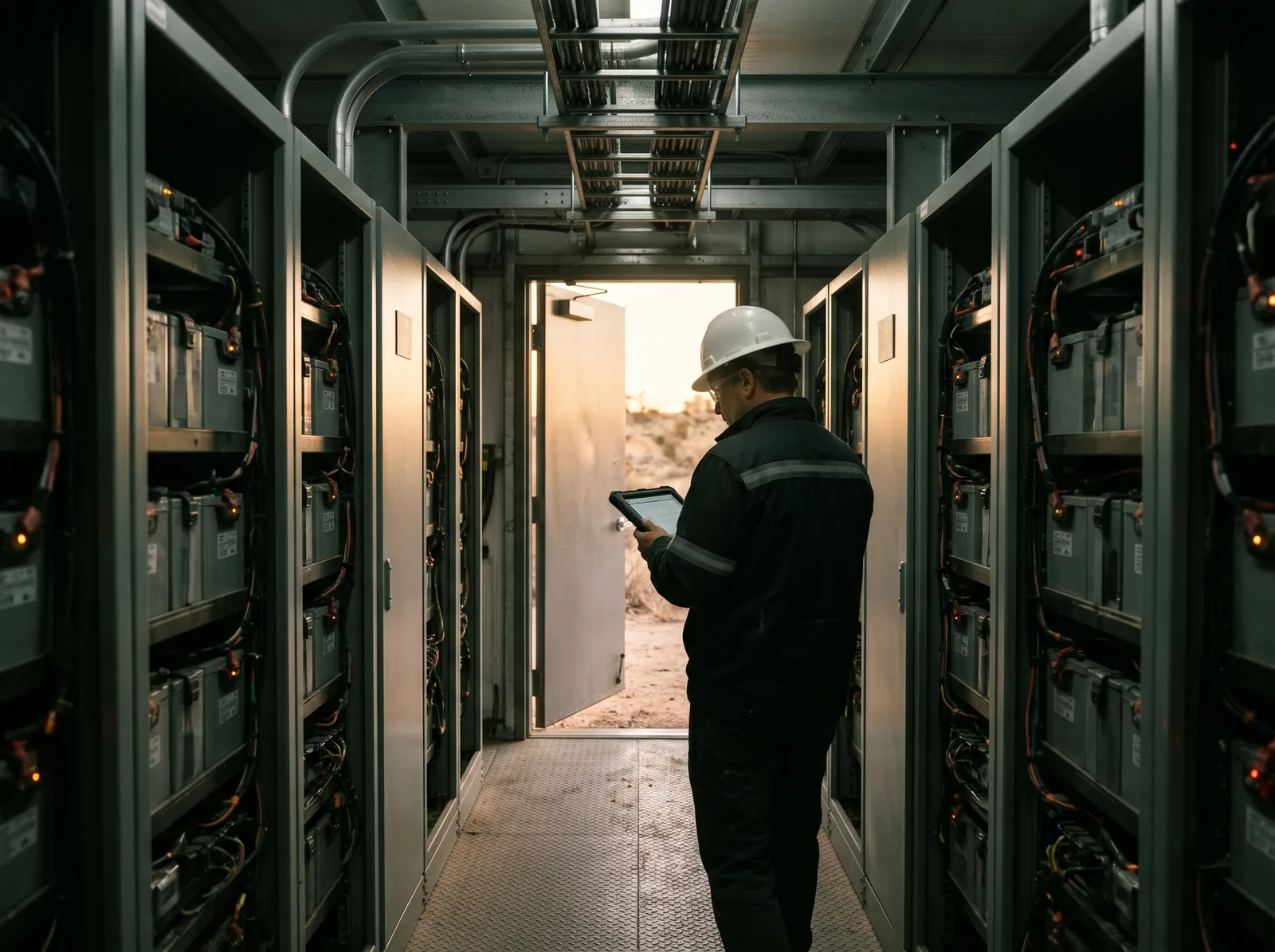
A technician with a tablet inside a battery storage enclosure aisle
 
Container status
Every container reports temperature, charge and health to Sandoval every five seconds.
04Specifications

The Numbers Inside the Containers

a.System
Reference site
Red Hollow, TX
Power
400 MW
Energy
1.6 GWh
Duration
4 hours
Chemistry
LFP
Enclosures
≈ 400 containers
b.Performance
Round-trip efficiency
88%
Year-one availability
98.4%
Standby to full power
Under 1 second
Homes at evening peak
≈ 80,000
c.Safety & Care
Detection
Per container
Layout
Fire-code spacing
Augmentation
Holds 1.6 GWh
Design life
20 yrs, then re-powered
PDF · fact sheet · Oct 2026
05Questions

Asked Before a Battery Site

The five questions counties, fire marshals and neighbours ask most about grid batteries. The rest live on the FAQ page.

Talk to our storage team
+1-⁠555-⁠0190 · Mon–Fri 8:00–⁠17:30 MST. Utilities and fire officials can ask for a site walk.

Are grid batteries safe?

We use lithium iron phosphate, which is far less prone to thermal runaway, in containers with their own detection, spaced to fire code and planned with the local fire marshal before construction starts.

Why four hours?

Four hours covers most of the evening ramp in the Southwest, when solar fades and demand peaks. Pads and substations are sized so longer-duration blocks can be added later.

Where does the charging power come from?

At hybrid sites, mostly from the panels next door — 94% at Saltbush Ridge. Stand-alone sites like Red Hollow charge from the grid at midday, when solar is plentiful.

Do batteries use water?

Not for operation. The containers are cooled by closed-loop systems; the site only needs a small supply for the crew building.

What happens at the end of their life?

Modules are replaced or the site re-powered around year twenty, and the used cells go to certified recyclers who recover lithium, iron and copper.

 
Land · Power · Partnerships

Let’s Build the Next Gigawatt.

Landowners, utilities, corporate buyers and suppliers — tell us about your site or your demand, and the right Terravolt team replies within two working days.

41 sites · seven states
 
Develop · build · own · since 2012
 
Rather Talk It Through?

Speak to the team that runs the plant.

+1-⁠555-⁠0190
Head office · Mon–Fri 8:00–⁠17:30 MST
[email protected]
Landowners & communities
1200 Mesa Verde Blvd, Suite 900
Head office · Sandoval, AZ 85000
[email protected]
Investor relations