

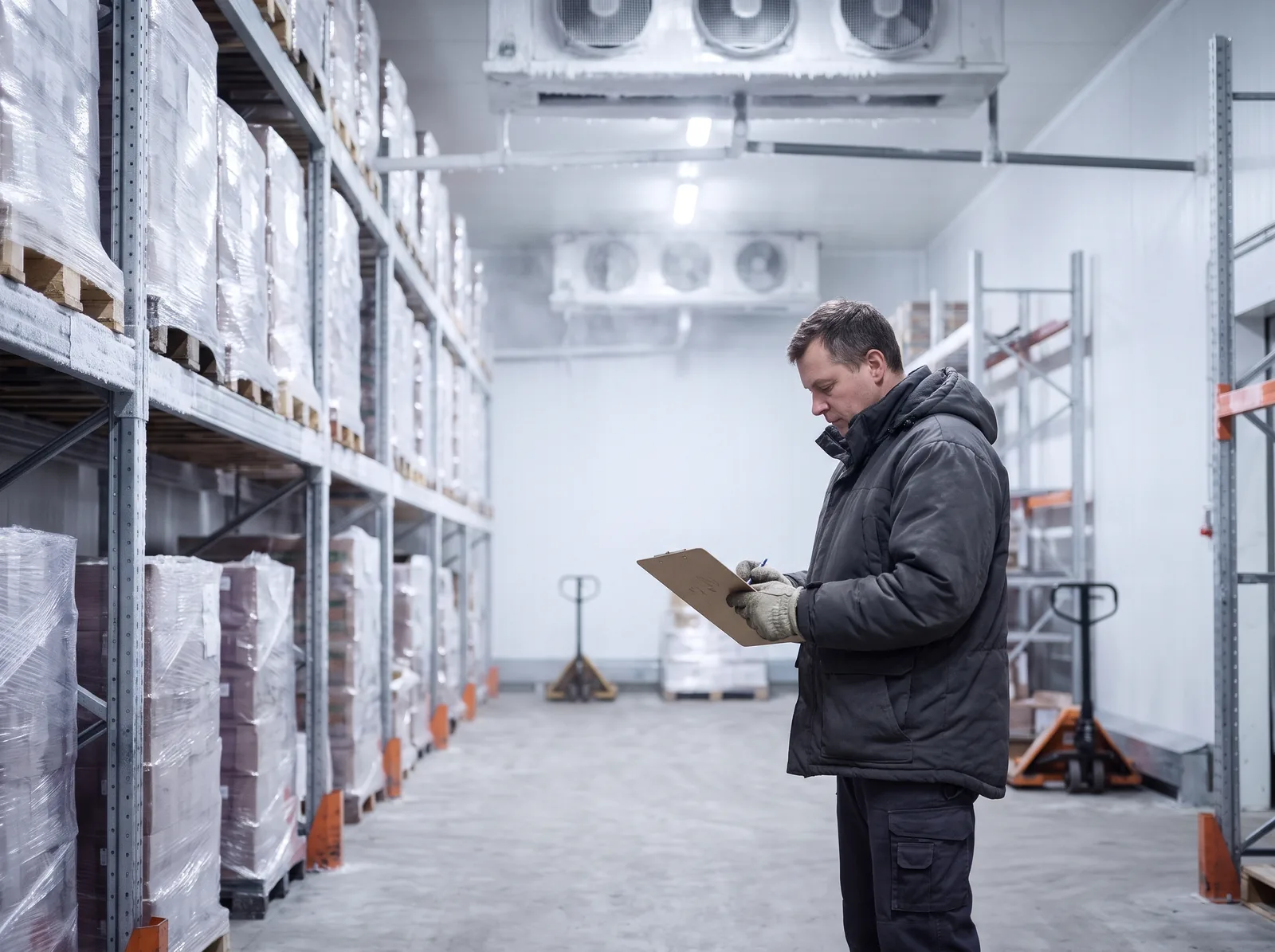
Refrigeration is the biggest load in a cold store, and defrost is the part of it nobody watches. Across 96 food and cold-chain audits, timer-based defrost was the single most common hidden load, worth on average 9% of the electricity bill.
Why timers waste energy
A timer defrosts every coil on a fixed schedule, iced up or not. Each cycle heats the coil, melts ice that may not be there, and then the plant spends more energy pulling the room back down to temperature.
Demand defrost
Sensors that defrost only when ice actually builds up cut the number of cycles by 40–60% in most stores. Combined with floating head pressure and fast-closing doors, the typical cold store saves 15–26%.
Linwood Cold Stores put demand defrost on 46 evaporators across four sites. The full case study shows the before-and-after numbers, measured over twelve months.