Fixed-tilt or single-axis tracker fields from 1 to 25 MWp on spare land next to your plant — connected behind the meter at medium voltage, or exported under a utility agreement.
A ground-mount starts with the land, not the module: boundary and topographic surveys, geotechnical tests, drainage, ecology and access for cranes and fire crews. Only then do we choose fixed tilt or trackers, and the cable route to your switchroom.
Most of our fields connect behind the meter at medium voltage, so every kWh offsets power you would otherwise buy. Where a field outgrows the site load we size the export under a utility agreement — and the engineers who design the tie-in stay on the O&M contract.
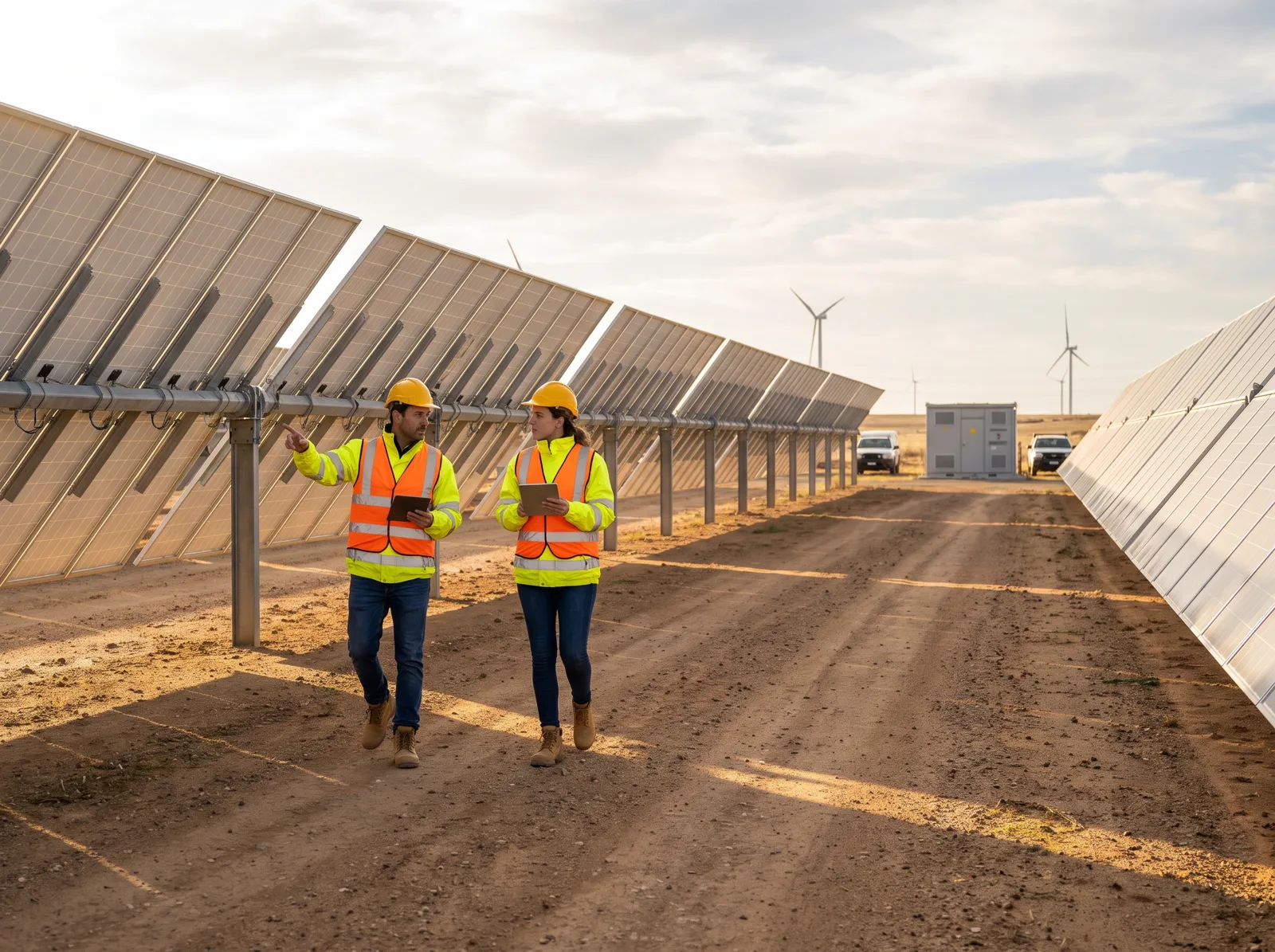
We only deviate when your land gives us a reason — rock, slope, flood risk — and every deviation is written into the proposal so your engineers can challenge it.
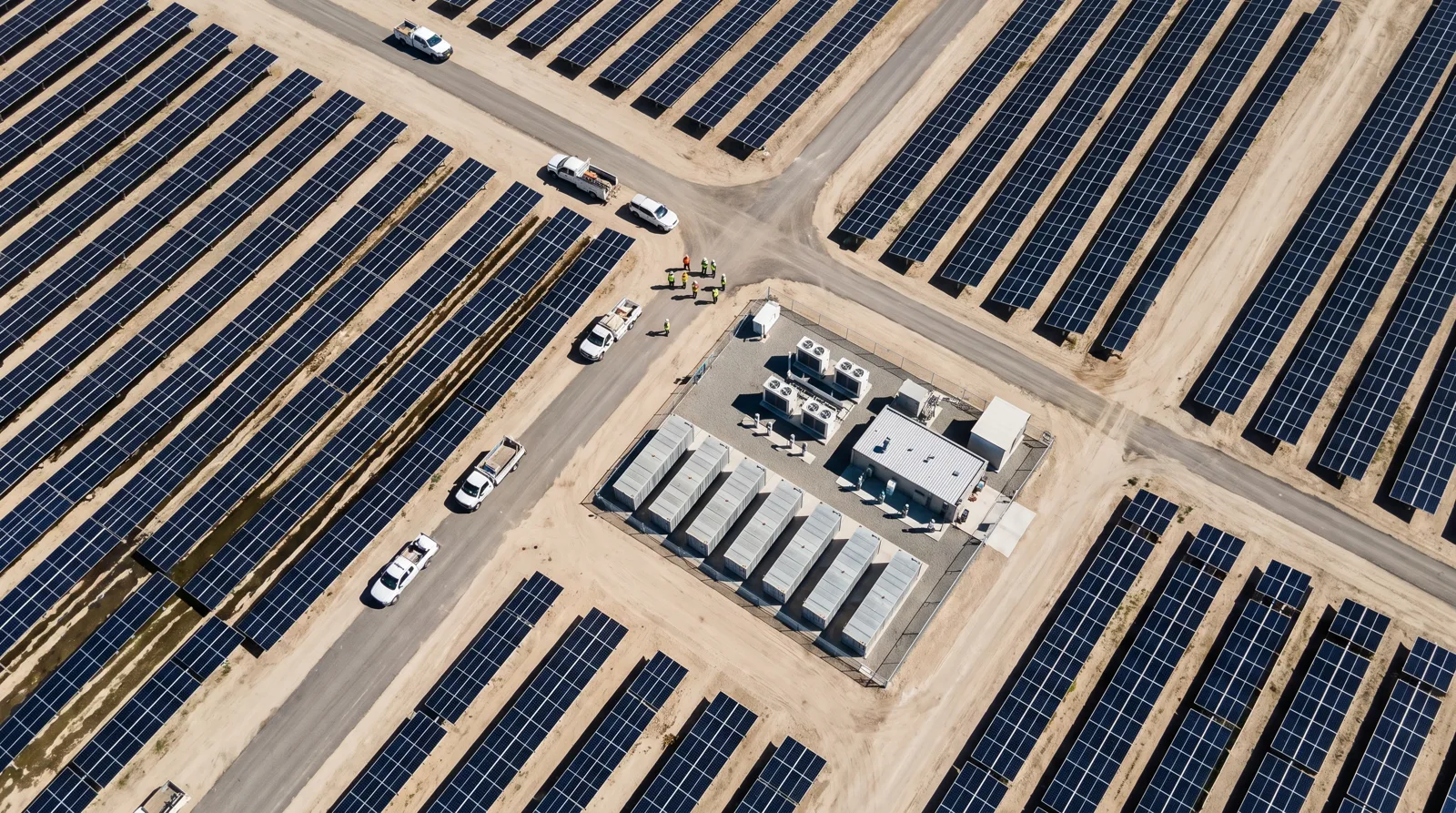
Each has its own pile pattern, land take and yield profile. If your land is something else — a capped landfill, a flood plain, a steep slope — we have a detail for that too.
Rows follow the sun from east to west: the most energy per MWp and a long afternoon shoulder.
Simple racking at 20–30° with no moving parts and the lowest O&M cost.
Low back-to-back rows that fit the most capacity onto a tight plot.
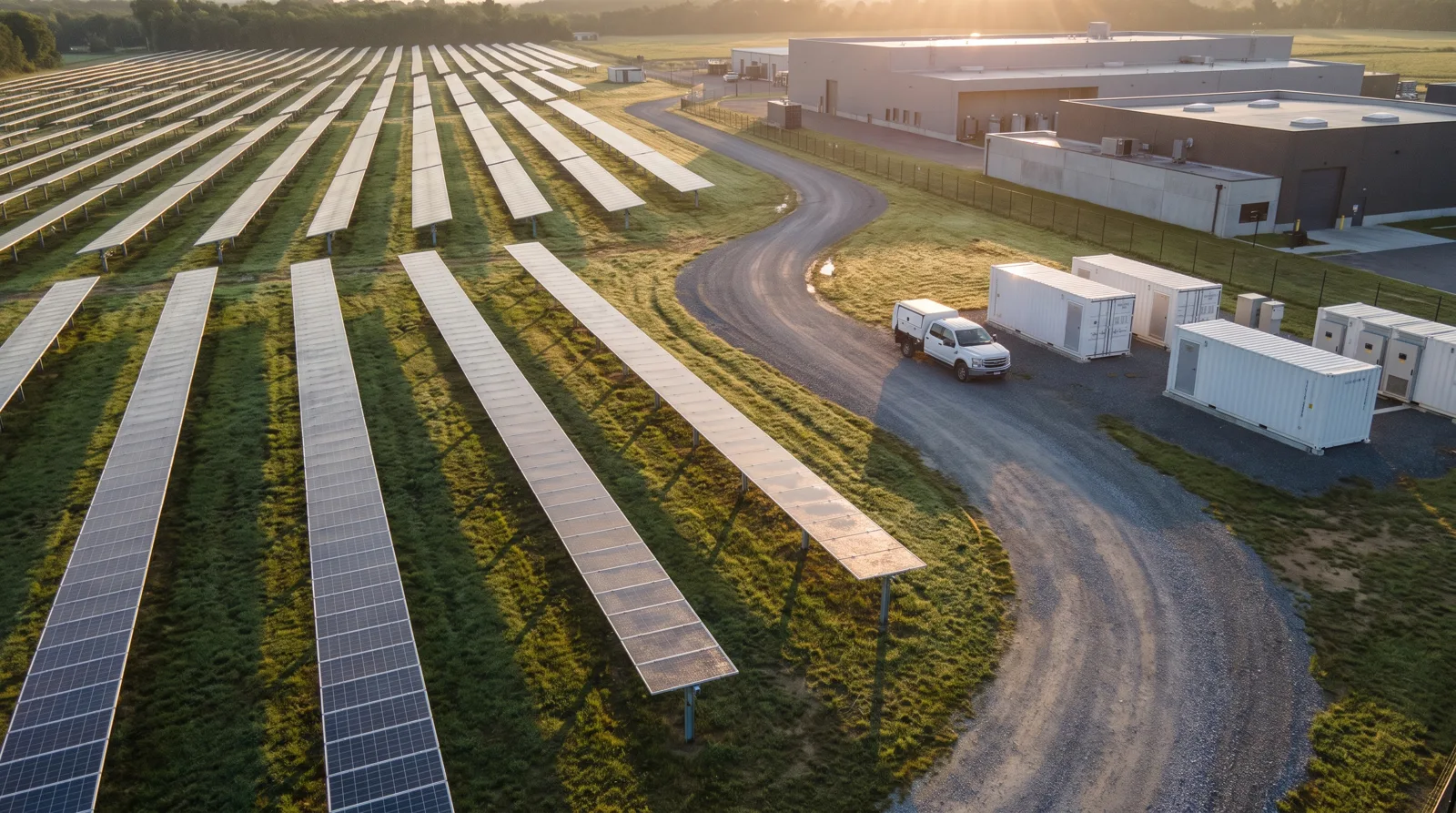
Tall rows with machinery lanes, so grazing or crops carry on underneath.
Short answers here; the long ones are in the feasibility report, with your land’s numbers in them.
About 1.6 hectares per MWp on average — closer to 1.8 for trackers and 1.0 for tight east-west rows. Access roads, setbacks and the inverter pads are included in that figure.
Trackers add around 18% more energy and a longer afternoon, which suits two-shift plants and evening loads. Fixed tilt costs less to build and maintain, and wins on uneven or sloping land. Every study prices both.
Usually, yes. We tie in at medium voltage to your switchroom so every kWh offsets grid power. Where the field outgrows the site load, we file an export agreement with the utility during the permits phase.
Twelve to twenty-four weeks on site, depending on size. The land-use permit and the grid study take longer than the build, which is why we file both as soon as the layout is fixed.
It stays land. We seed low-growing cover, manage vegetation in the O&M contract and can raise the rows so sheep can graze or crops grow between them.
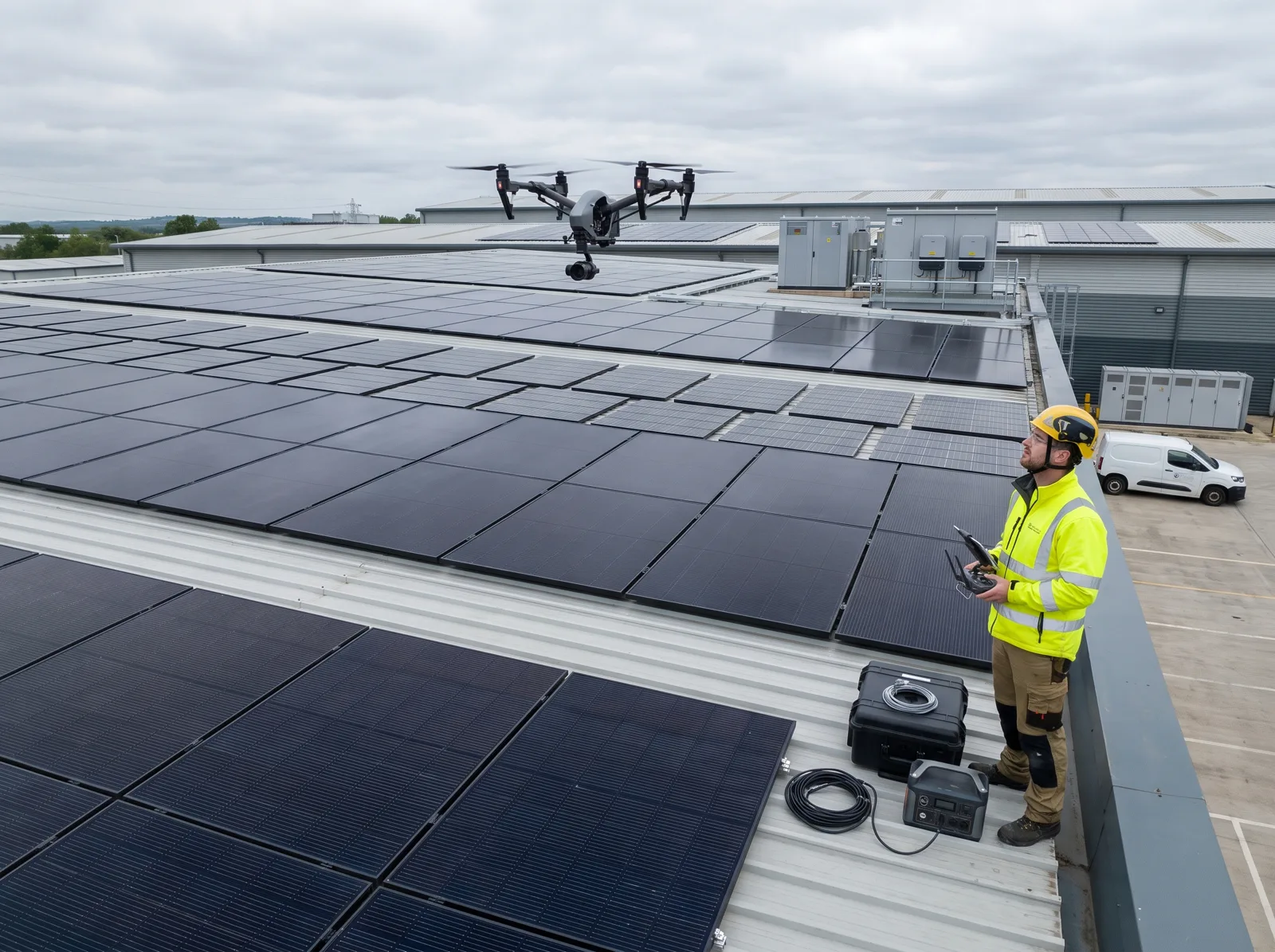
The same team that designed and built it. Our O&M desk watches every string and tracker live, answers alarms 24 / 7 and flies a thermal drone survey twice a year — on contracts of up to 25 years.