FLEET STATUS · 338 / 340 sites online · uptime 99.6% (2025)
Mon–Fri 7:00–18:00 CT     Careers     Client Portal
SALES DESK
+1-555-0188
HEAD OFFICE
1180 Meridian Pkwy, Ashford TX
FEASIBILITY
10-day desk study, no fee
Home / Solutions / Battery Storage
DOC NB-P03 · REV. 10/2026
[ Solution S-04 ]

Battery storage,
for the peak you pay for.

LFP battery systems from 250 kWh to 20 MWh that clip demand charges, shift midday solar into the evening peak and keep critical lines running through grid outages — with or without a new array.

LFP · UL 9540
3–6 WKS ON SITE
PEAK CUT UP TO 38%
SOLUTION FILE
S-04 · STORAGE
27%
Average peak-demand cut across our storage fleet; the best site reached 38%.
SYSTEMS BUILT
96
STORAGE INSTALLED
148 MWh
BACKUP
2–4 h critical load
 
ON THIS PAGE
01   Scope
02   Standard spec
03   Use cases
04   Projects & FAQ
01 / Scope

One contract from interval data to end of life.

A battery earns its keep in fifteen-minute blocks. So we start from twelve months of interval data, find the blocks that set your demand charge or carry your critical loads, and size power and energy to those — not to a round number on a datasheet.

The controller is set to your tariff and your outage plan, and the engineers who sized it watch it live from our operations centre. When your tariff changes, we re-tune it.
BATTERIES
96
AVG. CUT
27%
INCIDENTS
0
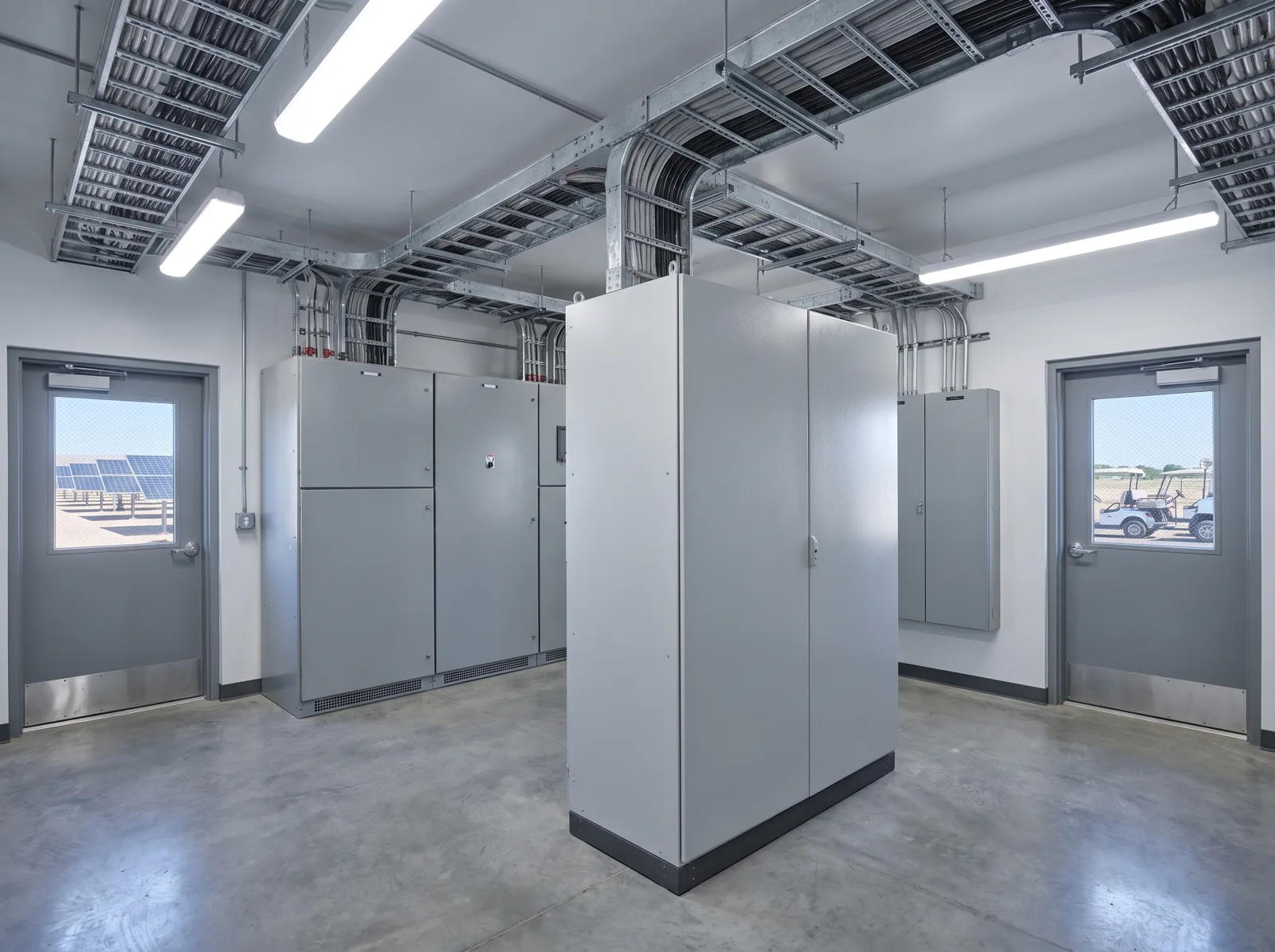
Battery storage cabinets in a clean electrical room
DETAIL B-02 · BATTERY ROOM
LFP cabinets · separated, ventilated
FIG. 01 — LFP battery cabinets in a separated room with their own ventilation
IN SCOPE · STANDARD CONTRACT
10 ITEMS
Interval-data & tariff analysis
Power & energy sizing model
Fire-code review & separation design
Utility interconnection
Battery, inverter & enclosure fit-out
Controller set to your tariff
Essential-board backup wiring
Commissioning & witness testing
Live monitoring, 24 / 7
O&M with a capacity warranty
OPTIONAL · OR BY OTHERS
New rooftop or carport array
SEE S-01 · S-02
Standby generator integration
COORDINATED WITH YOUR SUPPLIER
Switchgear upgrade
PRICED SEPARATELY IF NEEDED
DC fast-charger buffer
SEE S-02 · CARPORTS
02 / Standard spec

The spec sheet every battery starts from.

We only deviate when your load data gives us a reason — and every deviation is written into the proposal so your engineers and your fire officer can challenge it.
SPEC SHEET · S-04 STANDARD
REV. B
ITEM
STANDARD
OPTION
CHEMISTRY
LFP, UL 9540 listed
—
SIZE
250 kWh – 20 MWh, 2–4 h duration
Longer duration on request
ENCLOSURE
Outdoor container on a concrete pad
Indoor room with fire separation
POWER CONVERSION
Bi-directional inverter, grid-following
Grid-forming for islanding
CONTROLS
Peak clipping + solar shifting
Tariff arbitrage, demand response
BACKUP
Essential board, 2–4 h
Whole-site islanding
SAFETY
Gas detection, suppression, remote shutdown
Thermal camera monitoring
WARRANTIES
10-yr capacity (70% retained) · 10-yr workmanship
Capacity warranty to 15 yrs
PEAK CUT
Written into the contract, reported monthly
—
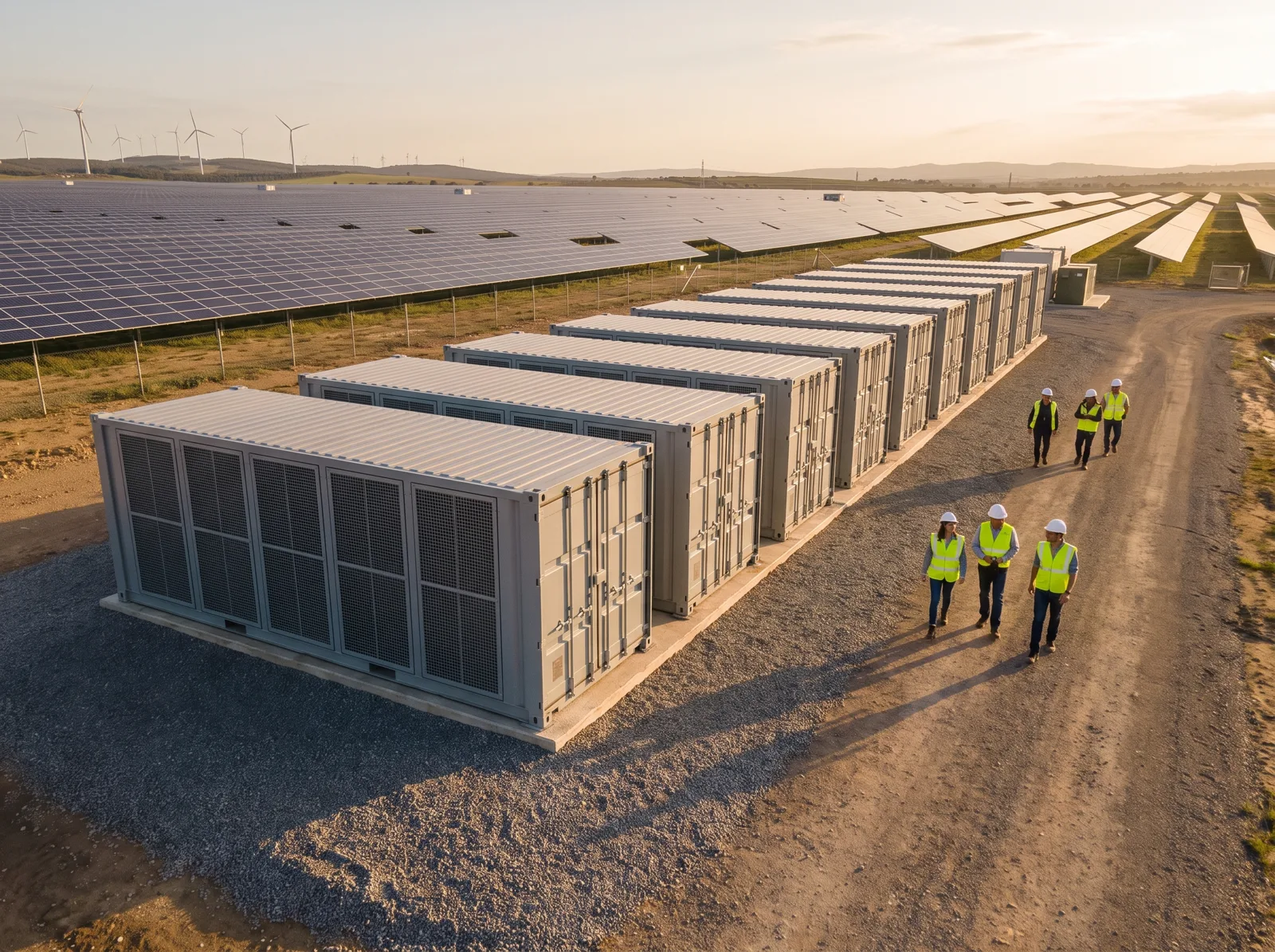
Containerised battery storage units on a gravel pad beside a solar field
PEAK CUT IN THE CONTRACT
The demand reduction we model is written into the contract — and reported on every monthly bill.
−35%
Harbor Logistics peak, year one
15min
Control interval, live
03 / Use cases

Four jobs a battery does — most do two.

Each job sets a different power-to-energy ratio and controller rule. The sizing model weighs them against your tariff before anything is priced.

B-1

Peak Clipping

Discharges in the fifteen-minute blocks that set your demand charge.

DURATION
1–2 h
TYPICAL RESULT
−20 to −38% peak
BEST FOR
Peaky loads
OUR SYSTEMS
41%
B-2

Solar Shifting

Stores the midday surplus and spends it on the evening shift or peak.

DURATION
2–4 h
TYPICAL RESULT
Self-use to 90%+
BEST FOR
Rooftop + storage
OUR SYSTEMS
33%
B-3

Critical Backup

Holds a reserve that keeps essential boards running through outages.

DURATION
2–4 h
TYPICAL RESULT
No drop on the board
BEST FOR
Healthcare, cold chain
OUR SYSTEMS
18%
B-4

Fast-Charger Buffer

Feeds DC fast chargers so a growing fleet never sets a new peak.
DURATION
0.5–1 h
TYPICAL RESULT
No new peak
BEST FOR
EV fleets
OUR SYSTEMS
8%
SIZING STUDY
10 days, from your interval data.
01
DAY 1–2
Data & tariff
12 months of 15-minute data, tariff and outage log
02
DAY 3–5
Peak hunt
Which blocks set the charge, and how often
03
DAY 6–8
Size & site
Power, energy, enclosure and fire separation
04
DAY 10
Priced options
Three sizes with payback, side by side
04 / Storage projects

Three batteries, three spec sheets you can check.

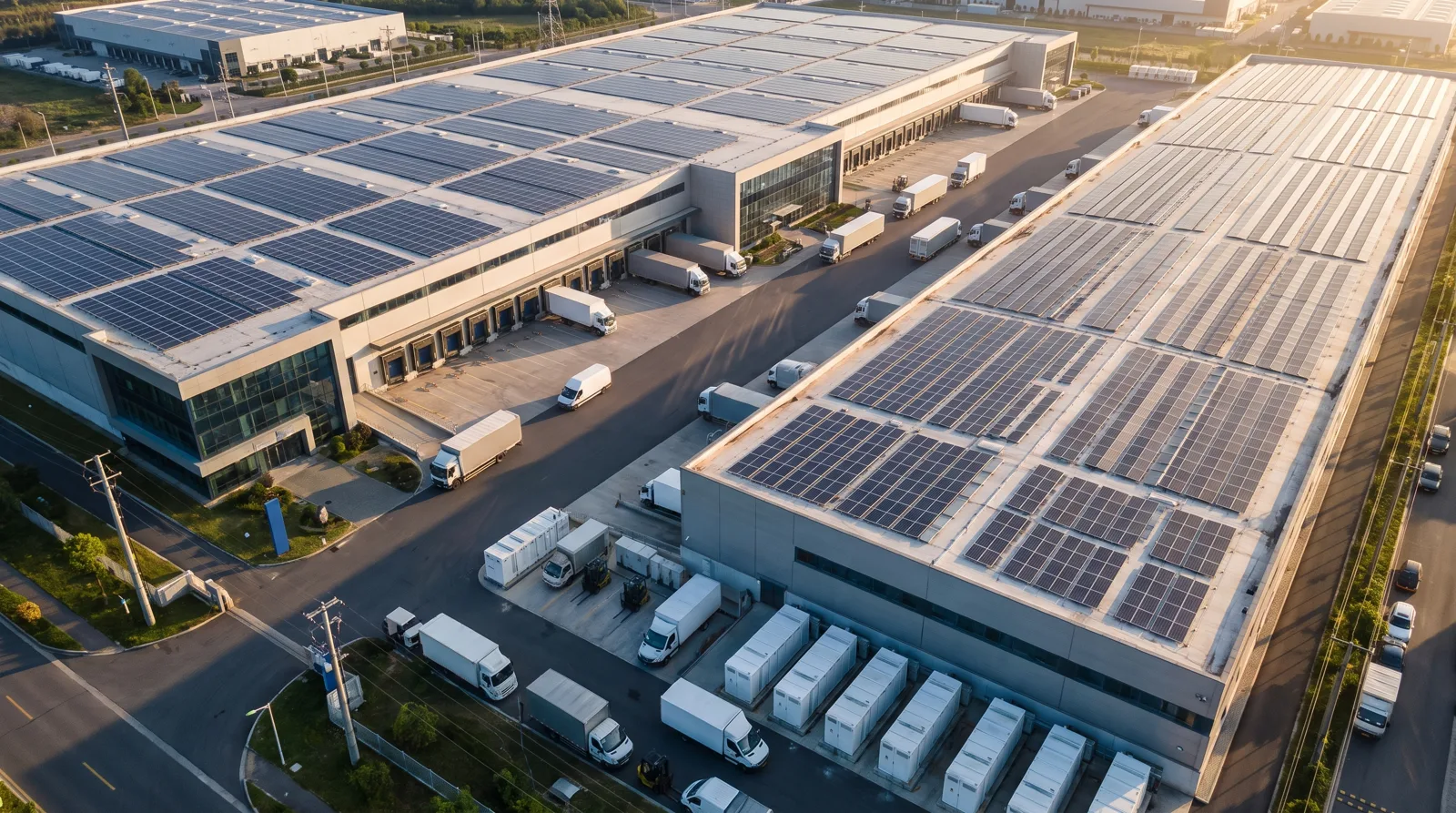
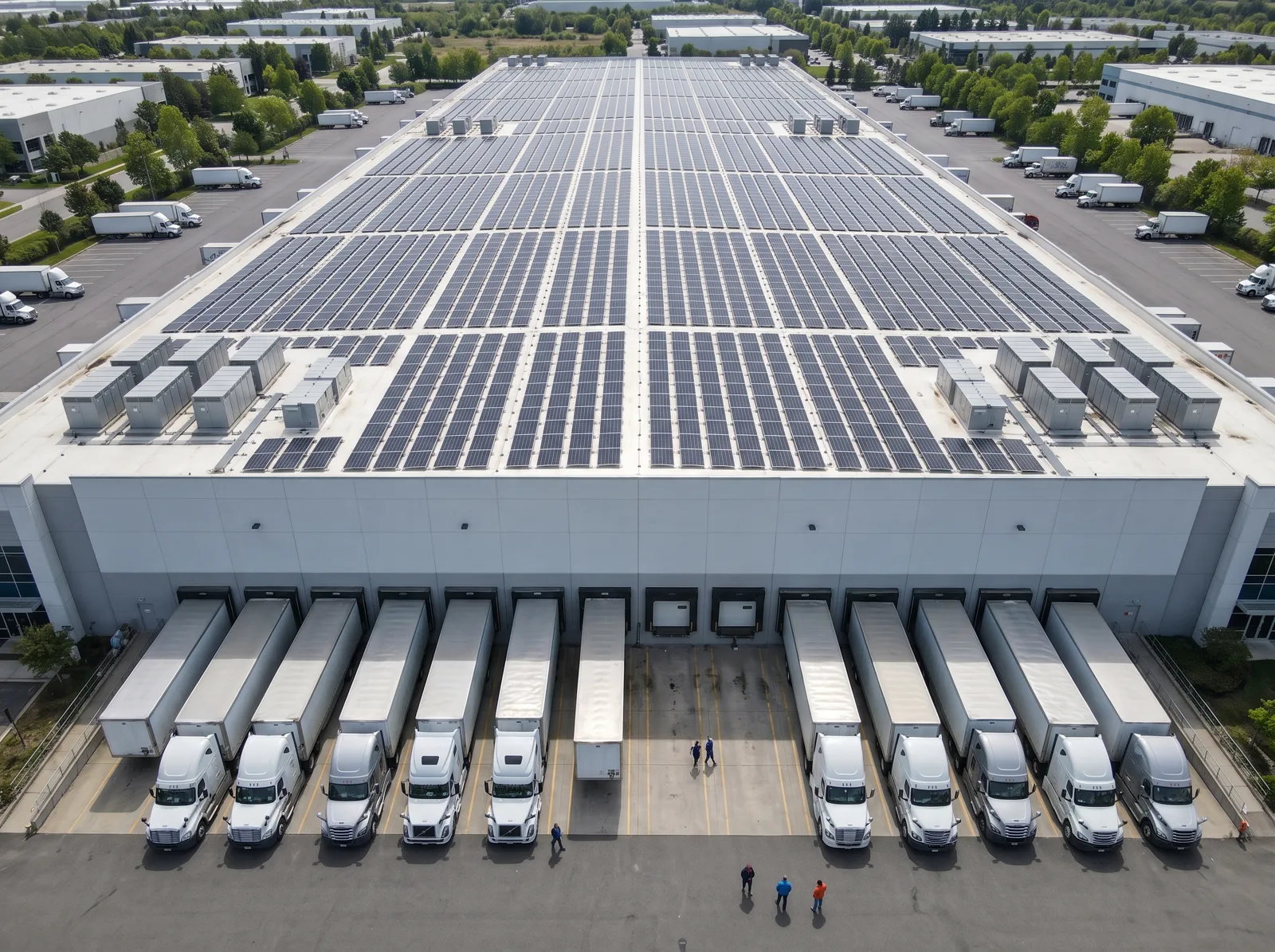
Distribution centre roof covered in solar modules above parked trucks

Harbor Logistics

Rooftop + storage · 1,742 MWh/yr · grid spend −31%
1.2 MWp
Aerial view of a logistics warehouse with a rooftop solar array and loading docks

Kestrel Foods Packhouse

Rooftop + 1 MWh storage · 103.4% of P50
640 kWp
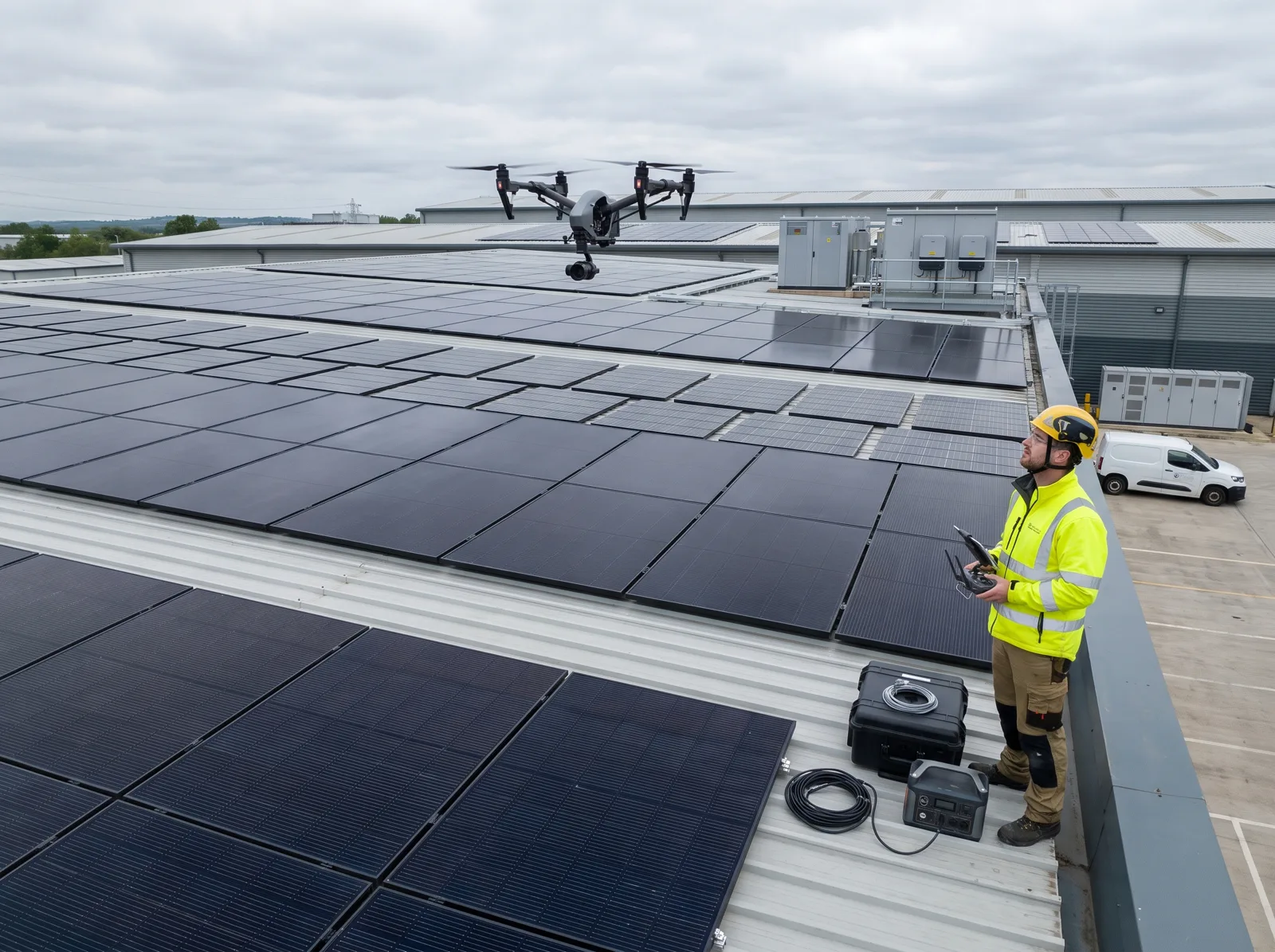
Technician flying an inspection drone over a rooftop solar array

Orbis Medical Campus

Rooftop + 2 MWh storage · 6 buildings
2.1 MWp
05 / FAQ

Storage questions facilities teams ask first.

Short answers here; the long ones are in the sizing study, with your own fifteen-minute data in them.

Portrait of Owen Reyes
Ask Owen’s team
Storage engineering desk
PHONE
REPLY
Within one working day

How do you size a battery?

From twelve months of fifteen-minute interval data. We find the blocks that set your demand charge or carry your critical loads, then size power and energy to clip or cover them — usually two to four hours of duration.

Is lithium storage safe on our site?

We use LFP chemistry in UL 9540-listed systems, with gas detection, suppression and remote shutdown. Every system goes through a fire-code review, and indoor rooms get their own separation and ventilation.

Do we need solar to add a battery?

No. A battery on its own can clip demand charges; with solar it can also store the midday surplus. Many clients add storage to an existing array — ours or someone else’s.

Can the battery back up our site in an outage?

Yes, if it is wired to an essential board. We hold a reserve of two to four hours of critical load that peak clipping never touches, and test the switchover with your team every quarter.

How long does a battery last?

Our standard warranty keeps at least 70% of capacity after ten years, extendable to fifteen. The controller is tuned to avoid the deep cycles that age LFP cells fastest.

What happens when our tariff changes?

We re-tune the controller. Our operations centre watches every system live, and the monthly report shows the peak each battery clipped and what it was worth on your bill.

Next step / Feasibility study

Send 12 months of bills. Get three priced options in 10 working days.

NO FEE · NO OBLIGATION · AN ENGINEER REPLIES IN ONE WORKING DAY
DIRECT LINES
SALES DESK
+1-555-0188
O&M DESK
24 / 7 / 365